Kashmir’s centuries-old tradition of handmade paper, once renowned across empires, has now completely vanished. No tools, workshops, or artisans remain; only fading memories and archived manuscripts testify to a craft now lost to time, reports Ibtisam Fayaz Khan
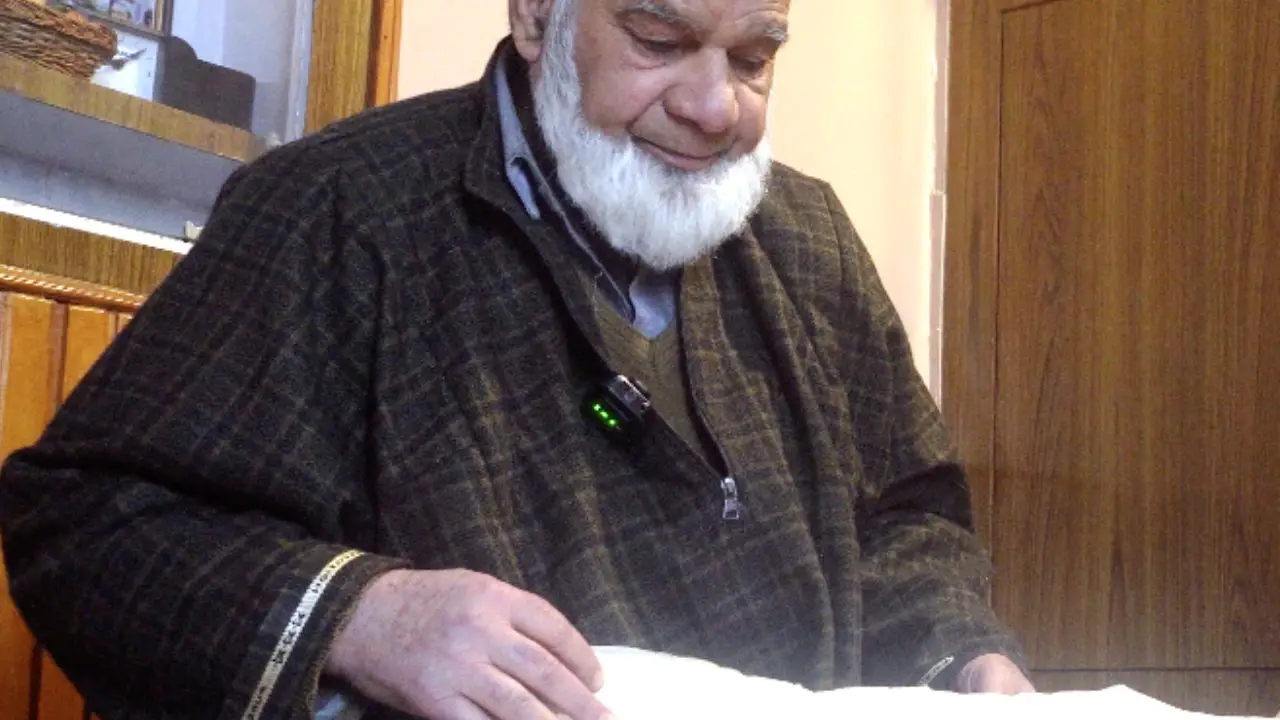
Abdul Ahad Rather’s fingers, weathered by time, reach into his pheran, fumbling with a set of keys. Slowly, he unlocks a small wooden cabinet and retrieves a single, precious sheet of Kashmiri handmade paper, manufactured before 1945. He gently traces its edges, marvelling at one of the last remnants of a lost craft. The broadsheet, preserved for over a century, gleams with a finished glaze, untouched by silverfish or decay. More than just paper, it is a symbol of identity, a tangible link to an ancestry that once defined Kashmir’s craftsmanship.
“This is our identity,” Rather said. “It is all that remains to show my younger generation what we once were.”
Kagazgar Mohalla
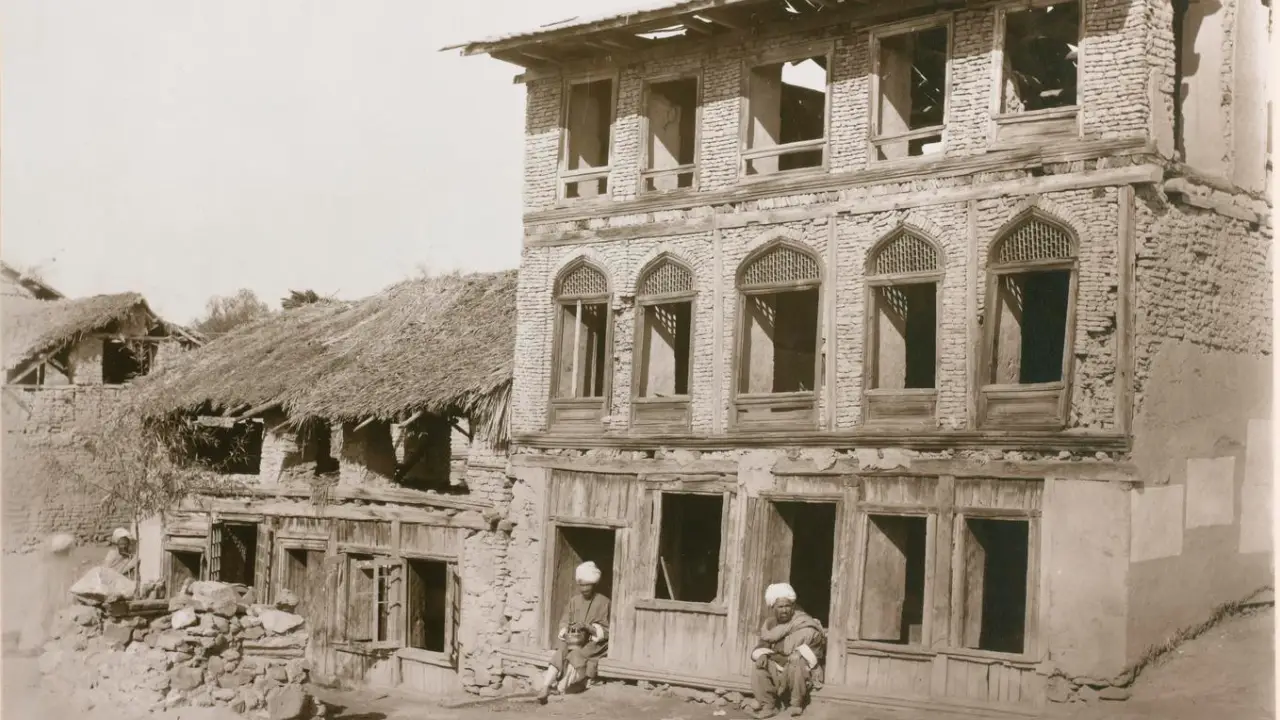
In the labyrinthine lanes of old Srinagar, where history lingers in crumbling walls and fading signboards, one name endures: Kagazgar Mohalla. Today, it is little more than an address, but centuries ago, it echoed with the rhythmic pounding of foot-powered mills and the gentle swish of reed screens as they lifted fragile sheets of handmade paper.
Once the pride of Kashmir, the art of papermaking has vanished without a trace. No workshops remain, no moulds, no drying frames. Only manuscripts, silent witnesses to a lost craft, survive in archives and private collections, locked away from public view.
Standing in the narrow alleys of Kagazgar Mohalla, Naushera, Abdul Ahad Rather surveys the transformed landscape. His walking stick taps against the modern paved squares as he gestures towards spaces that once bustled with artisans, where workshops stood, where hands, now long gone, moulded pulp into pages of history. “Everything has changed,” he sighed. “Only memories and words exist.”
Early History
The origins of handmade papermaking in Kashmir are traced to the reign of Budshah, Sultan Zain-ul-Abidin, in the 14th century, though some accounts suggest it predates his rule. Before paper was introduced, burza, the birch bark, served as the primary writing material in the region. Historians believe that the Budshah invited master papermakers from Samarkand, offering them land to settle in Kashmir. This exchange of knowledge laid the foundation for what would become a thriving craft.
“During the early 15th century, papermaking was emerging as a significant craft in Kashmir, alongside various skilled trades that arrived from Central Asia. Sultan Zain-ul-Abidin, an enlightened ruler, brought stability and tenure, ruling for nearly 50 years, an exceptional period of peace and infrastructural development,” INTACH Kashmir Convenor, Saleem Beg said, while providing the context. “Kashmir was one of the few regions in the Persianate world or Central Asia where Muslim traders and scholars travelled frequently, drawn by its opportunities and flourishing culture. Like other long-standing dynasties, Kashmir benefited from migration, which enriched its economic and cultural landscape.”
Flourishing Industry
Jalal-ud-Din Shah, a retired engineering geologist, describes the meticulous and labour-intensive craft of handmade papermaking in Kashmir. By the 19th century, the industry had reached its peak, with the Nowshera suburb of Srinagar emerging as its hub. By the 1830s, around 32 karkhanas (workshops) were in operation, sustained by skilled artisans known as Houzwoul, who crafted high-quality paper using time-honoured techniques.
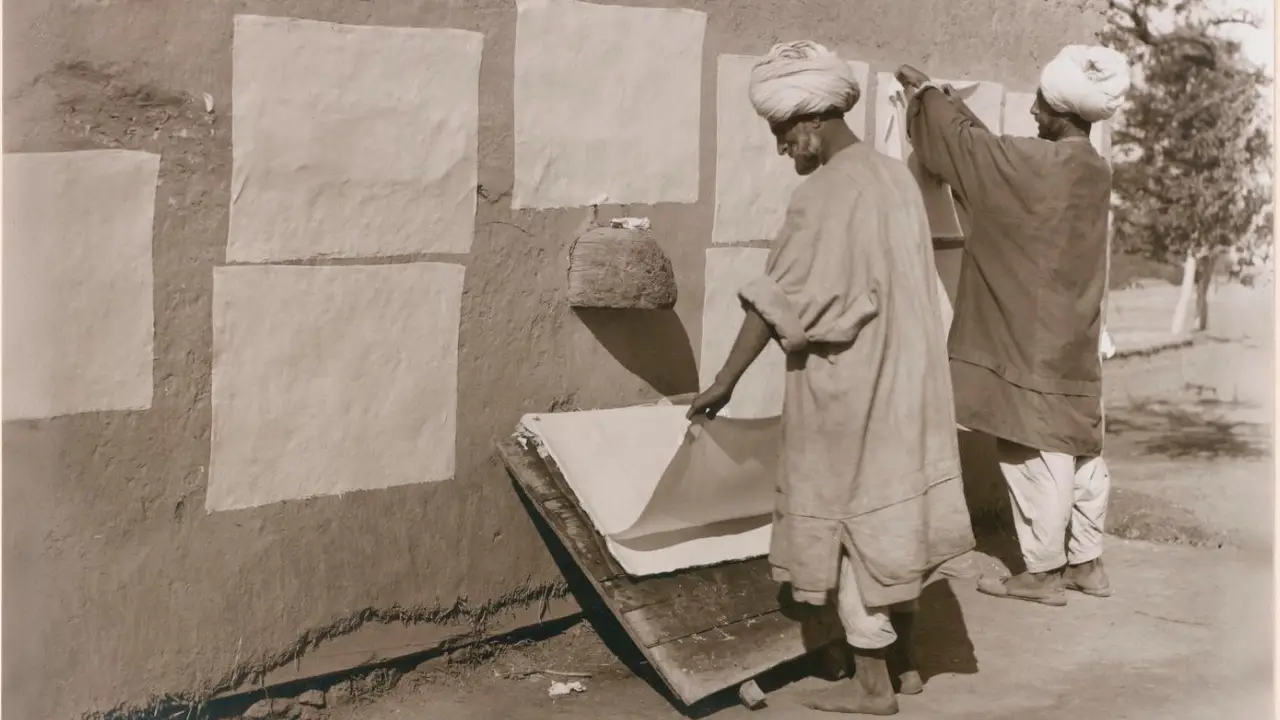
The process relied on a blend of cotton rags and hemp, treated with lime and caustic soda to whiten the pulp. The raw materials were ground in foot-pedal-powered lever mills called Mondan for 34 hours before being stored for further processing. Using wooden frames fitted with fine reed screens, artisans carefully lifted the pulp to form thin sheets, which were then dried and polished with pumice stones known as sungmohra. A rice paste was applied for a smooth finish, and the sheets were hung to dry, a process repeated over four days. Finally, they were handed to the moharkagh, who polished each with an agate stone set in a wooden handle. Kneeling before a sloping board, he rubbed the sheets with force until they gleamed. Any flaws were patched with scraps of paper, seamlessly blended through persistent rubbing.
Kashmir produced three primary types of handmade paper. Farmashi, also known as Maharaji or royal paper, was a fine, highly glazed variety made with two parts hemp fibre to sixteen parts cotton rags, primarily used for official documents. Dahmashti was a slightly rougher variety, with three parts hemp fibre to 177 parts cotton rags. The most commonly produced type was Kalamdani, made solely from rags without hemp fibre. Besides, a coloured variant, Rangamaz, was manufactured for packaging.
The Samarkand Connection
Abdul Ahad Rather, born in 1946 into a family of Kagazgar artisans, had mastered the centuries-old craft. He grew up hearing stories of the paper mills that once lined the streets of Srinagar. By the time he was born, most karkhanas had already closed.
“For generations, our family shaped paper with our hands. Our lineage traces back to the artisans Sultan Zain-ul-Abidin brought from Samarkand,” he said. Under the royal patronage, the craft flourished, sustained by skilled craftsmen who passed their knowledge from one generation to the next. Ahad’s ancestors carried forward this legacy, spending their days immersed in the rhythmic labour of papermaking.
However, Saleem Beg cautions that such claims are difficult to verify. He emphasises that the transmission of skills is often more significant than lineage.
“This claim is neither fully provable nor refutable. Many artisans inherit their craft, but an equal number of new entrants have also contributed to it over time. Whether they arrived with Mir Sayyid Ali Hamadani or from Central Asia is secondary,” Beg said. “What matters is that skills evolve and are adopted by local craftsmen. Older artisans likely taught the craft, passing it down through generations. This pattern exists in every society and economic pursuit; lineage may trace back to Samarkand or elsewhere, but the continuity and growth of the skill are what truly define its legacy.”
Ahad recalls watching his father and uncles at work. “We have always been Kagazgars. My father and uncles shaped paper with their hands, while I, just a child, only watched, too young to understand, yet old enough to remember.”
By 1942, long before Ahad could take part in the craft, its decline had already begun. “As wealth grows, so do aspirations,” he said. “A labourer does not remain a labourer forever.”
Paper Economy
In his article Manufacturing Kashmiri Paper in the 19th Century, Jalal-ud-Din Shah details the structured system of handmade paper production in Kashmir. By the mid-19th century, paper was categorised into distinct grades, each with a corresponding price.
The finest variety, Aala, sold for six chilki rupees per dusta, a bundle of 24 sheets, and roughly half a British rupee. A slightly lower grade was available at a reduced price, while Adna, the least refined, was sold for three rupees per dusta. For everyday use, an even more affordable variant was produced, commonly used by students and scribes, priced at four annas per quire (24 sheets).
The wages of artisans varied according to their level of expertise and role in the production process. The Houzwoul, responsible for processing the paper, earned two annas per dusta, producing up to four quires of high-quality Farmaish paper or six lower-grade sheets daily. The Moharkas, tasked with the final polishing, a labour-intensive job, earned between four and eight annas per dusta but could rarely complete more than one quire a day. The Karshwal, who applied rice paste to the sheets, earned half the Moharkas’ rate, while those handling the drying process were paid two annas per day.
These figures, recorded in historical accounts from around 1860, offer a rare glimpse into the economics of Kashmir’s once-thriving paper industry, where every sheet, every stroke of polish, carried the imprint of an artisan’s labour.
A Parallel Tradition
Kashmir’s handmade paper industry traces its origins to Samarkand, once a flourishing centre of papermaking in Central Asia. The craft arrived there in the eighth century when Chinese prisoners of war, skilled in the trade, revealed their techniques to local artisans. Over time, Samarkandi paper, renowned for its silk-like texture and ink-resistant quality, became the preferred medium for Persian and Arabic manuscripts.
Despite its prominence, the craft suffered setbacks in the 19th century due to war and political upheaval. In Uzbekistan, however, the Mukhtarov brothers later revived the tradition at the Meros Paper Mill, preserving the centuries-old process and offering visitors a glimpse into its past.
Paper itself was not widely used as a writing material until the early second millennium. Though it originated in ancient China, it took over a thousand years to reach India, travelling along the Silk Route through cultural and commercial exchanges. Historical accounts suggest that the rise of papermaking in the region coincided with the Muslim invasions of the early second millennium, with Kashmir emerging as one of the earliest centres of production. As Muslim rule expanded, so did the craft, spreading across India. By the colonial era, handmade paper had firmly established itself, though its dominance was already in decline.
A Shared Legacy
Among the surviving artefacts of Kashmir’s papermaking heritage is a Persian-inscribed sketch detailing the intricate process. It offers a rare glimpse into the craft, describing steps that mirror the Samarkandi method: fibres manually pounded, water mills set in motion, sheets carefully sieved, pressed, dried, and polished to perfection. The parallels are striking.
Centuries-old trade routes had carried more than just goods, along the Silk Road, techniques and traditions travelled, binding Kashmir’s artisans to those of Central Asia in ways now nearly forgotten.
Life Back Then
Abdul Ahad recalls his childhood in the family workshop, a communal space filled with the scent of wet pulp and ink. His extended family, including his parents, uncles, and their wives, lived under one roof. Privacy was an unfamiliar concept; wooden lofts (Kani) were partitioned into sections, each with its own earthen cooking space (Daun).
“Our minds were pure and simple,” he said. “Panun haakh baati aesi khewan.” There were always ten to fifteen children in the household, and meals were a shared affair. “What people now call a dastarkhwan was just a long piece of cloth for us back then.”
He speaks with quiet pride of belonging to a Kagazgari Khandaan, a family of papermakers whose ancestors, he emphasises, never had to convert to Islam upon arriving in Kashmir. Their origins in Central Asia were a source of identity and distinction. His father, a matriculate of 1943 who had studied at Punjab University Lahore, often spoke of their legacy, ensuring that Ahad and his siblings knew their roots.
As the years passed, the younger generation grew distant from the craft. “When a child grows up, he starts feeling embarrassed by his father’s profession,” Ahad reflects. The decline was inevitable. Imported machine-made paper flooded the markets, and Kashmiri handmade paper, though superior in quality, could not compete economically.
For centuries, Kashmiri handmade paper has been prized across India and Central Asia. It was used for preserving literary treasures, including Rubaiyat by Omar Khayyam, and manuscripts in Persian, Arabic, and Sharda script. Its durability and smooth texture often surpassed that of European varieties, which contained chemicals that caused faster deterioration.
During Afghan rule and the late Dogra period, demand for Kashmiri paper was high, with Indian companies stationing representatives in Srinagar to procure it. However, by the early 20th century, competition from industrial paper mills in undivided India led to its rapid decline.
A Forgotten Craft
Ghulam Mohammad Rather, Abdul Ahad’s elder cousin, now in his eighties and living near Mandibal Naushera, shares similar memories. Born in 1941, he recalls that by 1947, the workshops had all but disappeared. “When India took over, the paper started coming from outside. That was the end,” he said.
Their ancestors had worked tirelessly, six days a week, taking only Fridays off. “People back then had no choice but to work hard; there was poverty, but there was dignity in labour.”
At 83, Mohammad vividly remembers the intricate and labour-intensive process. Old rugs, newspapers, and discarded paper were collected and ground into a paste in charkhas, wooden mills powered by flowing river water. In Ganderbal’s Bobispoor, the family operated an Aabi Grati (water mill), where raw materials were processed. The pulp was sieved in a wooden Houz (tank)and shaped using a wooden frame. The freshly moulded sheets were pasted onto the walls to dry before being cut and refined.
Paper-making was a joint effort. “My father, my maternal uncle, and a neighbour each had specific roles in the process,” he said. Kashmiri Pandits sought this paper for religious scriptures, and it was once in high demand internationally. Legends whisper that both the Qur’an and the Bhagavad Gita were inscribed on this very paper during the time of Mir Sayyid Ali Hamdani.
Yet, despite its historic significance, the craft did not survive. The British traveller George Forster, who visited Kashmir during Afghan rule, once wrote that “Kashmir fabricated the best writing paper of the land and that it was an article of extensive traffic.” Today, that legacy exists only in memory.
In the Mughal Era
Kashmir’s handmade paper was a prized commodity in Mughal India, renowned for its durability and exceptional quality. During Akbar’s reign (1556–1605), it became the preferred choice of scholars and administrators. Historian Abdul Qadir Badayuni (1540–1615), a prominent figure at Akbar’s court, once wrote to his close associate, Shaykh Yaqub Sarfi of Kashmir, lamenting his absence and making a special request for Farmaishi Kagaz, the finest handmade paper from the valley.
This exchange underscores the paper’s prestige, not merely as a writing material but as a symbol of refinement among the Mughal elite. Saleem Beg notes that the letter is still preserved, offering a rare glimpse into Kashmir’s deep-rooted legacy in manuscript culture.
Zebunissa’s Scriptorium
In the late 17th century, Emperor Aurangzeb’s daughter, Zebunissa, played a crucial role in promoting Kashmiri handmade paper. A poet and scholar, she established a scriptorium in Kashmir, where skilled calligraphers transcribed rare manuscripts. As noted in the introduction to her poetic collection, Diwan-i-Makhfi, she maintained an extensive library and ensured that valuable books were copied onto Kashmiri paper. Her patronage reinforced the region’s reputation as a centre for high-quality manuscript production.
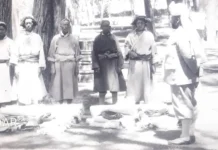
By the early 20th century, the once-thriving Kashmiri paper industry had entered a steep decline. In 1917, William Raitt, a consulting cellulose expert from the Forest Research Institute, Dehradun, visited Kashmir at the request of the local administration. Recognising the historical significance of the craft, he meticulously documented the handmade paper-making process in a series of 26 photographs. These images, later published in 1939 under the title Kashmiri Papermaking Photos, remain one of the few surviving visual records of this vanishing tradition.
The Final Years
A small attempt at revival came in the 1960s when the government established a small-scale industrial unit near Bagh-e-Ali Mardan Khan. A distant relative of Ghulam Mohammad Rather operated a factory there, but climate disruptions forced its closure. The craft’s final blow came when the relative suffered a tragic accident; his hands were crushed by a paper-rolling machine used for file covers.
By then, imported paper had sealed the fate of Kagazgari.“Jab bahar se kagaz aya, hamare kagaz ki demand kam hogayi,” said Mohammad. The machine-made alternative was cheaper, easier to produce, and required little labour compared to the painstaking process of Kashmiri papermaking.
Now, Ghulam Mohammad Rather stands alone as the custodian of fading memories. “Neither my grandsons ask about this, nor do I tell them,” he said. “That is a thing of the past. What more can I say, and how much should I reveal?”
The Vanishing Craft
By the early 20th century, mechanised paper mills had largely replaced traditional Kashmiri papermaking. In the early 1900s, around 32 families in Nowshera, Srinagar, remained engaged in the craft, each requiring 14 members to efficiently produce dastas, bundles of 24 sheets. On average, a family could manufacture five dastas of high-quality paper or seven rougher grades per day. Yet industrial advancements rendered handmade paper obsolete, accelerating the decline of a centuries-old tradition.
Today, only the name Kagazgar Mohalla in Srinagar serves as a faint reminder of this once-prosperous industry. While Kashmiri handmade paper is no longer produced, its legacy endures, a testament to the ingenuity of the region’s artisans and their contributions to literature, scholarship, and historical preservation.
Ruins of a Past
As Abdul Ahad walks through the narrow lanes of Kagazgar Mohalla, an elderly woman, Mayimoona, gestures towards a weathered wall. “This is where they used to paste the papers,” she recalls, drawing from stories passed down by her mother-in-law.
The mohallas still hold fragments of their past, old homes with traditional Kashmiri architecture, but change has crept in, reshaping the landscape. “There were six houses back then, three opposite the other three. The rest was open land,” Rather remembers.
As the final survey of Kagazgar Mohalla nears completion, two elderly men in pherans emerge from the winding alleys. One, his face lined with the weight of memory, stops and asks, “Is your work done?”
A nod is enough to make him sigh, his gaze drifting over the silent streets that once echoed with the sounds of craftsmanship. “Our ancestors used to say this paper was sought after across the world,” he said. “And now? Nothing remains.”
His words settle heavily in the air, a quiet elegy for a craft that once defined an entire community. After a moment, almost to himself, he adds, “Woh log hi waise thay, jo itni mehnat karpaatay thay.” The people of that era had the resilience to sustain this craft. The generations that followed did not.
“No silverfish could eat through this paper. The ink never bled to the other side. Such was its quality,” another man interjects.
The workshops are gone. The tools are lost. The knowledge has slipped through generations, leaving only stories, regrets, and a few surviving sheets of paper in the wooden cabinet of Abdul Ahad, one of the last custodians of a vanished world.

The Last Remains
Despite everything, traces of identity persist. Kagazgar Mohalla still bears the name of its artisans. Even in death, the Kagazgars carry their legacy, engraved on gravestones, where their names are followed by Kagazgari.
Abdul Ahad Rather, now in his twilight years, longs for a revival, not for himself, but for the generations to come. “If it is revived, it will be a matter of pride for our family,” he said. But he knows that revival requires remembrance, and remembrance demands witnesses.
His regret is not merely that the craft has died, but that future generations never saw it live.“I regret it, but my children will not. How can they value something they never witnessed?”
He looks down at a preserved sheet of handmade paper, his fingers brushing over its smooth surface. It is more than just a relic; it is the last proof of a forgotten world.
The disappearance of Kashmiri’s handmade paper is not merely the loss of a craft but of an entire history. Unlike other dying traditions, where old workshops, tools, or even partial production units survive as relics, Kashmir’s papermaking has left behind nothing tangible.
The karkhanas that once flourished in the lanes of Nowshera and Ganderbal have vanished without a trace. Not a single mould, drying frame, or pounding mill remains. Even the state authorities, who might have preserved this heritage, failed to document or safeguard the equipment that once sustained the craft.
All that endures are manuscripts written on Kashmiri paper, housed in archives, museums, and private collections. Judicial records, literary texts, and centuries-old documents bear testimony to the craft’s excellence, but they, too, exist behind locked doors, unseen by the public.
No museum chronicles the process of Kashmiri papermaking. No research institute studies its techniques. No educational effort ensures that future generations even know it exists.
Unlike Samarkand, where the ancient craft of papermaking has been revived in heritage mills, Kashmir has let its legacy slip into oblivion. What should have been a preserved and celebrated tradition has become nothing more than a whisper in history, its tools lost, its workshops erased, and its existence surviving only in words and memories.