SRINAGAR: The next round of discussions on constitutional and legislative safeguards for Ladakh is expected to be held in October, Chief Secretary Ashish Kundra said on Thursday, while briefing the media on the ongoing political dialogue and various administrative and developmental initiatives in the Union Territory.
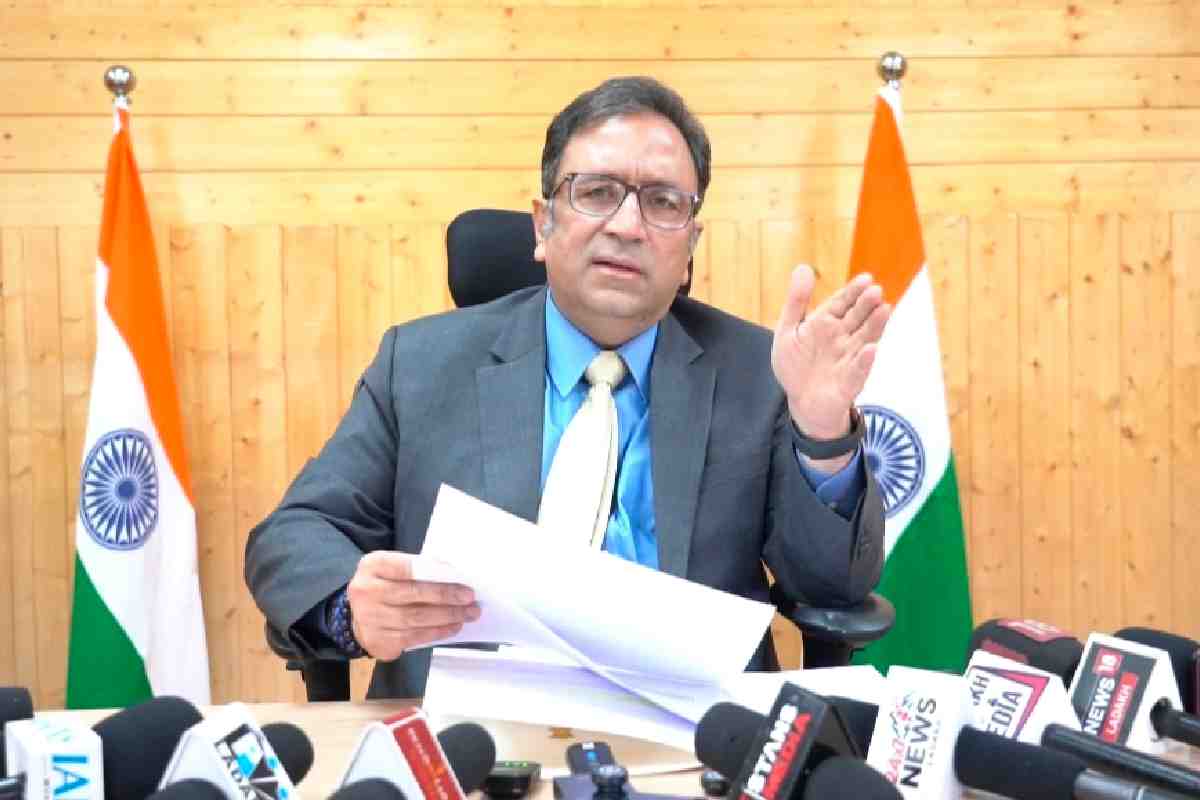
Kundra said a meeting between Ministry of Home Affairs (MHA) officials and members of the sub-committee of the UT-level body was held in New Delhi on Wednesday to discuss the framework for safeguards for Ladakh. Representatives of the Apex bodies and the Kargil Democratic Alliance participated in the meeting.
The meeting discussed the proposed structure of a UT-level body under Article 371 of the Constitution, with participants reaching a consensus on having its members directly elected through constituencies, he said.
The discussions focused on securing constitutional and legislative safeguards concerning Ladakh’s land, culture, heritage, natural resources, environment and employment, among other issues
The Ladakh representatives were asked to prepare a draft examining the structural relationship and distribution of powers between the Ladakh Autonomous Hill Development Councils (LAHDCs) and the proposed UT-level body, according to the Chief Secretary.
Kundra said constitutional safeguards would require a detailed legal and parliamentary process involving broad political consensus and consultations.
“The process will be taken forward through dialogue and consensus, and no framework will be imposed on Ladakh without due consultation with stakeholders,” he said.
Recruitment reforms
On recruitment and service-related matters, Kundra said the MHA has issued an enabling notification for recruitment against 79 posts across 15 departments under the Ladakh Reservation Rules, 2025.
Draft recruitment rules have been prepared and will be submitted to the Lieutenant Governor for approval. Once approved, the rules will be forwarded to the Union Public Service Commission (UPSC) to initiate the recruitment process.
The posts include Assistant Directors, Under Secretaries, Deputy Registrars, Excise and Taxation Officers, Assistant Labour Commissioners, Block Development Officers, Tehsildars and officers in the Social Welfare and Tourism departments.
The MHA has also approved the creation of the Ladakh Administrative Service and Ladakh Police Service, with modalities for their implementation to be worked out shortly, he said.
Kundra said recommendations for appointment against 1,340 categories/posts had been received under the ongoing recruitment process, while 1,504 posts had been advertised and 716 vacancies filled through promotions.
Recruitment to 125 Medical Officer posts is also being expedited. A UPSC board is scheduled to visit Ladakh from September 21 to 25 to conduct interviews, he said.
Nautor land rules
On the proposed Nautor land rules, Kundra clarified that the draft framework does not envisage monetisation of Nautor land.
He said the proposed rules seek to address long-pending issues concerning tenancy and conversion of eligible tenancy rights into ownership, subject to applicable rules.
The Chief Secretary said actual regularisation of Nautor land falls within the jurisdiction of the elected Hill Councils.
He added that provisions concerning monastery and religious institution land were also being examined, including measures to reduce the financial burden on small landholders.
The final rules have not yet been notified and suggestions from stakeholders would be considered before they are finalised, he said.
Kundra said the proposed land-use framework could help address difficulties faced by landholders regarding permissible land use and access to institutional finance.
Regarding the September 24 incident, the Chief Secretary said issues concerning withdrawal of cases and compensation for affected families had been taken up with the Lieutenant Governor for appropriate consideration and further action.
He reiterated that the Ladakh administration was committed to consultation and transparency while strengthening democratic and administrative processes and addressing public concerns in accordance with the law.