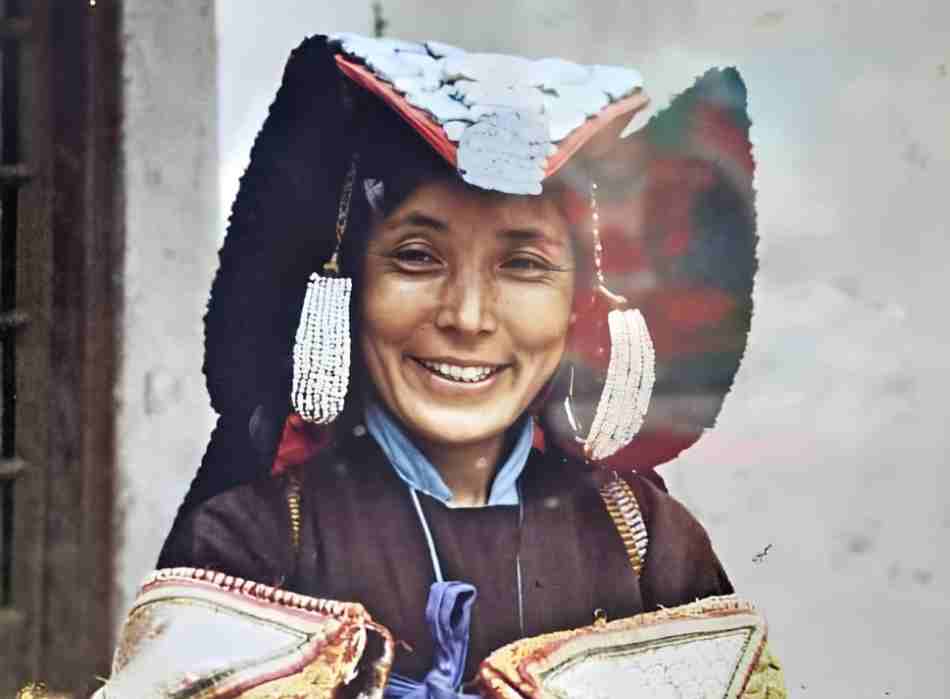
SRINAGAR: Gyalmo Deskit Wangmo, affectionately known as Rani Parvati Devi, the Queen of Ladakh, was laid to rest with full state honours on November 10, 2024, at Stok. Passing away at the age of 90 on November 5, at her residence in Stok Palace, Leh, her final rites brought together leaders, family, and citizens, commemorating a life devoted to Ladakh’s people, culture, and development.
The solemn funeral procession was attended by notable dignitaries, including Tashi Gyalson, Chairman of the Ladakh Autonomous Hill Development Council (LAHDC) Leh, and former Himachal Pradesh legislator Ravi Thakur, alongside family members and prominent figures from Leh and Lahaul-Spiti.
Born on May 1, 1934, at Khangsar Palace in Lahaul, Himachal Pradesh, Gyalmo Deskit Wangmo hailed from the distinguished Royal House of Khangsar. In 1950, she married Kunzang Namgyal, the King of Ladakh, marking the beginning of her remarkable journey at Stok Palace. Rising to prominence, she became the first woman from Ladakh to serve as a Member of Parliament, representing Ladakh’s constituency in the 6th Lok Sabha from 1977 to 1980 under the Indian National Congress with support from the Jammu and Kashmir National Conference. Her victory as the only woman elected as an MP from Ladakh remains a historic achievement, opening doors for women in a predominantly male political sphere.
Known for her commitment to community welfare, she actively contributed as the Convener of the Welfare Extension Project from 1958, an initiative dedicated to social upliftment in Ladakh. Gyalmo Deskit Wangmo’s philanthropy extended further with her efforts to bring the Save the Children Fund to Ladakh, focusing on the most vulnerable members of society. She was also a founding member of the Namgyal Institute of Research on Ladakhi Art and Culture (NIRLAC), which strives to preserve Ladakh’s rich cultural heritage.
In a touching obituary, Ashok Thakur, former IAS and member of the Thakur family recalled her deep ties to her ancestral home in Lahaul and her enduring legacy in promoting education, particularly for Ladakhi girls. Thakur credited her with initiating English education for girls, highlighting her decision to enrol her daughters in the Sacred Heart Convent in Dalhousie in the 1960s despite numerous hardships. Her forward-thinking approach to education was instrumental in ensuring equal opportunities for Ladakhi girls.
At Stok Palace, where she spent her later years, Gyalmo Deskit Wangmo’s life remains enshrined in the historic palace itself. With over 260 rooms, including royal apartments, shrines, and fresco-adorned chambers, Stok Palace serves as a testament to Ladakh’s legacy. Her former room, now part of a six-room hotel in the palace, still houses family heirlooms, furnishings, and hand-painted frescoes from 1820, symbolising her lasting connection to her heritage.
The Queen’s passing is seen as the end of an era for Ladakh and Lahaul, with an outpouring of condolences from Ladakhi leaders and the wider community. Raja Jigmet Wangchuk Namgyal, Rani Sarla Chhewang, Rani Rinchen Wangmo, and Raja Karma Konchok Namgyal—members of her immediate family—received heartfelt sympathy from all corners of society, honouring a woman whose legacy will continue to inspire Ladakh’s future generations.