After five years of protests, detentions and failed talks, the desert territory of Ladakh wrestled a historic governance deal from New Delhi, leaving Jammu and Kashmir’s entrenched political class facing hard questions on the streets, reports Mir Rameez Raja
It began, unusually, with a public contradiction. Days after LG Vinai Kumar Saxena posted on X that he had “cautioned” climate activist Sonam Wangchuk and quoted him as accepting that comparing Ladakh to Manipur was “an error of judgement,” Wangchuk pushed back, calmly, in public, on the same platform, and in detail. The meeting, he said, had ended on a positive note; the L-G had even invited him to an event the next day. The social media post was a surprise, and he wanted it on record.
“How would you feel,” he asked in a video posted on X, “when someone calls you home, offers tea, asks about your work and discusses collaborations, and after you leave, you learn the host has posted online that he issued you a warning?” He added that the LG had raised the subject of the so-called Cockroach Janata Party, an online political movement Wangchuk had been publicly supporting, and claimed it was a foreign conspiracy backed by Pakistan and the United States. “I smiled,” Wangchuk said, “as he said this to someone who had earlier been detained after making similar claims.”
The exchange was, on the surface, a minor spat between an activist and a lieutenant governor. But in the context of post-2019 Ladakh and Jammu and Kashmir, where questioning official narratives has, in the recent past, landed people under the National Security Act, a prominent figure publicly correcting the LG’s version of a private meeting signalled how much the political atmosphere in Ladakh has, in fact, shifted. It was a small moment that contained a larger story.

The Deal
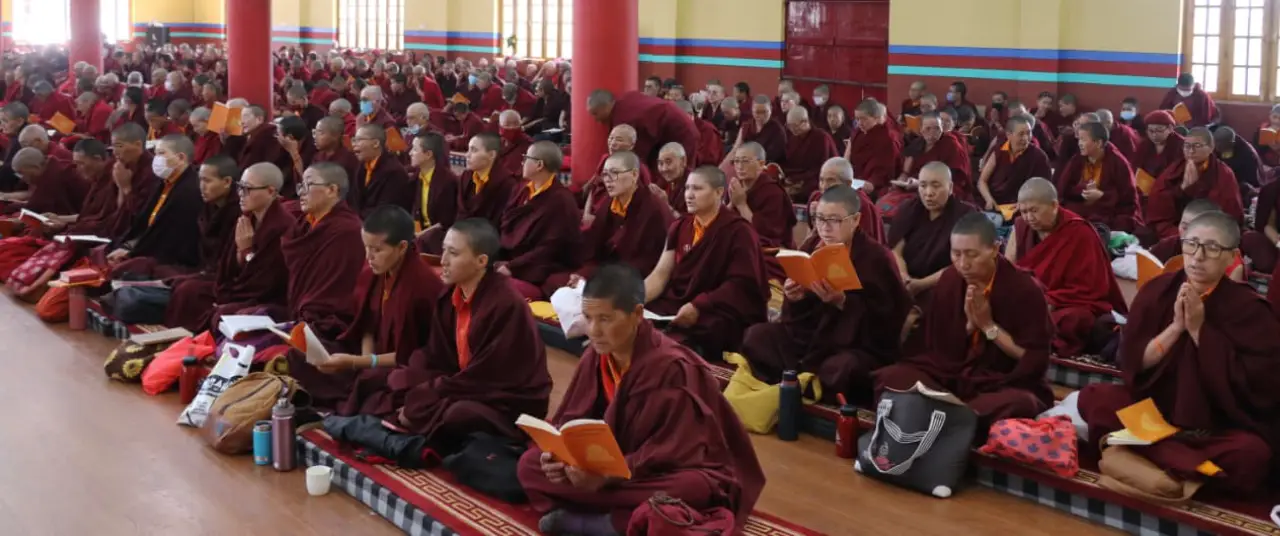
On May 22, after more than five years of street protests, hunger strikes, detentions and inconclusive meetings, the Leh Apex Body (LAB) and the Kargil Democratic Alliance (KDA) emerged from a sub-committee meeting at the Ministry of Home Affairs in New Delhi with what they described as an “in-principle understanding”, the most significant breakthrough since Ladakh was carved out of Jammu & Kashmir in August 2019. It was not a final agreement, and both sides were careful to say so, but the direction of travel was unmistakable.
The proposed framework is sweeping. Under it, Ladakh would receive a Union Territory-level elected legislature with legislative, executive and financial powers vested in elected representatives. All bureaucrats, including the Chief Secretary, would report to the elected executive head, proposed to be called the Chief Minister. That last provision is, strikingly, more than what the elected government in Jammu & Kashmir itself enjoys, where All India Services officers remain under the LG’s authority rather than the elected government.
Constitutional safeguards would be extended on the lines of Articles 371A, 371F and 371G, provisions that protect Nagaland, Sikkim and Mizoram from sweeping legislative overreach by the government if India on matters of land rights, employment and cultural identity. The MHA’s explanation for why full statehood cannot come immediately was blunt: Ladakh currently lacks adequate revenue to meet its own expenditure, including salaries. But officials assured that the new framework is designed as a pathway, “this setup will lead Ladakh towards full statehood as and when it meets the revenue criteria,” said the joint LAB-KDA statement.
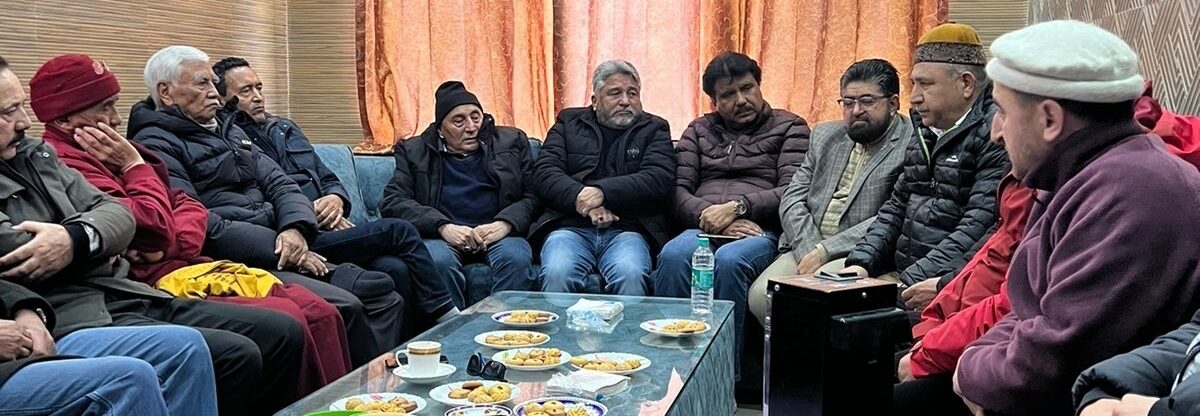
Leaders on both sides cautioned against premature celebration. KDA co-chairman Sajjad Kargili clarified two days later that no final agreement had been signed and that the government was yet to share a formal draft. Once received, it would be reviewed by legal and constitutional experts alongside full KDA and LAB leadership. “We will also assess its implications on regional balance, sensitivities, long-term safeguards and the democratic structure,” he said. “Until such a comprehensive review is undertaken, it would be prudent to avoid both unnecessary excitement and undue pessimism.”
The Struggle
Understanding why this matters requires going back to August 5, 2019, the day Jammu and Kashmir’s special status under Article 370 was abrogated, and the erstwhile state was split into two Union Territories. In Leh, the change was initially welcomed; Ladakhis had long chafed under what they saw as Kashmir’s “political dominance”, and the prospect of direct central governance seemed preferable. But within months, the reality of a UT without a legislature, governed entirely by a centrally-appointed LG, became apparent, and the mood curdled.
By 2021, the LAB and KDA, representing Leh and Kargil respectively, bridging the territory’s Buddhist and Muslim communities, concentrated in two districts with a history of mutual rivalry, and formed a joint front with four core demands: full statehood, inclusion under the Sixth Schedule for tribal protections, a separate Ladakh Public Service Commission, and two parliamentary seats. They launched protests, held marches, and knocked on ministry doors. Progress was achingly slow, and the Centre’s High-Powered Committee, led by Minister of State for Home Nityanand Rai, produced little of substance across multiple rounds of talks.
In September 2025, the pressure boiled over. Protests turned violent in Leh: four people were killed, including a Kargil war veteran, in police firing, dozens were injured, the local BJP office was set on fire, and curfew was imposed across the region. In the crackdown that followed, Wangchuk was detained under the NSA. He remained in detention for nearly six months before a Supreme Court intervention led to his release in March 2026, but even then, the trust deficit remained raw. His mobile phone, emails and digital records stayed in state custody. The land status of his Himalayan Institute of Alternatives, Ladakh (HIAL) remained under a cloud. “The government has left me half free and kept the other half in jail,” he said after his release.
The May 22 meeting was the first sub-committee-level meeting since LG Saxena took charge in March and the first since the September violence. For Wangchuk, its significance would ultimately be measured not by what was said in the room but by what happened on the ground in the weeks after. “I would like to see in the next one or two weeks whether they correct these things or not,” he said. “Only then will there be trust.”
A Watching Kashmir
The reaction in Jammu and Kashmir, a UT with full legislature but a dichotomy of power, was immediate, sharp, and, for the ruling establishment, uncomfortable. National Conference MP from Srinagar, Aga Ruhullah Mehdi, described the development as “a slap on the face” of J&K’s political leadership. A persistent internal critic of his own party, Mehdi had been asking its leadership to mount a sustained, Ladakh-style political fight for six years. “If the leadership of a small region like Ladakh can fight against the Government of India and get their rights,” he said, “there is no reason why the leadership of Kashmir could not do so.”
PDP MLA Waheed Para’s phrase cut even sharper: “What Ladakh achieved in seven years, we failed to achieve in 70.” A population of barely three lakh had moved the central government in ways that Jammu and Kashmir, with a legislature, an elected government, national party presence, and two decades of hard political experience, had not.
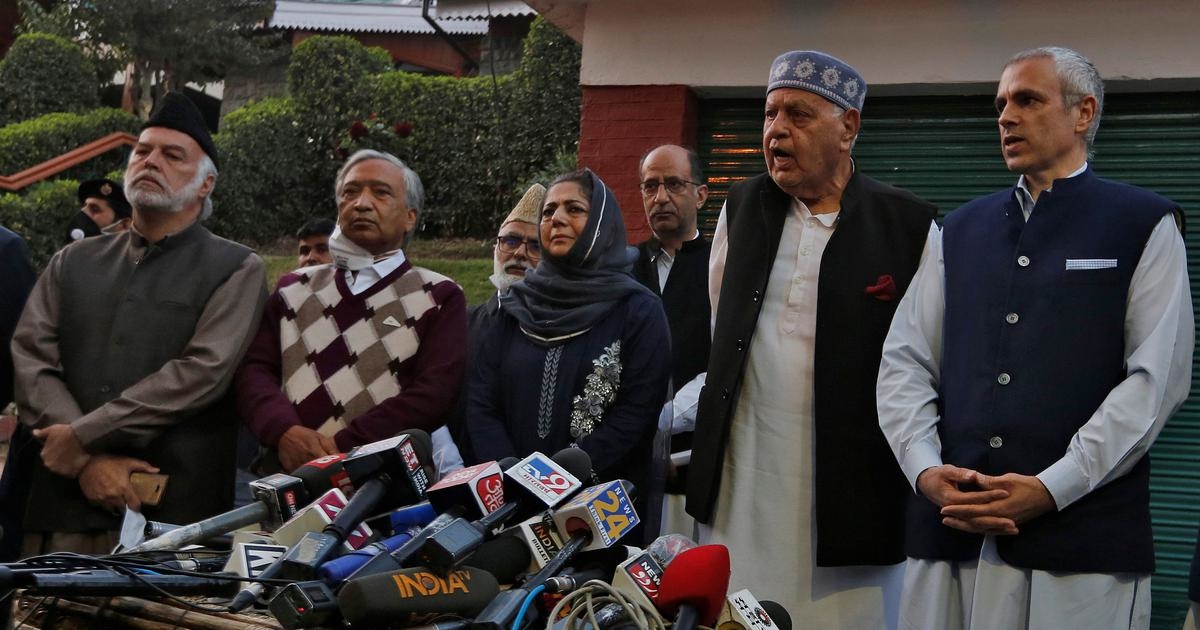
PDP president Mehbooba Mufti appealed explicitly to all parties, naming the National Conference, to unite on a single platform modelled on the Ladakh example. “The way Kargil and Leh leadership joined and fought together, we can also make similar efforts,” she said in Srinagar, adding that she had herself floated the idea of the People’s Alliance for Gupkar Declaration precisely to force the Centre into engagement.
Congress accused the central government of a “nefarious agenda” in withholding rights from Jammu and Kashmir. CPI-M legislator MY Tarigami asked the sharpest administrative question: “Leave aside statehood, they have not even approved business rules to demarcate powers for the elected government. They talked to the Ladakh leadership only after violence erupted there. Does that mean New Delhi listens once we come onto the streets?” The ruling National Conference, as well as the main opposition, maintained a pointed silence on the Ladakh deal, a silence that did not go unnoticed.
 The Ghost of Gupkar
The political debacle playing out in Kashmir has a specific, traceable backstory: the collapse of the People’s Alliance for Gupkar Declaration. Formed in the wake of August 2019 by the NC, PDP and smaller parties as a united front demanding restoration of Jammu and Kashmir’s pre-2019 status, PAGD briefly represented exactly the kind of cross-party solidarity that has made the LAB-KDA combine effective in Ladakh. It succeeded in compelling Delhi to convene an all-parties meeting with the Prime Minister. Then it fractured over seat-sharing disputes during the District Development Council elections, and has not been rebuilt since.
The contrast with Ladakh’s discipline is painful and plain. Political analyst Zafar Choudhary notes that Ladakhi political persistence has deep roots, dating to a 1950 memorandum where the region first expressed a preference for direct central governance over Srinagar’s rule. Over the following decades, it secured incremental gains: Kushak Bakula Rinpoche, a Ladakhi leader elevated to the deputy prime minister’s rank, and the eventual grant of autonomous hill council status. When it finally got UT status in 2019, it quickly assessed the limitations of the model and pivoted without abandoning the core demand for statehood. “They started deliberations, meetings and wider alliances encompassing political parties, civil society and religious bodies,” Choudhary said. “Leh and Kargil successfully shed their historical differences to forge a common front. That is one of the finest examples of political negotiation.”
In Jammu and Kashmir, Choudhary concedes, no comparable effort is underway. “Jammu & Kashmir has lost its internal autonomy. The region is too fragmented from within because of cyclical and prolonged conflict. There is no movement, no slogan.” A legislative resolution remains a formality unless backed by genuine mobilisation, and that mobilisation, bridging Jammu and Kashmir, crossing party lines, sustaining pressure over years, has not happened.
Into this charged atmosphere came a pointed intervention from an unlikely voice: Engineer Rashid, the North Kashmir MP from the Awami Ittehad Party, who shuttles between Tihar jail and the Lok Sabha floor while out on bail. When both Omar Abdullah and Mehbooba Mufti visited to condole the death of his father, he reportedly asked them directly: why could the two parties not have stayed together in the PAGD? It is the question that now hangs over Jammu and Kashmir’s entire political class.

What Comes Next
For Ladakh, the road ahead remains unfinished. The MHA is yet to share a formal draft; nomenclature, will elected members be called MLAs, or something else entirely, is undecided; the number of districts has just been raised from two to seven, adding Nubra, Sham, Changthang, Zanskar and Drass to the original Leh and Kargil, and questions of representation across the new map are still being worked through. LAB and KDA leaders have been consistent: full statehood remains the ultimate demand, and the Article 371 framework is a step toward it, not a substitute for it.
The cases against people arrested during the September 24 protests, for Wangchuk, the single most important confidence-building measure, remain pending. His mobile phone, emails and digital records are still in state custody more than two months after his release. The land status of HIAL is unresolved. “The biggest thing is what happened on September 24,” Wangchuk said after the May 22 meeting. “So many people were injured, some died, and many were charged. Will those cases be withdrawn? Only then will there be trust.”
Whether Ladakh’s model is a template or an exception, a feat made possible by specific geographic and demographic conditions that cannot be replicated in the far larger, more fractured terrain of Jammu and Kashmir, is a question valley politicians will have to answer for themselves.