SRINAGAR: Commercial activity resumed in Leh town on Wednesday evening after remaining suspended for over 35 hours due to a shutdown call by the Merchant Association Leh. The shutdown was staged in protest against the Srinagar-based Mir Sales Corporation, which local traders accused of “unfair trade practices” by selling goods at rates significantly lower than the local market.
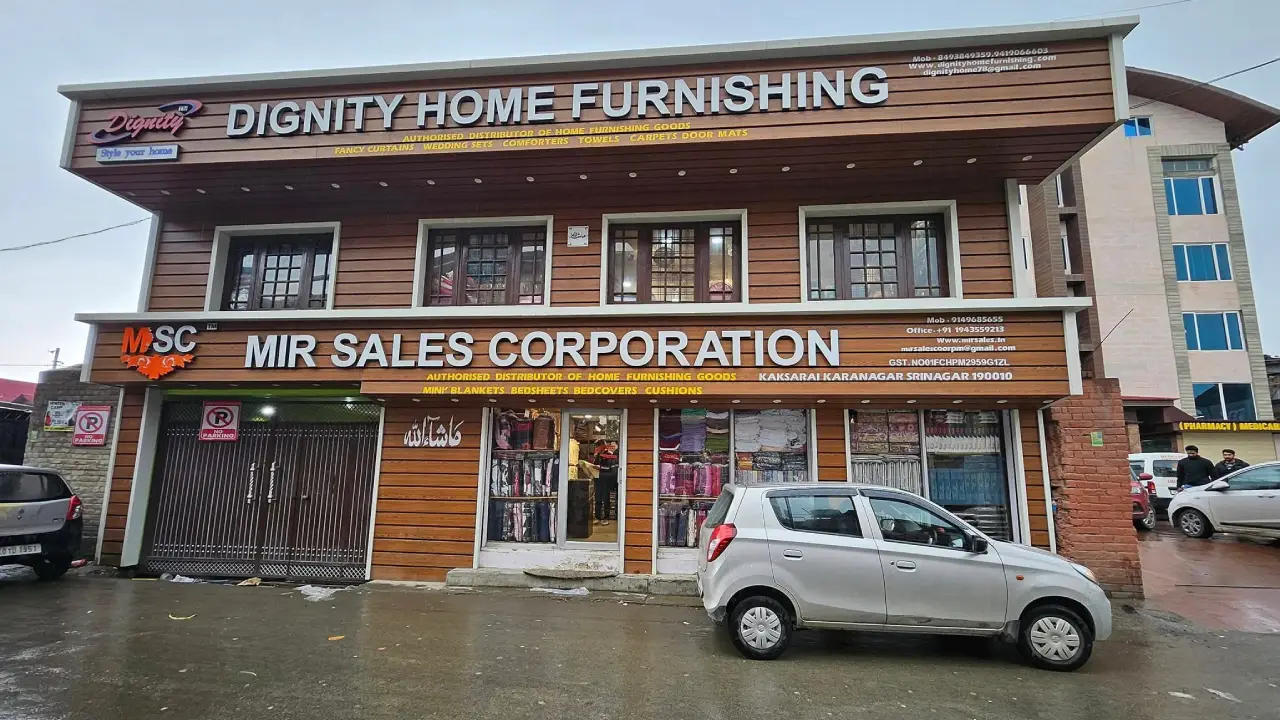
The impasse was temporarily resolved following a stakeholder meeting chaired by Chief Executive Councillor (CEC) of LAHDC Leh, Tashi Gyalson, during which it was decided that Mir Sales Corporation would temporarily suspend its retail operations for ten days, pending a formal inquiry.
President of the Merchant Association, Tsering Angchuk, said that the decision was not about local versus non-local traders, but about “safeguarding the future of small businesses in Ladakh.” He alleged that Mir Sales Corporation had caused similar disruptions in Himachal Pradesh, Kargil, and Srinagar, and referred to its pricing model as being akin to a “scam.”
At the centre of the controversy is Mir Sales Corporation, which operates seven retail counters across north India, including Leh, Srinagar, Shopian, Lal Bazar, Sopore, Kargil, and Karan Nagar, wherefrom it operates. The company officials said they have a better acceptance among low-income customers for offering affordable furnishing and utility products such as three bedsheets for Rs 200-250 and pillow covers at Rs 12, sparking concerns among local traders over its market impact.
Company promoter Tauseef Ahmad Mir told Kashmir Life, that he had full constitutional rights to conduct business anywhere in the country. “This is not about harming anyone’s livelihood; it’s about offering affordable options to poor and middle-class consumers,” he said. “We do not believe in skinning people in the name of business. We maintain thin profit margins and we aim to gain consumers, not profit.”
Mir denied allegations of malpractice. “We are ready to accept any decision the authorities deem fit. But we were not approached directly by the Association. We are open to dialogue and cooperation.” He said they do not have any outlets in Himachal Pradesh.
He stressed that competition was the essence of a healthy market economy. “Why is it a crime to sell at lower rates if it benefits the consumer? I am not here to outcompete people by force. I am here to serve.”
The standoff began earlier this week after the Merchant Association submitted a memorandum to the Additional Deputy Commissioner (ADC) Leh, demanding that Mir Sales Corporation be barred from retailing. They alleged that its pricing model was unsustainable and harmful to the fragile local economy. A similar complaint had earlier been submitted on June 28, but no formal action was taken by authorities until this week’s events.
Besides, the traders’ body called for tighter regulation of supermart chains, saying that the population of Leh does not justify the pace of retail expansion currently underway.
Despite the tensions, both sides expressed hope for a peaceful resolution. The administration has assured all parties that an investigation would be initiated and a long-term framework put in place to ensure fair competition and protection of local market dynamics.
In Kargil, where Mir Sales Corporation reportedly holds a 90 per cent market share, no such protests have occurred so far. However, the Leh episode could prompt similar scrutiny across Ladakh in the coming days.
An executive of the chain said they are a wholesale body that operates its retail chain. “We supply to market as well, and a lot of retail is purchasing from us,” the executive, who identified himself as Tabish, said.
For now, the shutters are up again, and customers are back on the streets of Leh. But the episode has triggered a deeper conversation around retail regulation, market access, and the affordability versus sustainability debate in remote economies like Ladakh’s.