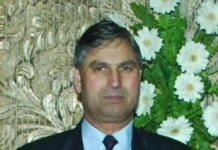
by Areesa Peerzada
He is also survived by the walls of a Shopian mosque whose foundations he bolstered, in the waters of the Dal lake that reflect the work he did in laying the foundations of the Fore Shore road, in the blessings of the Hazratbal Shrine whose dome he contributed towards, the roads that pave the way from Pahalgam to Aru, the devotion that leads up to the Amarnath caves, the legacy he left behind by serving his local mosque, the opulence of the Centaur – SKICC, SKIMS and the very gravel that builds Kashmir and for which he proudly served as the Senior Quality Monitor (SQM) even post-retirement.

Dear Papa,
I write lines and delete them. And write and delete them—knowing that words could never do justice to who you were.
It seems unreal to write “were.” I can still close my eyes and make myself believe that you are in the next room—on your bed, tinkering with the radio, coming up with the next set of rhymes to regale us.
The past few days, I have tried putting pen to paper many times, and all I could come up with were memories and voices—your face, your safari suits, that Kishtwari blanket, you waving at me when you would pick me up from school, your melodious Quran recitation, the way you would sit at the helm of your room with us kids in tow, trying to make decent gentlemen and ladies out of us.
Your arrey pagal, arrey pagal, the bitiya rani piercing through memories, the 4 boondo wala for my maths test, your singing, your inimitable ability to turn everything into a rhyme and a song. Our long discussions about religion, faith, marriage, work, and anything under the sun. Your smile and the way it would reach your eyes and light up a room, your kindness to your family and strangers alike, your undying love for food and for feeding us all, your devotion to your PMGSY model—and oh! There’s not enough paper in the world for me to write the things I—we—miss about you.
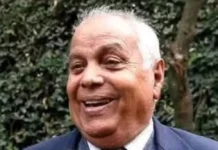
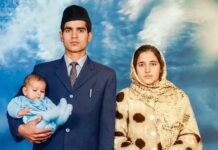
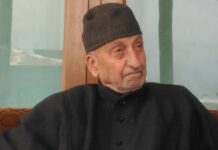
So why am I writing this here? I mean—5G connectivity in the heavens is something I have not worried about till now. I am writing this here to tell the world that in the early hours of May 22, 2024, the world lost a remarkable man, Mohammad Amin Malik, at the young age of 87.
The man who lived—and how! A man who would tell me, bitiya rani, I am still 22 in my head—and lived life—familial, professional, social, and spiritual—with the passion of one. And although you leave an irreparable void in our hearts, your wisdom, your dialogues and monikers, your spirit, and your humour live in all of us fortunate enough to know you.
And while you were a man of many talents—your greatest gift was to bring people together. The horde of the Maliks, the Mad House, your colleagues, your friends, the neighbours—anyone. You had a way of making everyone feel worthy and loved. Be it through your curiosity, your sage advice, your hearty laugh—or your keenness to ensure that everyone was well-fed and well-pooping properly. You were—nope, you ARE one of a kind, Papa.
He is survived by a devoted clan who adore him and choose to keep him alive in their hearts and stories. He is also survived by the walls of a Shopian mosque whose foundations he bolstered, in the waters of the Dal lake that reflect the work he did in laying the foundations of the Fore Shore road, in the blessings of the Hazratbal Shrine whose dome he contributed towards, the roads that pave the way from Pahalgam to Aru, the devotion that leads up to the Amarnath caves, the legacy he left behind by serving his local mosque, the opulence of the Centaur – SKICC, SKIMS and the very gravel that builds Kashmir and for which he proudly served as the Senior Quality Monitor (SQM) even post-retirement.
To those reading this note, in my Papa’s honour, I ask that you have a hearty meal, listen to songs you love, tell a story, whip up a silly rhyme, and open your heart completely to life—because that’s Papa.
And to you, Papa, in your words, “to uphold the sanity and integrity of our sentimental attachment,” let’s end this with a song you thought described your life: “Sau saal pehlay mujhay tum se pyaar tha, aaj bhi hai aur kal bhi rahega.”
(The author is a student. Ideas are personal.)