by Nazir Wani
Mir portrays creative expression as fragile but persistent. It survives in fragments, often imperilled by the very world it seeks to describe. His language is deliberate, his rhythm unforced, resisting embellishment even as it strives to preserve meaning.
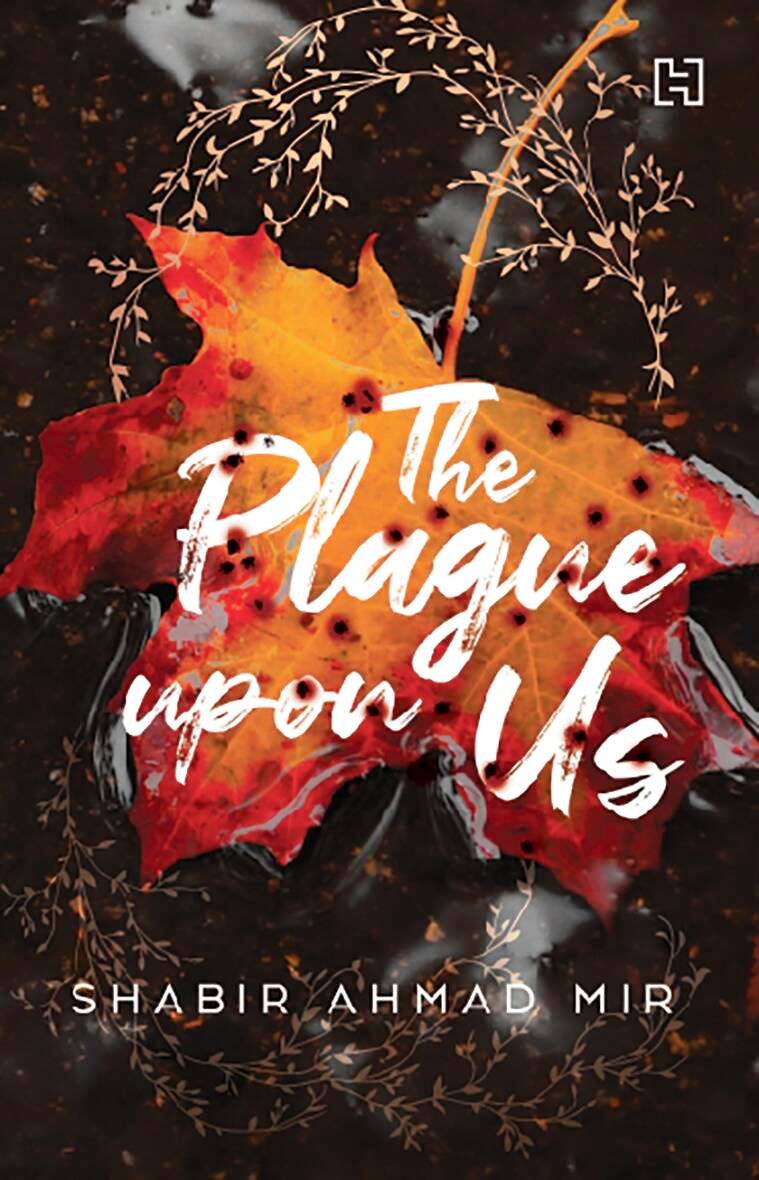
In the shadow of the Himalayas, where the wind carries remnants of unspoken histories, The Plague Upon Us by Shabir Ahmad Mir begins to unfold, not as a linear tale but as a meditation on grief, survival, and human frailty. The novel resists the comfort of a conventional narrative. Instead, it immerses the reader in a landscape shaped by conflict, where mountains are not passive backdrops but scarred witnesses. Their silence holds the weight of stories never fully told.
The novel moves through a terrain where the borders between the real and the imagined are deliberately blurred. This distortion, unsettling and persistent, mirrors the psychological disorientation of life in a region marked by prolonged unrest. What emerges is not merely a story but a troubled dream, haunting, elusive, and soaked in the melancholia of a place that is never quite at peace. The prose does not offer refuge. It exposes, in restrained yet unflinching terms, the textures of pain that inhabit Kashmir’s battered consciousness.
Aziz Pohal is drawn not by nostalgia but by instinct to the highland pastures, where nature momentarily quiets the ache of memory. The streams in spring offer him a reprieve, however brief, from the dissonance of loss. The tranquillity he seeks is not romanticised. It is provisional, always under threat. His longing is grounded in rhythm and repetition. As the season shifts, so does his need to return to the mountains, to tend his flock, to keep moving, even if nothing is ever fully left behind.
Oubaid, by contrast, lives in a suspended state of fear. His world is shaped by apprehension, and the physical spaces around him, Zaeldaer Kouet in particular, become metaphors for his inner dread. He is unnerved by the very objects that surround him. Doors, stairs, even toys lose their innocence, charged instead with latent menace. His fear is not exaggerated. It is precise, intimate, and wholly believable.
The violence in the novel arrives without prelude. It erupts, collapses, and remains. Mir’s description of the bridge scene avoids sentimentality. Victims do not have names or backstories. They are hit, injured, crying, running, bleeding, falling, dead, dying. The repetition is deliberate. It denies the reader relief and forces an encounter with the brutality in its most unadorned form. Like The Road or The Battle of Algiers, this narrative leaves no room for abstraction. The horror is immediate and bodily.
Mir’s achievement lies in how he renders this violence both collective and deeply personal. There is no escape into allegory. The narrative offers no clear moral centre. Instead, it insists on the reality of devastation, both external and internal, refusing to let the reader forget what is at stake when the human cost of war becomes just another background hum.
The novel examines relationships shaped by trauma and the weight of unspoken words. Oubaid and Sabia, reunited in college, find themselves locked in a silence that neither nostalgia nor familiarity can resolve. The awkwardness between them is immediate. Their conversations trail off into nothing, suggesting a rupture so profound that even language fails. It is as though they have never known each other. The emotional distance is heightened when Oubaid finally speaks, his words emerging slowly, as if dredged from a place untouched by human voice. His silence does not suggest absence, but rather a deep cavity where sorrow has consumed speech itself. This silence recalls the emotional absences in Beloved, where memory corrodes intimacy.
Within a social structure governed by strict codes and gendered expectations, language becomes a tool of correction. The words used to reprimand Sabia and Oubaid are not simply admonitions but declarations of order. They carry the weight of patriarchal authority and social policing. Sabia is told to behave as a girl, while Oubaid is shamed for deviating from masculine norms. The reprimands bristle under the pressure of adolescent uncertainty, delivered in a tone that reduces both characters to archetypes. In such an atmosphere, love becomes a risk, a transgression negotiated through memory and fear. The suppression of Sabia’s voice mirrors the silencing endured by the narrator in The Yellow Wallpaper, where patriarchal discipline suffocates individual will.
The plague in the novel does not merely suggest illness. It is an affliction of the collective conscience, eroding the fabric of Kashmiri life much like the invisible curse in Oedipus Rex. Mir’s metaphor extends beyond physical ailment to convey ethical decay. Characters remain unaware of their complicity and limitations until they are overwhelmed. This gradual unravelling mirrors the tragic structure of Greek drama. The futility that governs their struggle recalls the stasis of Waiting for Godot, where hope exists but never arrives, and each gesture towards change is swallowed by the absurdity of the moment. The land becomes a theatre of delay and disillusionment.
In one of the most emotionally charged moments, Maimoona confronts Oubaid. Her words are harsh, laced with shame and sorrow, yet she does not let go of her son. Her insult is matched by her embrace. The contradiction in her reaction captures the emotional entanglement that pervades the novel. It is not forgiveness, nor complete rejection. It is grief, fury, and maternal instinct entangled in a gesture that defies explanation.
Mir also explores the commodification of suffering. Hamid, despite his reluctance, finds himself implicated in a system that rewards complicity. The sneers and scowls of others linger in his memory, yet they do not stop the growth of his trade. His business flourishes, fuelled by orders that reach beyond his locality, with supplies sourced from military depots. The irony is sharp. Prosperity is drawn from the very institution that embodies repression. This dynamic is reminiscent of 1984, where power is sustained through contradiction and coercion.
At the heart of this corrupted structure lies the Centre, described in language that evokes disgust and revulsion. It is not merely administrative. It is the destination for everything discarded, unwanted, and toxic. It functions much like Room 101 in 1984, a place where personal resistance is dissolved and the machinery of control operates without scrutiny. The Centre does not simply manage. It absorbs and extinguishes. Through this metaphor, Mir articulates a vision of governance where power is absolute, and truth is endlessly reshaped.
The novel captures the slow erosion of art and beauty during prolonged unrest. Altaf Firdausi, once vibrant, begins to fade. His poetry, like the red handkerchief once bright with meaning, starts to lose colour. This decline recalls Pablo Neruda’s subdued lyricism under authoritarian rule and Salman Rushdie’s interrogation of the artist’s position during national upheaval in Midnight’s Children. Altaf’s retreat from creative expression is not an individual failure. It reflects a broader collapse of cultural life, where aesthetic pursuits are displaced by survival.
Public spaces, once animated by leisure and imagination, come under scrutiny. Cinemas are no longer centres of entertainment but are branded irreligious, even traps set by adversaries. This shift mirrors the social control in The Handmaid’s Tale, where art and pleasure are discarded under the weight of dogma. Everyday life begins to operate within new limits. Expressions of joy or spontaneity are no longer innocent. They carry risk.
Communities begin to fracture. The departure of the elder Kouls, marked by ritual farewells and hushed instructions, evokes the slow unravelling of domestic life. Their goodbyes are tinged with a quiet urgency, not unlike the tone of The Diary of Anne Frank, where exits are softened by fear. These departures are not dramatic. They are deliberate, shaped by caution and necessity.
Even soldiers are not insulated from reflection. One reflects on his posting with unexpected candour. At first, the prospect had seemed romantic. Now, that sentiment feels naïve. His internal conflict reveals the futility of idealism in wartime. It is a realisation that resembles Frederic Henry’s arc in A Farewell to Arms, where war strips individuals of illusion and sentiment, leaving behind only survival and fatigue.
The novel turns toward the structures that maintain and exploit conflict. Political figures remain shielded while others remain exposed. The word mukhbir becomes a force in itself, undefined, yet potent. It has the capacity to isolate, endanger, and annihilate. In this atmosphere, accusation alone is sufficient. The logic recalls Kafka’s The Trial, where guilt precedes evidence and innocence is irrelevant.
Towards the end, a visceral image appears. Cries pierce through a glass pane and enter the narrator’s eyes, drawing out black rain and bloody hail. The metaphor is not decorative. It is physical, invasive, and unrelenting. It captures the cost of bearing witness, the toll exacted by exposure to relentless suffering.
Mir portrays creative expression as fragile but persistent. It survives in fragments, often imperilled by the very world it seeks to describe. His language is deliberate, his rhythm unforced, resisting embellishment even as it strives to preserve meaning. The voices that disappear throughout the novel are mourned not with sentimentality, but with steadiness. The silence that follows is not empty. It is marked by loss and defiance, akin to the poetics of Agha Shahid Ali, whose work grieves what has vanished yet refuses to forget.
The Plague Upon Us resists closure. Its characters remain unsettled, and its stories linger. The novel does not offer solutions. It exposes consequences. It unsettles with both its elegance and cruelty. In doing so, it places responsibility back into the reader’s hands. Through its narrative, it documents not only the cost of war, but also the unresolved tensions of memory, blame, and endurance.
(The author is a senior lecturer in English and a gold medallist postgraduate from the University of Kashmir. He is the author of two poetry collections, ‘And the Silence Whispered’ and ‘The Chill in the Bones’, with work published in national and international journals. Ideas are personal.)