by Sri Varshith Kumar Reddy E
Seven years after Article 370’s abrogation, young people across both the Jammu and the Kashmir regions are asking a quieter question than restoration or repeal: what an elected government with real authority would actually let them build

I still remember the exact texture of that August 2019 afternoon. A group of us had just walked out of a lecture hall at Ashoka University, still adjusting to daylight, when phones began buzzing with the news. Television anchors were already celebrating.
I stood beside classmates from Jammu and Kashmir who reacted with visible anxiety, unsure what the announcement meant for their families back home. Others fell into a careful silence, absorbing news of a decision that had reshaped their homeland’s constitutional status without any consultation with the people of Jammu and Kashmir themselves.
Andhra Pradesh’s bifurcation in 2014 had already left me wary of how casually India redraws its federal architecture from above. That wariness sharpened as I listened to my classmates that afternoon.
Seven years later, those classmates have younger siblings and cousins entering universities and small businesses across both regions, a cohort building futures inside an arrangement none of them chose. The question worth asking now concerns what changes for them the day an elected government in Srinagar gains the authority of statehood.
A Government That Can Finish What It Starts
Picture a small manufacturing unit in Kathua or a tourism venture in Pahalgam seeking approval for expansion. Decisions on land, security clearance, and bureaucratic appointment currently travel through the Home Ministry before reaching the entrepreneur waiting for a signature. A restored state government answers to voters for how quickly that signature arrives, whether the voter lives in Srinagar or Samba, because its electoral survival depends on that responsiveness.
Statehood would let Jammu and Kashmir borrow against its own future the way Himachal Pradesh or Uttarakhand already do. State Development Loans would then be issued directly, rather than routed through central discretion. A road connecting Jammu’s industrial estates to the national highway network, a polytechnic college in Kashmir, a cold storage facility for horticulture grown across both regions, projects like these currently wait on sanction cycles set in Delhi. Full fiscal authority would let a local government finance them on its own calendar, tied to its own electoral promises rather than someone else’s.

The Diaspora Watching
A significant share of this generation’s most talented members have already left both regions, studying in Delhi, Bengaluru, and further abroad, sending remittances home while watching the statehood debate unfold from a distance. Students and young professionals from Jammu and Kashmir have scattered across Indian metros and Gulf cities. They represent a pool of capital, skill, and political voice that an empowered state government could actively court, the way Kerala and Punjab have built formal diaspora investment and return migration channels over decades.
A Union Territory administration lacks the fiscal and policy autonomy to offer this diaspora anything more durable than a goodwill visit or a startup conclave. A state government designing its own NRI investment window, diaspora bond, or return migration incentive for skilled professionals would convert scattered goodwill into structured capital.
The Youth Choices
Jammu and Kashmir held its first assembly election in a decade in October 2024. Overall turnout reached 63.88 per cent, touching nearly 70 per cent in the final phase across parts of both regions, a figure unthinkable during the years of boycott calls that once defined Valley elections. That turnout also surpassed the 58.58 per cent recorded in the Lok Sabha polls held the same year, evidence that participation rose specifically when the ballot carried the promise of a local, responsive government. Young voters chose participation inside a diminished Union Territory over abstention from the system altogether, calculating that a limited voice still carried more value than none.
Legislators from Jammu have echoed that calculation directly. MLA Sunil Bhardwaj told reporters in February 2026 that restoration of statehood is a genuine demand of the youth of Jammu and Kashmir, urging the Centre to take early steps toward fulfilling a long-standing promise.
Dr Farooq Abdullah’s July 2026 letter went further still. Addressed to more than fifty political leaders across party lines, including Sonia Gandhi, Mallikarjun Kharge, and Mirwaiz Umar Farooq, it called the continued delay in restoring statehood unconscionable. The letter invited a cross-section of Indian politics to join a protest at Jantar Mantar on the opening day of Parliament’s monsoon session. That protest, which followed on July 20, drew much of its energy from this younger constituency translating votes into sustained public pressure.
Three Mechanisms Worth Legislating
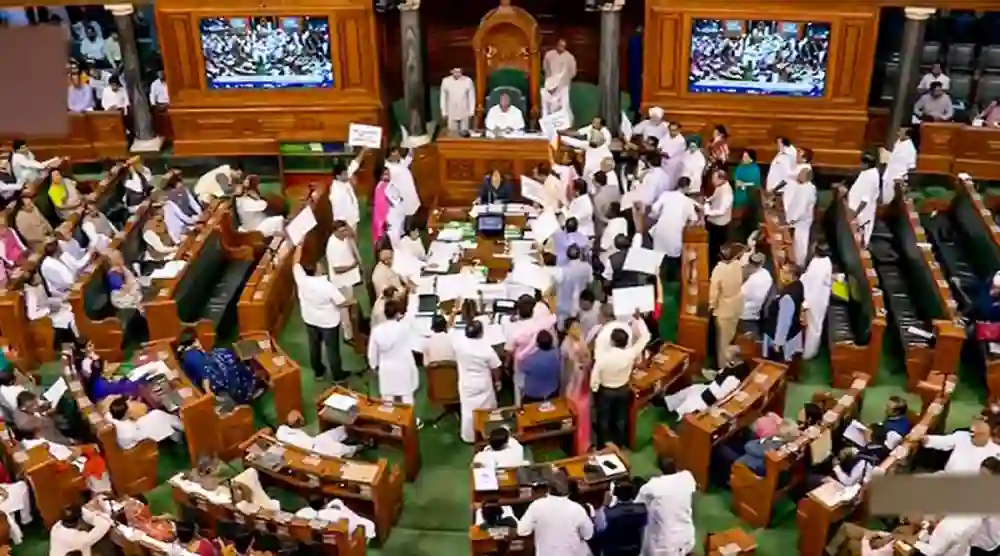
First, the Supreme Court directed in December 2023 that statehood be restored at the earliest, a phrase this generation has taken more literally than the government that received it. Two and a half years later, no compliance mechanism tracks that directive. A standing compliance bench, a model already used in environmental and prison reform litigation, could require quarterly status reports filed directly to the Court. This would give the demand a permanent institutional address rather than leaving it dependent on periodic protest.
Second, Parliament could separately legislate a sunset clause, amending the Reorganisation Act so that Union Territory status triggers an automatic statehood transition process on a fixed date. This draws on a legislative device India has used before, in contexts ranging from anti-terror law to tax policy. The clause would need to pair its expiry date with a pre-built transition framework, specifying which administrative powers revert to the state government and on what timeline. A fixed date compels action only if the machinery to receive that transition already exists. The core shift would still hold. The burden of proof would move from the region proving readiness to the Centre justifying continued delay, publicly, on the floor of Parliament, rather than through informal reassurance offered whenever convenient.
A third step could bypass the statehood question entirely. The Centre could pilot a graduated devolution model, transferring specific powers on a fixed timetable ahead of full statehood. Market borrowing authority, industrial land clearances, and diaspora investment policy could each move on that timetable, with measurable outcomes triggering each transfer. Such a model would give young people in both Jammu and Kashmir a visible, trackable roadmap rather than an indefinite wait.
Returning to That Room
That afternoon at Ashoka has stayed with me for a reason. The classmates beside me that day, from both Jammu and Kashmir, now watch a younger generation come of age inside the very arrangement that once left them anxious. Their worry in 2019 has become deliberate political participation by 2026, ballots cast, letters written across party lines, protests organized with clear demands attached, regardless of which side of the Pir Panchal they call home.
Jawaharlal Nehru told the Lok Sabha in 1952 that the ultimate decision on Kashmir would rest in the minds and hearts of its people, not in Parliament or any legislative chamber. What those minds and hearts want today, in Jammu as much as in Kashmir, is a government capable of finishing what it starts and a diaspora invited to invest rather than merely visit. Statehood would hand this generation the tools to build that future, and let the building finally belong to them.
Some generations inherit answers. This one is building its own.
(The author is a pracademic working on government policy and public institutions. Ideas are personal.)