SRINAGAR: Former IAS officer Kanan Gopinathan has said his decision to resign from the civil services following the abrogation of Article 370 was driven less by a desire to “stand up for Kashmiris” and more by his belief that the Indian state had failed to uphold the constitutional rights of its citizens.
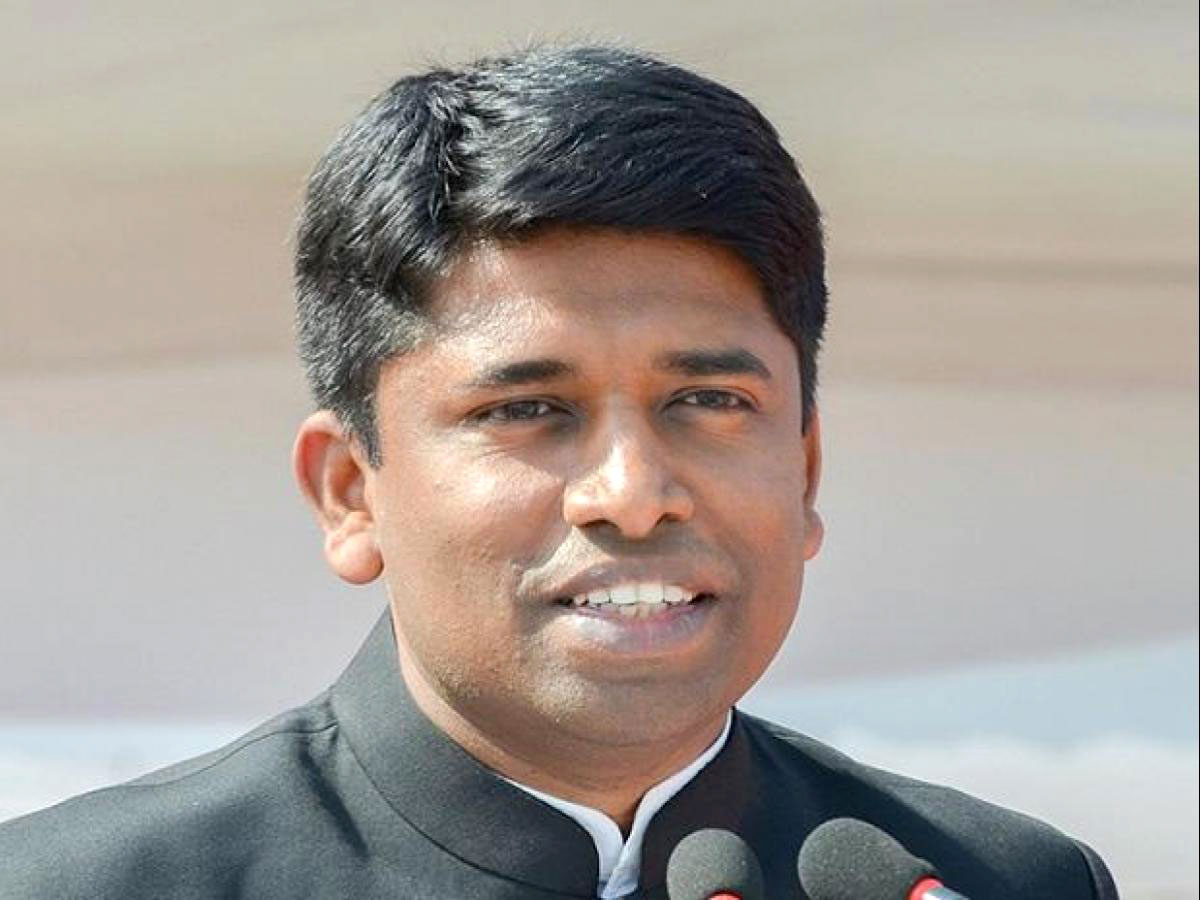
Speaking to journalist Arfa Khanum Sherwani, Gopinathan said the issue for him was not whether the government had the right to take a political decision on Jammu and Kashmir, but whether citizens retained the right to respond to that decision.
“An elected government has every right to make a decision,” Gopinathan said, adding that citizens had an equal right to express whether they supported or opposed it, protest or otherwise respond.
“But in Kashmir, we decided: ‘We have made a decision, now everyone shut up. No one has the right to speak,’” he said.
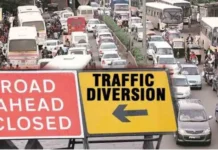
Gopinathan, who resigned from the IAS in August 2019, said what troubled him most was the manner in which the decision was implemented in Kashmir. He pointed to the shutdown of communications and transport and the detention of political leaders, while public messaging suggested that the situation was normal.
“The media was showing that people there were distributing sweets,” he said, while he and his former batchmates posted in Kashmir were discussing in private WhatsApp groups what they believed was happening on the ground. “All transport was shut down, all communications were cut, no mobile phones, no internet, and all political leaders were put in jail,” he said.
Sherwani, who was reporting from Kashmir during the first week of the August 2019 lockdown, corroborated the account during the conversation. She said she spent a week in Kashmir without her family or office knowing whether she was safe.
She recalled that there was virtually no communication with the outside world and said that, at one hotel where foreign journalists were staying, a single landline was among the few functioning means of communication.
Gopinathan said his concern arose from what he regarded as a failure of India’s democratic checks and balances. The executive, he said, naturally seeks to expand its power, but in a democracy the judiciary, media and civil society are expected to restrain such excesses.
“In Kashmir,” he said, “we saw all these institutions looking away, claiming it was in the ‘national interest’.”
He argued that the extraordinary restrictions imposed on Kashmir raised a fundamental constitutional question. If the situation was serious enough to require the suspension of communication, movement and rights for months, he said, the government should have invoked the constitutional mechanism applicable to an emergency rather than relying on repeated orders under Section 144.
Gopinathan said the episode also exposed what he described as a deeper change in the understanding of citizenship. Drawing on his experience as a civil servant, he said governments increasingly appeared to define governance in terms of delivering services while discouraging citizens from questioning authority.
“If a toilet is built and there is no water, you have no right to ask why,” he said, describing the emerging philosophy as one that preferred “subjects” over citizens.
For Gopinathan, the transition from subject to citizen was central to India’s freedom struggle. “For the first time, during the freedom struggle, we were taught that we have the right to question those in power,” he said.
He said the danger was particularly visible in the way dissent could be labelled anti-national. “When anyone who asks a question is labelled anti-national, you are seen as an obstacle to their goals,” he said.
Gopinathan also rejected the argument that the abrogation of Article 370 could be justified as a means of ending terrorism. “We claimed that removing Article 370 would end terrorism, as if terrorists read the Constitution first,” he said.
He said the larger question was whether the Indian state could claim to integrate people while simultaneously violating their rights.
“If you want to integrate people and make them feel a part of the nation, how can you do that by hurting, bullying and violating their rights, while simultaneously claiming everything is normal?” he asked.
Gopinathan said he had subsequently spoken to Kashmiris who told him that, as someone from outside the region, he did not fully understand Kashmir and should stay out of its affairs. He said he respected that view but maintained that his intervention had been about India’s constitutional commitment.
“Whom were we fooling?” he asked. “If they are citizens—whether they are from Mizoram, Arunachal, Kashmir, Kerala, or anywhere else—their rights flow from the same Constitution.”
Explaining why he chose resignation rather than remaining within the bureaucracy, Gopinathan said speaking publicly while serving as an IAS officer would have violated service conduct rules and could have resulted in disciplinary action or punitive transfers.
He recalled that when he began raising his concerns in internal groups, senior officers told him: “Kanan, don’t write all this nonsense. Learn to keep quiet.”
That, he said, forced him to confront whether he should remain silent until retirement.
“Should I wait 60 years until retirement to speak up about what I believe is right or wrong?” he asked.
A friend subsequently challenged him to do more than complain privately. Gopinathan said he took the remark seriously and concluded that resignation was the most appropriate way to express dissent.
“When the voices of the citizens are silenced—when you cut off their communication networks, transport, and lock them down—then someone else has to speak for them,” he said. “I felt that submitting my resignation was the most decent way to express my dissent.”
Gopinathan said he had no elaborate plan for life after the IAS. He and his wife calculated that he could survive by tutoring UPSC aspirants if necessary. He recalled being told that the media would forget him within half an hour.
His response at the time, he said, was that even half an hour of public discussion about what he regarded as a constitutional crisis would have been worthwhile.
The former bureaucrat has since moved into public activism and politics, joining the Congress after years of travelling across the country and speaking about civil liberties and the Constitution.
But Kashmir remains central to the political journey that began with his resignation. Looking back, Gopinathan said his stand was ultimately a test of whether Indians themselves believed in the constitutional protections they claimed to uphold.
“My concern was about how seriously we take our own Constitution,” he said. “Do we actually believe in it?”