SRINAGAR: At least nine people, including a police officer and a paramilitary personnel, were killed in fresh clashes between security forces and protesters in Pakistan-occupied Kashmir (PoK), as unrest over political representation intensified ahead of the July 27 legislative elections.
The violence erupted on Tuesday in the Poonch region, where supporters of the banned Jammu Kashmir Joint Awami Action Committee (JAAC) confronted security forces during an operation to clear road blockades that have disrupted transport and supplies for weeks.
According to officials quoted by Reuters, six protesters and a police officer were killed in Tararkhal, while another protester and a security official died in a separate confrontation in Rawalakot. Authorities said security personnel acted in self-defence after protesters attacked a security convoy with stones and gunfire.
Al Jazeera, citing local officials, reported that security forces had also raided a house near Rawalakot following intelligence about a cache of weapons, where an officer was killed in an exchange of fire. The broadcaster said at least 28 people have now been killed since the latest wave of protests began in early June.
The JAAC, which was declared a banned organisation under Pakistan’s anti-terrorism laws on June 5, has been leading protests against the constitutional arrangement that reserves 12 seats in the PoK Legislative Assembly for Kashmiri refugees living elsewhere in Pakistan.
The group argues that the reserved seats allow Pakistan-based political parties to shape the composition of the regional assembly while weakening the political voice of residents of PoK. It also alleges that development funds intended for the region are diverted through this system.
The controversy intensified after the Supreme Court of Pakistan-administered Kashmir ruled last month that the refugee seats are constitutionally protected and cannot be abolished without a constitutional amendment, effectively rejecting the JAAC’s central demand.
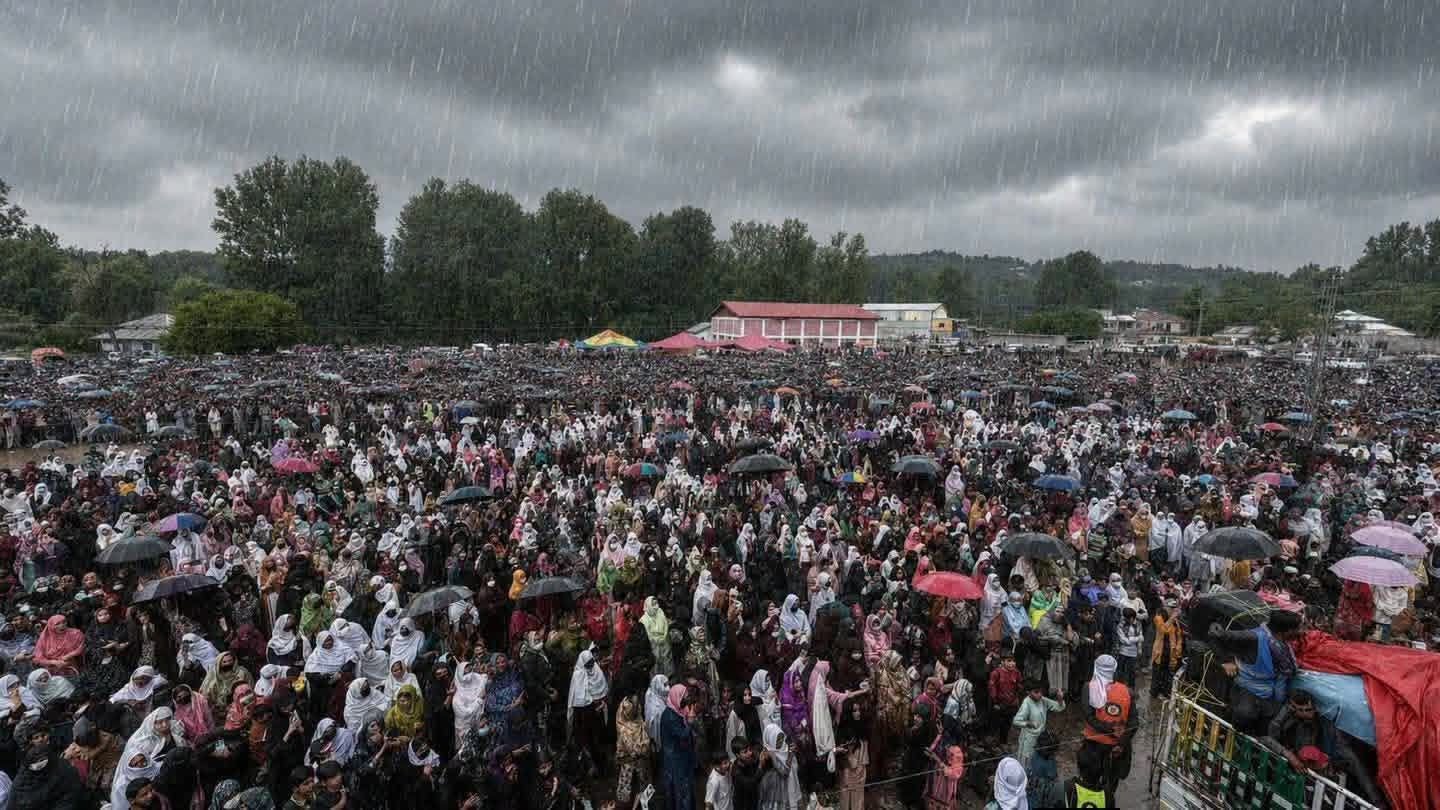
Despite the ban and a heavy security deployment, thousands of JAAC supporters gathered in Rawalakot on Wednesday, intending to march towards Muzaffarabad, the region’s capital. However, the march was delayed amid tight security restrictions and widespread disruption of internet and mobile phone services.
Al Jazeera quoted Inspector General of Police Liaqat Ali Malik as saying that between 3,000 and 4,000 protesters remained assembled in Rawalakot, although no fresh violence was reported on Wednesday. Authorities have deployed about 4,000 police and paramilitary personnel across the region to prevent marchers from reaching Muzaffarabad.
Officials said the protesters would not be allowed to proceed on the main highway and, if they continued, would have to take mountain routes.
The Associated Press reported that Pakistani authorities had launched a region-wide operation to reopen roads blocked by JAAC supporters for nearly a month. Officials said prolonged road closures had led to shortages of food, medicines and transport services in several areas.
Regional Home Secretary Chaudhry Guftar Hussain accused armed members of the banned organisation of opening indiscriminate fire on security personnel, resulting in the death of a police officer. The JAAC has rejected allegations of terrorism, describing the ban as political repression and insisting that its movement seeks constitutional, political and economic reforms.
Agence France-Presse reported that authorities have sealed the group’s headquarters and arrested hundreds of its supporters since the ban was imposed. Shops remained largely closed and public transport suspended across parts of Poonch as protesters continued road blockades.
The latest unrest follows another wave of violent protests in September last year that left nine people dead. According to official figures cited by AFP, at least 22 people were killed during clashes immediately after the JAAC was outlawed in June. With Tuesday’s deaths, the toll since the current agitation began has risen to nearly 30, according to official estimates cited by Reuters and Al Jazeera.
The protests have erupted at a politically sensitive time, with elections to the PoK Legislative Assembly scheduled for July 27. The dispute over the reserved refugee seats has become one of the central issues dominating the election campaign, exposing growing discontent over governance and political representation in the region.