A decade’s delay for Omar Abdullah to return to CM’s Office is slightly a smaller issue than the skirted and shrunken space that his office has in the new Naya Kashmir that August 5, 2019, created. Syed Shadab Ali Gillani reports about the decision-making in the about-three-fortnight government running with a bonsai cabinet

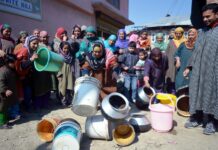
Sworn in as the first Chief Minister of the Union Territory of Jammu and Kashmir on October 16, symbolic gestures and pragmatic negotiations marked Omar Abdullah’s early days in office. During the nearly three fortnights in office, he ordered an end to VIP “green corridors” for his movement, shouted in Delhi over the loss that Kashmir suffered owing to the Indus Water Treaty and attempted to address the acute power shortages that plagued the region during winters.
Given that he is in the ‘honeymoon period,’ even his rivals are not very harsh about the net delivery that they were expecting. The new government, with limited shoulders to cry upon, is still assessing what to do and how, and before that, they need to assess the changes that the post-2019 period has brought.
The Resolution
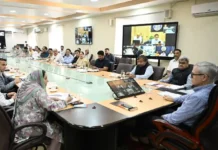
Two things were politically in huge demand for the JKNC government – formally demanding the restoration of the state status to Jammu and Kashmir; and formally rejecting the August 5, 2019 decision-making. A formal resolution was adopted by the Jammu and Kashmir bonsai cabinet in its first meeting. It was sent to the LG Manoj Sinha for mandatory approval and then Omar Abdullah flew it personally and handed it over to the Prime Minister.
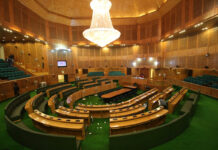
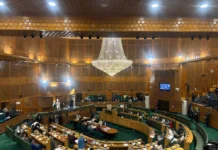
Later, as the assembly was convened for the first time, Deputy Chief Minister Surinder Choudhary presented the motion, calling for constitutional safeguards to preserve the region’s unique identity and urging dialogue between the Centre and elected representatives. This political resolution put on record the “concern” of Jammu and Kashmir over what it was subjected to on August 5, 2019 and the subsequent days.
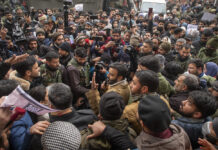
The resolution has sparked widespread discussions and brought the issue to the forefront of political discourse. Prime Minister Narendra Modi highlighting the resolution throughout his campaign for Maharashtra polls, along with the BJP lawmakers being dragged out of the assembly hall, is being seen as the resolution acknowledgement.
It ignited a fierce political debate. At the centre of the controversy was the resolution’s interpretation and its implications for the restoration of Article 370 and Jammu and Kashmir’s special status. Political parties, leaders, and stakeholders have offered varying perspectives, with some questioning the resolution’s motivations and its potential impact on the region’s future.
Congress leaders, including JKPCC chief Tariq Hamid Karra, asserted the resolution does not explicitly advocate for restoring Article 370 as his party’s focus remains on statehood, with safeguards for land, jobs, and natural resources. Congress president Mallikarjun Kharge, Karra said the Supreme Court’s consideration of Article 370 has made statehood the most pragmatic demand. The Congress leaders were responding to a hi-pitch BJP campaign in Maharashtra envisaging its leaders accusing the party of conspiring t bring the binned law back.
“If the BJP believes the matter is settled, as its leaders claim, they should stop raising it during elections,” Karra said, arguing that the party’s repeated references to Article 370 reflect a continued strategy of electoral exploitation.
In Srinagar, however, Ruhullah criticised the Congress for its (mis)interpretation of the resolution, which, according to him calls for reversing all constitutional amendments made between 1953 and 2019, including the abrogation of Articles 370 and 35A. He sees the resolution as an expression of the public’s disapproval of these constitutional changes and a demand for the restoration of Jammu and Kashmir’s pre-1953 special status.
JKNC rival People’s Democratic Party (PDP) president Mehbooba Mufti pointed out the ‘ambiguity’ in the resolution, asserting it fell short of explicitly condemning the abrogation of Article 370. She called it “a surrender”. Parra highlighted apparent contradictions within the JKNC, noting that the Deputy Chief Minister, who introduced the resolution, had explicitly delinked it from Article 370. He accused the ruling party of misleading the public and engaging in “double-talk.”
Sajad Lone of the People’s Conference is on the same page. Lone argued that the resolution did not explicitly condemn the decision of August 5, 2019, or call for the reinstatement of Articles 370 and 35A. He alleged that the ambiguity was intentional, designed to minimise political risks while appeasing diverse constituencies. He sees it as a “fixed match”.
Dr Haseeb A Drabu, a former minister, in an article, provided an intriguing perspective, noting parallels with past agreements. “Interestingly,” he said, “the same lexicon was signed off by the People’s Democratic Party in its Agenda of Alliance with the BJP. The publicly available document reads, ‘…the present position will be maintained on all the constitutional provisions about J&K, including the special status in the Constitution of India.’ There was no mention of Articles 370 or 35A. It is curious that they now find this terminology weak, vague, and compromised.”
The controversy surrounding the resolution highlights the complexities of Jammu and Kashmir’s political landscape. The alliance between the National Conference (NC) and Congress, despite a shared opposition to the BJP, is marked by internal divisions on pivotal issues such as Article 370. Opposition parties, including the People’s Democratic Party (PDP) and the People’s Conference (PC), have seized on these contradictions to question the alliance’s coherence and credibility. On its part, BJP has used the debate to underscore what it describes as Congress’s inconsistency on Article 370, portraying the issue as resolved and attempting to frame calls for its reinstatement as outdated.
Accessible Governance
In a move aimed at fostering accessible governance, Omar Abdullah has transformed his Srinagar residence into a public grievance office. Senior officials now oversee citizen complaints from the premises, while Abdullah has committed to meeting residents on designated days to ensure greater accountability.
Among the new government’s key decisions was the reversal of the academic calendar, a change widely welcomed across Jammu Kashmir. The shift realigns the school year with the region’s unique climatic conditions. While the change was effected till Class-IX, Education Minister Sakina Itoo announced Classes 10 to 12, will get the status quo ante next year.
“This year, examinations for Classes 1 to 9 will be held before the winter break,” Itoo said, adding that logistical challenges prevented an immediate adjustment for higher classes.
Besides, the government has raised the upper age limit for Combined Competitive Exams from 30 to 35 years for open merit candidates. Relaxations have also been granted to reserved categories and persons with disabilities, reflecting the administration’s efforts to address longstanding demands for inclusivity in recruitment policies.
First Month
Insiders in the government suggest that there are several initiatives on which work has started but the outcome and the final decision may take a bit of time. They also admit that Omar’s decision to work in cooperation with the Raj Bhawan is not merely a statement but a reality and it might slow down certain things till the processes pick up the speed.
Omar government has announced plans to enact the Jammu and Kashmir Youth Employment Generation Act within three months. The proposed legislation aims to fill government vacancies within 180 days and create sustainable job opportunities for the region’s youth.
In anticipation of drafting the budget for fiscal 2025-26, for which the preliminary discussions are starting shortly, Omar had an interaction with Finance Minister Nirmala Sitharaman in which he requested an additional resource of Rs 6,000 crore to address fiscal shortfalls in the current fiscal.
Omar’s rivals admit a month is too early to pass a verdict. “Omar Abdullah’s government cannot be judged in one month. We must be fair and give them a year to assess their performance,” PDP leader and lawmaker Waheed Parra said. However, he noted areas where he perceived policy shifts, including approaches to Article 370, the reservation policy, the Public Safety Act, and the release of political prisoners.
Reservation Policy
Omar Abdullah in his second cabinet meeting (his first in Jammu) on November 22, announced the formation of a sub-committee to reassess the region’s reservation policy that can address widespread concerns about perceived disparities in job quotas. Javed Rana, senior minister and Pahari leader confirmed the decision, emphasising the administration’s commitment to an inclusive approach and setting a 100-day deadline to implement key electoral promises, including reservation reforms.
The issue has emerged as a top priority subject because a massive crisis is visible on the ground owing to the unfair reservations. JKNC leader and MP Agha Ruhullah Mehdi highlighted alarming statistics, noting that only 26 per cent of jobs are currently allocated to the open merit category, despite it representing 70 per cent of the population. A Twitter post read: “Out of 575 lecturer posts referred to JKPSC for recruitment, only 238 are for open merit students, while 337 are reserved.”

The Spokesman Speaks
JKNC’s Tanvir Sadiq defended the government’s record, highlighting its early achievements. “Within a month of taking office, our government has delivered on four key promises, setting a strong tone for progress,” Sadiq said. He outlined these as passing the special status resolution in the assembly with majority support; approving the restoration of statehood in the cabinet and presenting it positively to the Prime Minister; reinstating the November academic session for students; and relaxing the age limits for competitive exams to address public demands.
Sadiq affirmed the government’s commitment to fulfilling its 12 guarantees and 26 manifesto pledges within its five-year term. He acknowledged ongoing challenges, such as electricity shortages and ration distribution, but insisted these issues were being addressed. “This is just the beginning,” he said, emphasising a focus on development, inclusivity, and resolving public grievances.