SRINAGAR: The National Green Tribunal (NGT) has been informed of extensive riverbed mining activities in Sukhnag Nallah of Budgam district, with an inspection panel highlighting severe ecological concerns linked to the large-scale extraction of minerals from the water body.
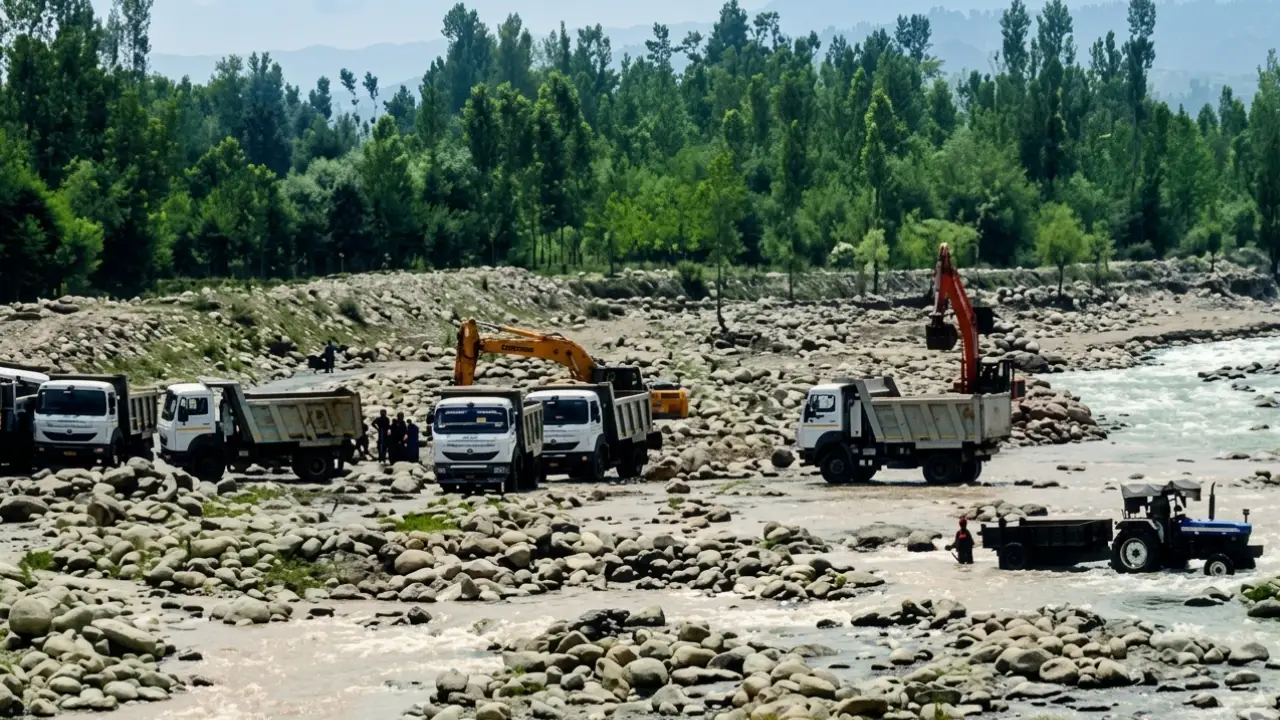
A joint team, tasked with examining the situation, carried out a field visit in March and found evidence suggesting substantial excavation within the river channel and nearby areas. The observations were later submitted before the NGT by the Jammu and Kashmir Pollution Control Committee (JKPCC).
According to the findings, the affected stretch showed signs of heavy alteration to the natural river course, raising concerns about the long-term impact on the local environment and river health. Protective structures exist along parts of the nallah, but investigators noted that extraction activities appear to have significantly disturbed the riverbed.
The survey covered a section upstream of Sail Bridge, where officials recorded widespread excavation across a considerable area. Based on field assessments, the quantity of material removed from the site was estimated to be in the range of over one million tonnes.
The panel has cautioned that unchecked mining in the river ecosystem could have serious environmental consequences and stressed the need for stricter monitoring and regulatory enforcement to safeguard the water body.
The committee stated that the large-scale mining activity has drastically altered the natural morphology of Sukhnag Nallah and affected the underlying aquifer systems. “The absence of scientific assessment, coupled with violations of prescribed environmental safeguards, pointed towards serious institutional and regulatory failures,” it observed. The report warned that the environmental damage could have far-reaching consequences for the river ecosystem, groundwater resources and the fisheries sector.
During the inspection, officials identified two major excavation pits within the river channel. One pit was spread over nearly 799 square metres with an average depth of 2.84 metres, while a second pit covered about 620 square metres and reached an average depth of 4.42 metres. The committee described the latter as a matter of grave concern, noting that excavation had extended below the active riverbed into the alluvial aquifer zone, increasing the risk of permanent hydrogeological damage.
The report also highlighted several procedural lapses and alleged violations of environmental norms. It noted that safeguards and directions issued by the Ministry of Environment, Forest and Climate Change (MoEF and CC) through various Office Memorandums in August 2022, July 2023 and August 2023 were not adequately followed while granting permissions and issuing challans for extraction activities.
Further, the committee observed that project proponents failed to notify the Jammu and Kashmir Pollution Control Committee at least 14 days before the commencement of mining operations, a mandatory requirement under existing environmental regulations.
A major concern flagged by the panel was the absence of replenishment studies in Sukhnag Nallah between 2020 and 2024. Such studies are considered essential for assessing the sustainable availability of riverbed material and preventing over-extraction. Despite this, permissions were reportedly issued for the excavation of nearly five lakh metric tonnes of material without preparing a Detailed Project Report (DPR) or undertaking scientific modelling in line with the National Framework for Sediment Management.
According to information furnished by the District Mineral Officer, permissions for the extraction of around 6,32,940 tonnes of riverbed material were granted through various permits between 2020 and 2024. Of the total quantity approved, approximately 4,85,794 tonnes—nearly 77 per cent—were allotted to M/s NKC Projects.
The committee maintained that the findings indicate widespread environmental concerns and stressed the need for strict regulatory oversight, scientific assessment and compliance with sustainable mining practices to prevent further degradation of the river ecosystem.
The committee also assessed the impact of mining activities on local trout farming and inspected the trout farm owned by Peerzada Rayees. During the visit, officials noted allegations that illegal extraction of riverbed material had disrupted and diverted the water supply to the farm during night hours, resulting in significant losses. According to the assessment, nearly 2,000 trout fish were lost, with the total biomass loss estimated at around 600 kilograms. The financial impact was calculated at approximately Rs 13 lakh based on the prevailing market rate of Rs 500 per kilogram.
In view of the findings, the committee recommended an immediate halt to all mining operations within a five-kilometre stretch both upstream and downstream of Sail Bridge extending up to Beerwah town, an area identified as part of the designated trout zone.
The panel further called for strict enforcement of the Sustainable Sand Mining Management Guidelines and suggested the installation of CCTV cameras and surveillance systems at vulnerable mining locations to check illegal extraction.
Other recommendations include restoration of damaged riverbeds, filling of deep excavation pits, rehabilitation of aquatic and fish habitats, restocking of trout populations and regular inspections by a dedicated monitoring task force to ensure compliance and prevent further environmental damage. (KNO)