SRINAGAR: In a historic appointment that reflects both continuity and quiet transformation within the world’s most valuable tech company, Apple Inc. has named Indian-origin technocrat Sabih Khan as its new Chief Operating Officer (COO). The move not only marks a shift in the leadership structure of Apple—where Khan will step into the shoes of long-serving COO Jeff Williams, but also carries immense symbolic weight for many, as Khan becomes one of the most prominent Indian Muslim executives in the global tech landscape.
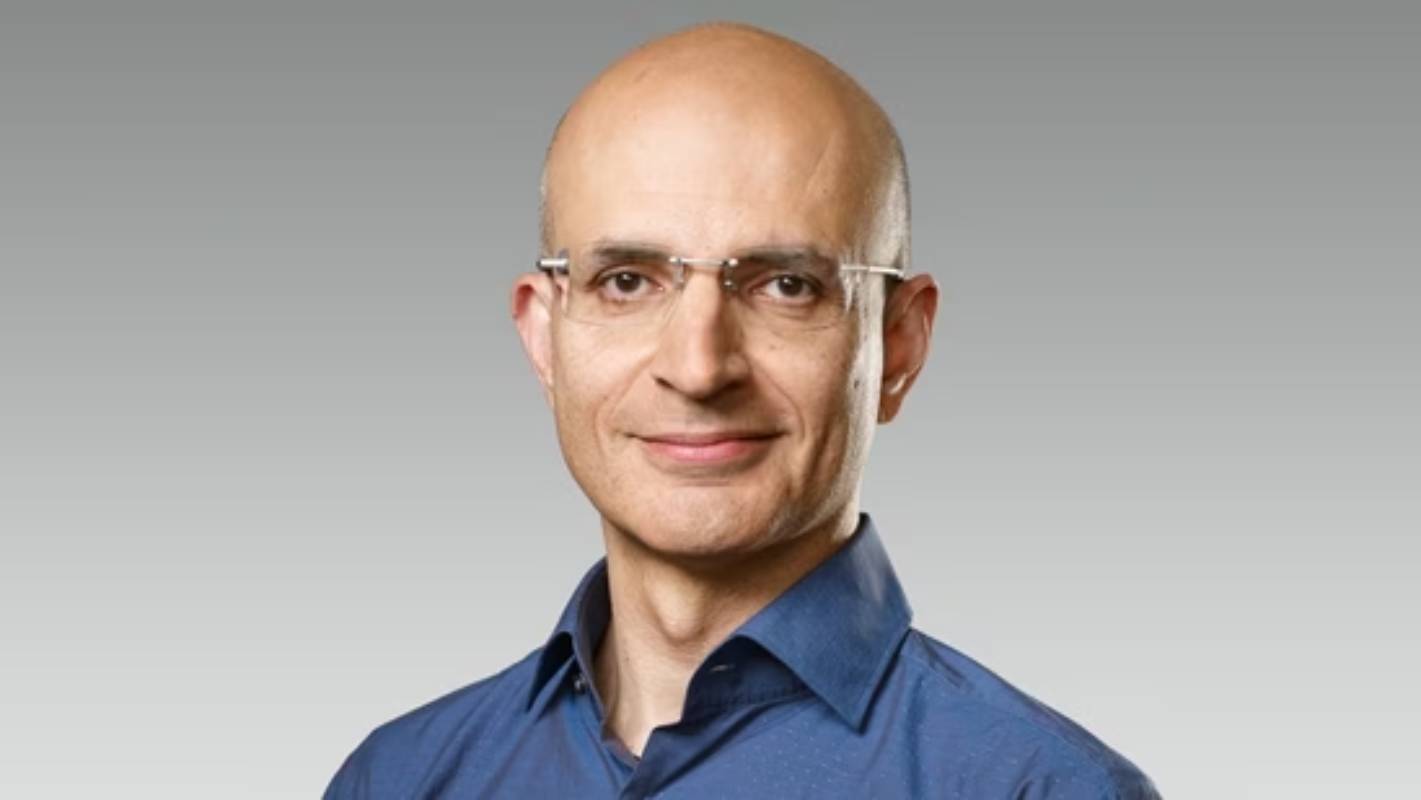
Sabih Khan’s story begins in 1966 in Moradabad, a city in western Uttar Pradesh, India, better known for its brassware industry than for Silicon Valley connections. Born into a traditional Indian Muslim family, Khan’s early years were rooted in the social fabric of small-town India. At the age of ten, his family relocated to Singapore, a move that opened doors to a different kind of education and international exposure.
Khan pursued dual degrees in economics and mechanical engineering at Tufts University in the United States—an unusual combination that would later help him bridge the worlds of finance and engineering. He went on to earn a master’s degree in mechanical engineering from Rensselaer Polytechnic Institute, laying the technical foundation for a long and transformative career.
Before joining Apple, Khan worked at GE Plastics (now SABIC) as an applications development engineer and key account technical leader. He joined Apple’s procurement division in 1995, when the company was still years away from the iPhone revolution. Over the next three decades, Khan quietly rose through the ranks, eventually being appointed Senior Vice President of Operations in 2019.
It was in this role that Khan came into his own. He spearheaded Apple’s massive and complex global supply chain—an invisible but essential engine behind the company’s sleek devices and seamless product rollouts. His tenure saw Apple not only expand manufacturing in the United States and Asia but also deepen its commitment to environmental sustainability and ethical labour practices.
Under Khan’s leadership, Apple says it has reduced its carbon footprint by over 60 per cent, thanks to innovative supplier partnerships and green manufacturing initiatives. He also led Apple’s supplier responsibility programmes, which aim to ensure safety, education, and dignity for workers across Apple’s vast production network.
Khan’s ascent to one of the highest executive roles at Apple is rare, not just for its technical merit, but also because it brings visibility to a demographic often underrepresented in global corporate boardrooms: Indian Muslims. In an industry and an era where conversations about inclusion have often focused on gender and race, Khan’s appointment signals a broader, quieter form of representation—one that is particularly resonant for young Muslims in South Asia and its diaspora.
Although Khan has remained personally low-profile and avoids public comment on religious or cultural identity, his success story—rising from a conservative North Indian city to one of the most powerful posts in Silicon Valley—offers a narrative of aspiration and excellence that transcends borders.
Apple CEO Tim Cook lavished praise on Khan, calling him “a brilliant strategist” and “one of the central architects of Apple’s supply chain.” He highlighted Khan’s ability to lead with “heart and values,” while noting his pivotal role in Apple’s environmental and operational progress.
Outgoing COO Jeff Williams, who worked closely with Khan for 27 years, called him “the most talented operations executive on the planet,” underscoring the deep trust and admiration Khan commands within Apple’s executive team.
Khan takes over at a time when Apple is facing significant pressure, from the delayed rollout of its generative AI-enhanced Siri, to complex trade politics involving China, India, and the United States. His expertise in global logistics, supplier strategy, and risk mitigation will be critical as the company navigates technological disruption and economic nationalism.
There is also the question of whether Apple’s future supply chain pivots more firmly toward India, a country where Khan has ancestral and emotional roots. If that happens, his role could become even more strategic in rebalancing Apple’s manufacturing matrix in an increasingly divided world.
For Apple, Khan’s promotion is a statement of trust and continuity. For India, and particularly for its Muslim minority, his rise to such a powerful global position is a moment of quiet pride. In a world increasingly defined by fractured identities, Sabih Khan’s journey—rooted in Moradabad, shaped in Singapore, forged in America, —offers a reminder of the possibilities that talent, discipline, and integrity can unlock.