by Asad Mirza
Recent years have witnessed a push from certain state governments to replace Urdu terms with those drawn from Hindi or the respective official state language in official police correspondence, FIRs, and reports—an overzealous effort, the court seemed to imply, that ignores the shared linguistic heritage of the land.
A Supreme Court bench’s remarks on the use of Urdu reopened a long-festering wound—one that speaks of the neglect and misappropriation of a language once celebrated for its refinement, now reduced to a symbol of communal identity. Urdu, a language of connoisseurs and culture, has long been appended to the Muslim community, and this latest judicial observation has once again stirred the embers of that association. Yet, as with previous occasions, this development may yield little substance. The truth remains that the current diminished status of Urdu is not solely the result of external forces; rather, much of the decline has been facilitated by the very community that once cherished it.
The matter arose before a Supreme Court bench comprising Justice Sudhanshu Dhulia and Justice K Vinod Chandran, who were hearing a petition filed by Varshatai Sanjay Bagade, a former councillor from Patur in Maharashtra’s Akola district. Bagade had challenged the inclusion of Urdu alongside Marathi on the name board of the local municipal council, contending that the business of the Municipal Council must be conducted exclusively in Marathi and that the presence of Urdu on the signage was impermissible.
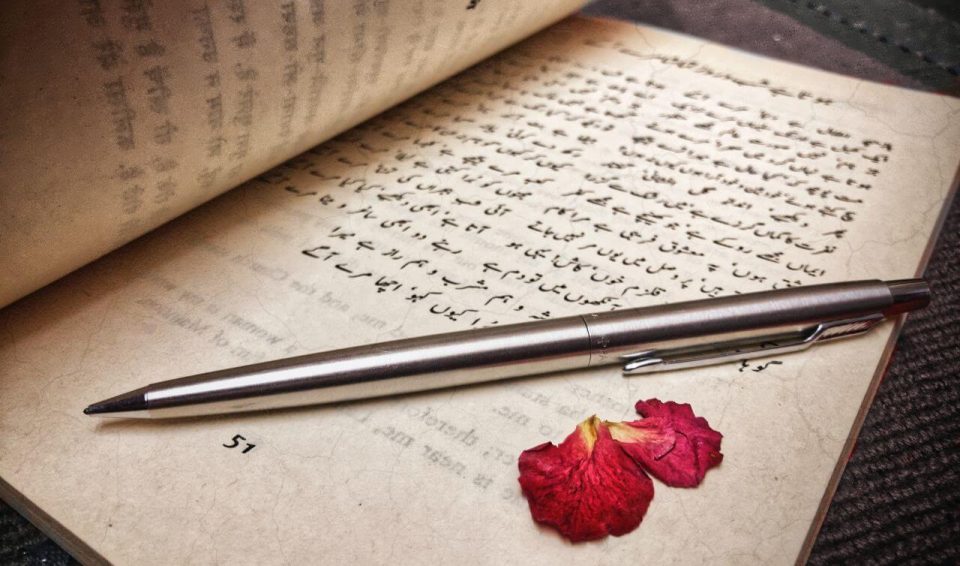
In their observations, the judges alluded to several oft-repeated sentiments surrounding the Urdu language. Drawing from a Nazm by poet Iqbal Ashhar, they sought to give voice to the language itself—imagining its lament:
Urdu hai mirā naam, maiñ ‘Khusrav’ kī pahelī
Kyuuñ mujh ko banāte ho ta.assub kā nishāna
Maiñ ne to kabhī ḳhud ko musalmāñ nahīñ maanā
Dekhā thā kabhī maiñ ne bhī ḳhushiyoñ kā zamāna
Apne hī vatan meñ huuñ magar aaj akelī,
Urdu hai mirā naam maiñ ‘Khusrav’ kī pahelī
Urdu is my name, I am the riddle of ‘Khusro’
Do not hold me for your prejudices
I never considered myself a Muslim
I too have seen happier times
I feel like an outsider in my homeland today
Urdu is my name, I am the riddle of ‘Khusro’
The judges rightly remarked that no language can be tied to a religion. To label Urdu as the language of Muslims alone is, in their words, a “pitiable digression” from the pluralistic spirit that defines India’s unity in diversity. They asserted that language belongs to a community, a region, and a people—not to a faith. Language, they observed, is culture, and serves as a barometer for the civilisational evolution of its speakers.
So it is with Urdu. It remains one of the most refined expressions of the Ganga-Jamuni Tahzeeb—the shared cultural ethos of northern and central India. Before it became a medium of instruction or literary expression, language was, and remains, a means of communication. In this context, the court found the actions of the Patur Municipal Council entirely reasonable. Urdu was retained on the name board because it facilitated communication with residents who understood the language. The intent, the judges noted, was simply to speak to the people—nothing more, nothing less.
The court emphasised that a Municipal Council exists to serve the local community, attending to their immediate, everyday needs. If residents within the council’s jurisdiction are familiar with Urdu, there ought to be no objection to its use alongside Marathi, at least on municipal signboards. Language, the court noted, is a vehicle for the exchange of ideas, a bridge between people of differing beliefs and perspectives. It must not become a fault line of division.
The bench succinctly observed that the prejudice against Urdu arises from the mistaken belief that the language is foreign to India. This notion, the judges declared, is unfounded. Urdu, like Marathi and Hindi, is an Indo-Aryan language, born of this very land. It emerged and evolved in India through the mingling of communities from diverse cultural backgrounds seeking mutual understanding and communication. Over centuries, it attained remarkable sophistication, becoming the chosen medium for some of the subcontinent’s most celebrated poets.
Yet, this linguistic harmony encountered resistance. The fusion of Hindi and Urdu was thwarted by purists on both sides. Hindi grew increasingly Sanskritised, while Urdu absorbed more Persian influences. This divergence was cynically manipulated by colonial powers, who sought to draw religious lines through language—casting Hindi as the tongue of Hindus and Urdu as that of Muslims. Such a division, the court lamented, represents a tragic deviation from the principles of unity in diversity and the ideal of universal brotherhood.
Turning to constitutional provisions, the court noted that the Eighth Schedule of the Indian Constitution recognises 22 Indian languages, including both Marathi and Urdu. Significantly, English does not feature among them, for it is not an Indian language. The court further remarked that the spoken Hindustani of the masses is suffused with Urdu, even when speakers may be unaware of it. It would not be inaccurate, the judges said, to claim that everyday conversation in Hindi cannot proceed without recourse to Urdu or Urdu-derived words. Indeed, the very word ‘Hindi’ traces its origin to the Persian ‘Hindavi’.
This linguistic exchange is not unidirectional. Urdu, too, has absorbed vocabulary from a range of Indian languages, including Sanskrit. Its influence is particularly pronounced in legal and police discourse, with Urdu terminology woven deeply into the lexicon of both criminal and civil law. However, recent years have witnessed a push from certain state governments to replace Urdu terms with those drawn from Hindi or the respective official state language in official police correspondence, FIRs, and reports—an overzealous effort, the court seemed to imply, that ignores the shared linguistic heritage of the land.
Words such as Mukaddama (case), Mulzim (accused), Ilzam (allegation), Ittila (information), Chashmdeed (eyewitness), Mustaghees (complainant), Jeb Tarashi (pickpocketing), Ferd Baramadgi (recovery memo), Adalat (court), Halafnama (deposition), and Peshi (hearing date) remain deeply embedded in the vocabulary of Indian courtrooms and police stations. These terms, drawn from Urdu, underscore the language’s enduring imprint on the nation’s legal and administrative discourse.
Yet, the Three Language Formula of 1968 looms as a persistent adversary in Urdu’s journey. Cloaked in the rhetoric of promoting state languages alongside Hindi and English in school curricula, the policy has in effect curtailed the reach and presence of Urdu in educational institutions. It is this formula that continues to stifle the growth of the language under the guise of linguistic pluralism.
Time and again, Urdu advocates have responded to inflammatory campaigns that seek to displace Urdu with Hindi, defending the language with passion and historical clarity. However, those spearheading these movements remain impervious to reason, unwilling to entertain a balanced discussion. As a result, even the recent, thoughtful observations of the honourable judges may soon fade into oblivion, lost amid the noise of persistent, polarising rhetoric. In the absence of a unified and strategic response from Urdu’s champions, the language continues to bear the brunt of marginalisation.
In a final note, the Court urged that entrenched misconceptions—and indeed prejudices—towards a language must be confronted with honesty and courage. Against the vast and rich diversity of India, it declared, “Our strength can never be our weakness. Let us make friends with Urdu and every language.”
(The author is a New Delhi-based senior commentator on national and international affairs, defence and strategic issues, environmental concerns, and interfaith dialogue. He also works as a media consultant. Ideas are personal.)