A goat cloned in Kashmir brings laurels and global attention to the scientists at SKAUST. Majid Maqbool goes behind the scenes of a homegrown scientific achievement.
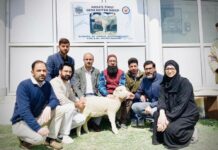
 After two years of rigorous, focused work, a team of Kashmiri scientists at the Centre of Animal Biotechnology, SKUAST, in Shuhama, Srinagar, gave the world the first handmade cloned Pashmina goat on March 9, 2012. The clone has been named “Noori,” meaning “the light” or “the light of hope and promise.”
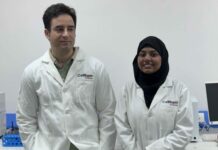
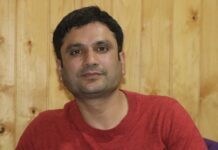
Associate Professor in Animal Biotechnology, Dr Riaz Ahmad Shah and his team were successful after experimenting with the herd of Pashmina goats reared in the campus. Dr Riaz was also part of the team that cloned the buffalo calf, Garima, using the same cloning technique at the National Dairy Research Institute (NDRI) in Karnal, Haryana in 2009. At the time, he was pursuing his PhD at the institute.
“It is a great milestone for the scientific community of Kashmir and especially for the Veterinary and Agricultural Scientists from SKUAST-K,” says Dr Riaz.
He says his team could produce work which is at par with the best scientific institutes in the world. He adds, “Pertinently, there are a few laboratories (10 to 15) in the world that have the ability and capability to produce live clones of livestock species.”
After producing Garima in 2009, Dr Riaz approached the World Bank to fund the Pashmina goat cloning project in collaboration with NDRI. “We were granted a project from the Indian Council of Agricultural Research. It is a multi-crore project aimed at developing facilities and technology to produce cloned embryos of buffaloes and Pashmina goats efficiently,” says Dr Riaz. Under the project, NDRI worked on buffalo cloning, and SKUAST-K took up the Pashmina goat cloning part of the project.
Cloning is a process of producing genetically similar populations of organisms of the desired sex. Dr Riaz says the aim is to clone the animals of high production potential (Cashmere Fibre) and assess the fibre-producing ability of the clone. “Our observation shows that the Pashmina goats are able to survive and produce the fibre in significant quantities when reared under low-altitude conditions at our university farm,” he says. In some laboratories outside India, he says, cloning technology has shown promise in rescuing wild and endangered species. “Even dead animals have been revived by cloning,” he says.
Dr Riaz says they wanted to clone the Pashmina goat because it is of economic importance for the J&K state. “It took us two years to refine the cloning technique so that it could work for cloning Pashmina goats,” he says. “Finally, after three years of continuous experimentation, the baby goat was born.” Dr Riaz believes that cloning technology will have a distinct role in the near future for the improvement of livestock productivity in our state. The success of this technology shall open up new vista in strategic and applied research, he says, which includes “multiplication of elite animals of desired sex, stem cell technology for regenerative medicine, transgenics for production of biopharmaceuticals like Factor IX, alpha1 anti-trypsin etc of value in human medicine, cloned animals as disease models, and conservation of threatened wild and domestic animal species.”
Regarding the ethical issues raised by certain quarters about cloning, according to Dr Riaz, there are ethical issues about human cloning, not animal cloning. “The only ethical issue in animal cloning is the treatment of animals during experimentation, but that is taken care of, besides, there is an ethics committee regarding that which is already in place in the university,” he says. In addition to training individuals from other departments in animal cloning, Dr Riaz says they hope to undertake stem cell research in the future. “We also want to divert this cloning technology to areas like transgenic animal production, in which a new gene is incorporated in clones which can produce anti-cancer drugs,” he says. The cloned goat has been a success through the hard work of individuals like Dr Riaz and other members of his team, including Dr Nazir A. Ganai, Dr Hilal Musadiq, Dr Mujeeb Fazili, Dr F. D Sheikh, Dr T.A.S. Ganai, Dr. Syed Hilal, Mr Maajid Hassan and Mr Firdous Khan.
With the support of the J&K government and other state and national funding agencies, scientists at SKUAST-Kashmir hope to take up more projects such as this one to initiate work on the cloning of endangered species shortly. “The birth of Noori is just the beginning,” says Dr Riaz.