KL NEWS NETWORK
SRINAGAR
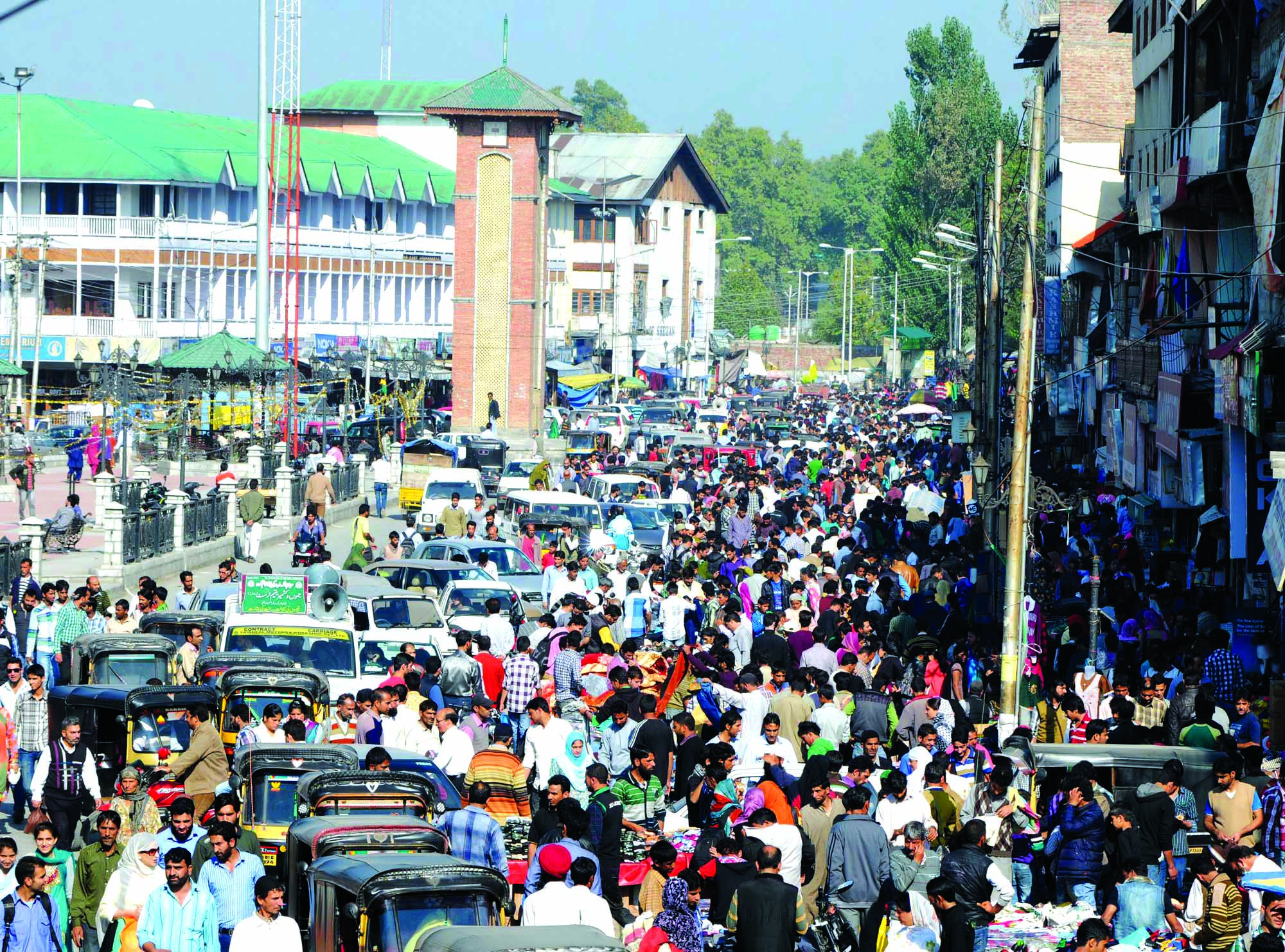
While the Eid has remained twice a year festival that Kashmir celebrates with traditional fervour, many things associated with the major events of Muslim calendar have changed unnoticed. Partly dictated by the turmoil of last nearly three decades and partly because of the affluence, the older generations feel a lot of change every time Kashmir getting into the Eid celebration mood.
“It was a much bigger event for me when I was of your age,” Nazir Ahmad, a medical professional tells his son, a middle school student, in Srinagar. Ahmad is an economic migrant who studied in the periphery and settled eventually in Srinagar and raised his family. “I would wait for the month of fasting because the Eid was full of fun and frolics,”
Then, all villages had not the big spacious mosques and one in a dozen hamlets would have a Jamia Masjid. “It was a huge gathering both within and outside the mosque,” remembers Nazir. “While the preacher would spend a couple of hours to deliver his sermons, outside the mosque was the huge cultural and economic event, youngsters selling and purchasing as diverse attractions would keep the children busy.”
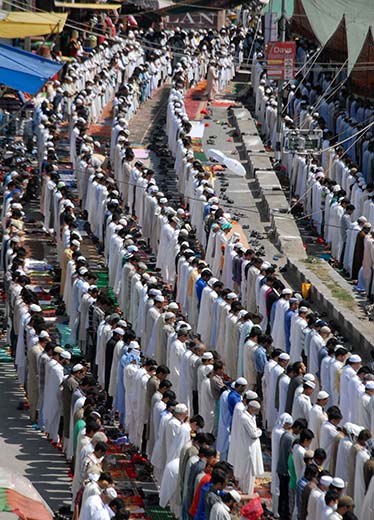
With the apple money encouraging almost every village to have its own mosque where the Friday and Eid prayers are offered, the centrality of some of the major village has evaporated. There, the Eid celebrations are the routine low-key, dull affairs. With every village having its own facility for special prayers was dictated by the turmoil when people tried to skip moving “far away”.
Nazir believes that unlike past, the children are more interested in virtual games, avoid junk and if required make purchases of the toys and other stuff on-line. “They are more brand conscious and may be it is because of the exposure to media and may be the affluence also plays its own part,” asserts Nazir.
Earlier the Eid celebrations would be more hectic, interesting, interactive and cheap. Now they are expensive but dull affairs.
Even the urban spaces have changed on these occasions. In major Mohallas, people have diverse choices and different schedules for offering prayers. One can offer prayers as early as 7 am and then there are options to pray till around 11 am. “While all mosques are the Home of the God, the sect-conscious faithful have added to the huge divide that hits centrality and the unity,” believes a university teacher, speaking on the condition of anonymity. “Friday and Eid congregations in the pure historic sense are statements of unity by the Ummah but off late these have reduced to mere religious events.”
Divisions apart, the decades old turmoil has contributed in affecting certain changes in the traditional celebrations in Urban sub urban spaces as well. Earlier, it was rare that the government will arrest religious or political beings and prevent them from either making speeches or leading prayers. “If it would happen, it would be considered a major event that people would talk about for years,” said Mohiuddin, an old city resident. “But these arrests are so often that these are being taken part of the routine.”
This Eid, interestingly, neither of the separatist leaders have been permitted to be part of any prayers. They have either been reduced to their residences or simply put under temporary custody of the police. This Eid, reports suggested, Mirwaiz Umer Farooq, who was restricted to his Nigheen Mansion and prevented from getting into Eidgah, has addressed the huge gathering using his cell phone! A couple in Srinagar married in pre-1990 era by consented to the mutual choice using a landline from abroad. This kept the debate ragging for many months in Srinagar.But now, we have complete sermons and even political speeches being delivered to people on phone!
In Srinagar, the major gathering on Eid would take place in the sprawling Eidgah. The tradition was disrupted after the situation changed. When the process was resumed a few years back, the state apparatus played foul for at least two years. Without formally banning the prayers in the grounds, they would use fire tender pumps in the dead of the night to inundate it and make the vast grounds un-usable for a gathering. Finally when the society prevailed and resumed the tradition, these congregations are routinely marred by the ding-dong battles between the cops and groups of youth.
“There are two types of people coming to Eidgah,” a resident of Safa Kadal said. “Majority of the people come for prayers and a few groups of youth after praying in different mosques come to create that spectacle by engaging cops.” Fortunately, however, most of these “clashes” have not led to any major event that would witness any loss of life.
A major new entry into these Eid congregations is raising resources for the destitute. Though the system existed earlier as well and the mosque managers would help some poor man, now it an elaborate affair involving almost all the mosques. This is a change that turmoil has dictated.
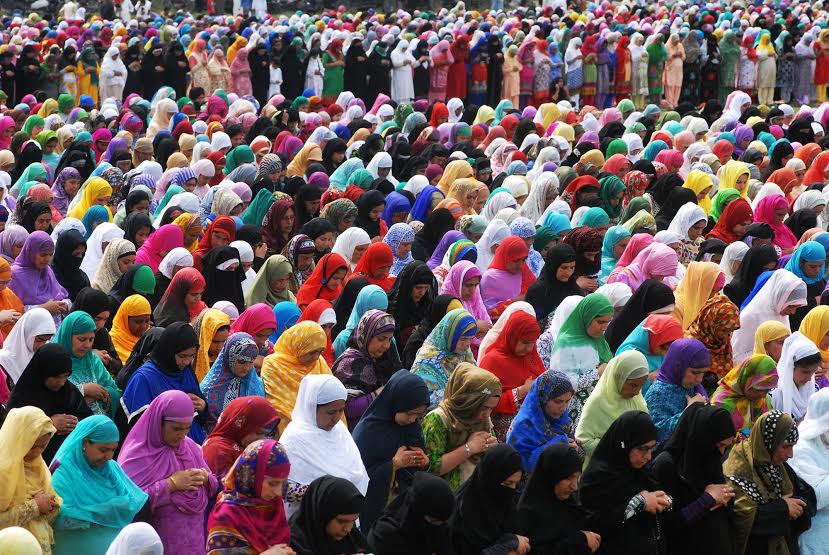
Over the years a chain of institutions in private sector has emerged to manage the destitute load of the society. Though they have a year long system of sourcing funds from the individuals contributors, still the holy month of Muslim fasting and the Eid are a major source of their incomes. Same is the case of a massive network of seminaries which operate as residential homes and schools of religious teachings. The Muslim month of fasting continues to be the period of major charities in the Muslim world. Apart from Sadqa Fitr, people calculate and pay Zakat in this month.