by Ramiz Bhat
Elia’s poetry reflects his philosophical insight, drawing on a wide array of thinkers, including Kant, Dante, Freud, Hume and Voltaire.

Jaun Elia, born Syed Sibt-e-Asghar Naqvi on 14 December 1931, was a distinguished Urdu poet, philosopher and scholar. His profound contributions to literature have immortalised his legacy. Elia is celebrated as one of the most influential poets of the 20th century, captivating readers with the emotional intensity, intellectual depth and unfiltered honesty of his work.
Through his poetry, Elia explored themes of love, loss, existentialism and the complexities of life. He carved a unique space for himself in the annals of Urdu literature.
Jaun Elia was born in Amroha, Uttar Pradesh, India, into a distinguished family of scholars and poets. His father, Shafiq Hasan Elia, was a noted intellectual, while his brother, Rais Amrohvi, was a celebrated poet. This rich literary and philosophical environment nurtured Elia’s early love for language, literature and philosophy.
Following the 1947 partition, Elia’s family relocated to Karachi, Pakistan. He completed his early education in Amroha and later earned a Master’s degree in Urdu literature from the University of Karachi. This solid educational foundation and exposure to diverse intellectual traditions shaped his distinctive poetic voice.
Jaun Elia’s literary career spanned several decades, yielding a diverse body of work that includes poetry, essays, translations and critical writings. He drew inspiration from classical Persian poets, such as Mirza Ghalib and Allama Iqbal, as well as Western thinkers like Nietzsche, Sartre and Kant.
Elia’s poetry is characterised by its emotional intensity and philosophical depth. His verses address universal themes, including unrequited love, existential despair and the transience of life. A distinctive feature of his work is the juxtaposition of grandeur with stark truths, resonating deeply with his readers.
Jaun Elia’s major poetry collections include Shayad, Ya’ani, Gumaan and Lekin. These works are celebrated for their originality and intellectual rigour, exploring profound emotions and ideas. In Shayad, Elia seamlessly intertwines classical Urdu imagery with existential musings, highlighting the impermanence of human existence.
Elia’s accessible language, enriched with cultural and philosophical references, creates a rich tapestry of meaning. His work offers intellectual engagement and emotional solace to readers.
Jaun Elia’s poetry is characterised by a profound exploration of love and loss. His verses vividly depict unfulfilled desires and the anguish of separation, connecting these emotions to broader reflections on the transience of life.
In one of his couplets, Elia writes:
It is necessary to help myself
To invent something from the void in my chest.
This poignant expression encapsulates the emotional intensity that pervades his work.
Elia, a self-proclaimed nihilist and anarchist, frequently questioned the meaning of life and existence in his poetry. Drawing on both Western and Islamic philosophy, he incorporated ideas from Nietzsche, Sartre and Ghazali into his reflections.
One striking verse reads:
The agony of loneliness is such
That even God calls out to man.
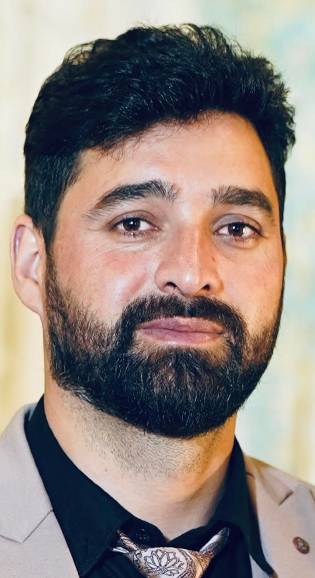
Jaun Elia’s poetry is imbued with his profound understanding of mysticism and metaphysics. Drawing on Sufi traditions, Islamic spirituality and Kabbalistic ideas, he explores the spiritual emptiness of human existence.
In one memorable verse, Elia writes:
How empty was my inner self
Even God resided in me for a few days.
This verse encapsulates Elia’s exploration of the human condition, where the boundaries between the divine and the self are blurred.
Jaun Elia’s unorthodox style of reciting poetry at Mushairas earned him immense popularity. His dramatic delivery, melancholic presence and deeply personal themes left an enduring impact on his audiences.
Unlike many poets of his era, Elia was candid about his flaws and frustrations. This paradoxical combination of self-assurance and vulnerability made him a compelling literary figure, bridging the gap between traditional and modern sensibilities.
Elia’s poetry reflects his philosophical insight, drawing on a wide array of thinkers, including Kant, Dante, Freud, Hume and Voltaire. These references enrich his work, adding layers of meaning that invite readers to question life, identity and existence.
In one couplet, Elia explores the nature of selfhood:
Existence is a tear of nakedness
If clothed, it would remain unstitched.
This poignant verse exemplifies Elia’s ability to distil complex philosophical ideas into powerful, evocative poetry.
Jaun Elia passed away on November 8, 2002, in Karachi, leaving behind a legacy that continues to inspire readers worldwide. His posthumous popularity has grown, particularly among younger audiences drawn to his themes of love, despair and existential inquiry.
Elia’s influence extends beyond his poetry. He introduced global masterpieces to Urdu readers through his translations of Russian, Turkish and Arabic works, fostering cross-cultural literary appreciation.
Jaun Elia’s poetry transcends time and cultural boundaries. His ability to articulate universal emotions and philosophical ideas in simple yet profound language ensures his work remains relevant. Elia once remarked that what matters is not whether people are reading his books or others, but that they are reading books.
Jaun Elia’s life and poetry reflect a relentless quest for meaning in a chaotic world. Through his verses, he gave voice to the silent struggles of the human spirit, addressing universal themes.
Elia’s unique blend of emotional depth, philosophical insight and linguistic brilliance ensures that his work will continue to inspire generations. As he aptly put it:
This is a hardship, not a coincidence
Being Jaun is no joke.
(The author is a student of south Asian studies. Ideas are personal.)