by Haris Fayaz
Unchecked mobile journalism is undermining privacy, ethics, and professional reporting, raising calls for legal safeguards
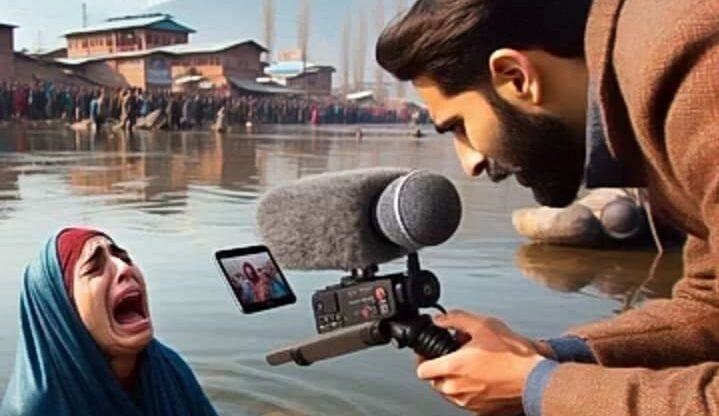
Walk through any street today, and you’ll notice something that has quietly become normal: people recording everything. A small incident, a heated argument, an accident, even someone’s private moment, within seconds, a phone is out, a video is being made, and before anyone fully understands what’s happening, it is already on the internet.
Some call this “mobile journalism.” Others see it as awareness in action. But there is an uncomfortable question that we can no longer ignore: at what point does this stop being helpful and start becoming harmful?
There was a time when journalism carried a certain discipline. Reporting was not just about capturing an event; it was about understanding it. Facts were checked, sources were verified, and stories went through layers of editorial judgment before reaching the public. There was a system that ensured responsibility. A journalist knew that their words had consequences.
Today, that system has been bypassed.
Now, anyone with a smartphone and an internet connection can record, comment, and publish. There is no waiting, no verification, and often, no accountability. The urgency to upload has replaced the responsibility to understand. And in this rush, something important is being lost: basic human sensitivity.
Take accident scenes as an example. Instead of helping the injured, people gather around and start filming. The victim, who needs immediate care, becomes content. Their pain turns into something to be viewed, shared, and commented on. It’s a disturbing shift, one that raises a simple but serious concern: have we started valuing content more than compassion?
The same pattern appears in personal disputes. A private argument between individuals quickly becomes a public spectacle. Phones are raised before voices are lowered. Instead of resolving the situation, it is recorded, uploaded, and judged by strangers who know nothing about the full context.
In many such cases, consent is completely ignored. Faces are shown, names are revealed, and identities are exposed without a second thought. The people involved are reduced to clips and captions. And once these videos go viral, there is no way to undo the damage.
What makes the situation even more complicated is how easily misinformation spreads in this environment. A short clip, taken out of context, can tell a completely different story. Add a misleading caption, and it can influence thousands of viewers within minutes. By the time the truth comes out, if it comes out at all, the narrative has already been shaped.
Reputation, once damaged in the digital space, is not easily repaired.
There are real human consequences behind these actions. A person wrongly portrayed in a viral video may face social stigma, mental stress, or even threats. Families get affected. Careers can be damaged. And all of this can happen because someone decided to record and upload without thinking it through.
Another serious concern that cannot be ignored is the declining space for trained and certified journalists. Those who have studied journalism, who understand ethics, legal boundaries, and the responsibility that comes with reporting, are slowly being pushed to the margins.
Their work is verified, balanced, and accountable, but it often fails to compete with the speed and sensationalism of untrained digital content.
As a result, the role of professional journalism is gradually being diluted. When anyone with a smartphone is seen as a “reporter,” the distinction between responsible journalism and random content disappears. This not only undermines the efforts of qualified professionals but also weakens the credibility of journalism as a whole.
Over time, people begin to trust viral clips more than verified reports, and that shift can be dangerous for any society.
This is not to say that mobile journalism has no value. In fact, it has played a significant role in highlighting issues that might otherwise have been ignored. There have been instances where ordinary citizens have brought important matters to light through their phones.
But the problem arises when this power is used without any sense of responsibility.
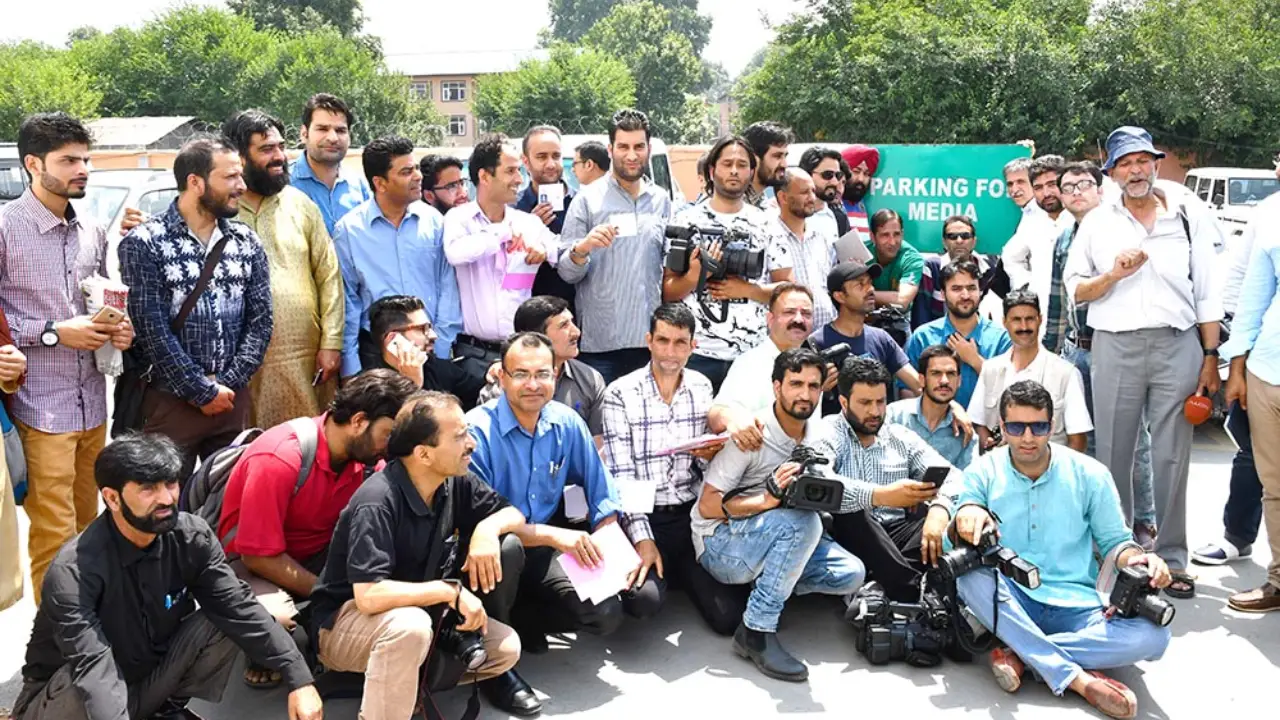
Freedom of speech is a fundamental right, and it must be protected. People should be able to express themselves, raise concerns, and share information. But freedom without responsibility can lead to chaos.
When there are no clear boundaries, misuse becomes inevitable.
Professional journalists operate within a framework. They can be questioned, held accountable, and even penalized if they cross ethical or legal lines. But when random individuals upload harmful or misleading content, the lines become blurred.
Who is responsible then? Who answers for the damage caused?
At present, there is no clear and effective mechanism to deal with this growing issue.
This brings us to an important and timely question: do we need stronger legal safeguards to regulate irresponsible digital reporting?
The idea is not to control or silence people. It is not about restricting expression. It is about protecting individuals from unnecessary harm.
There should be clarity on issues like consent, privacy, and the sharing of sensitive content. People must understand that recording and publishing someone’s vulnerable moment is not just insensitive, it can also be deeply harmful.
Even basic legal awareness can make a difference. If individuals know that certain actions can have consequences, they are more likely to act responsibly.
Laws, if framed carefully, can serve as a deterrent against misuse while still protecting genuine expression.
At the same time, this is not just a legal issue — it is also a social one. As a society, we need to reflect on our own behaviour. Why do we feel the need to record everything? Why do we share content without questioning its authenticity?
And why do we consume such content so quickly without thinking about the people involved?
Maybe the answer lies in slowing down.
Not every moment needs to be captured. Not every incident needs to be shared. Sometimes, the right thing to do is to step forward and help, not step back and record.
Technology will continue to evolve. Smartphones will become even more powerful. Platforms will grow. But the real question is whether our sense of responsibility will grow with them.
Because if it doesn’t, the consequences will only become more serious.

This is not about choosing between freedom and control. It is about finding a balance. A balance where people can speak freely, but not carelessly. Where information can be shared, but not at the cost of someone’s dignity.
The rise of mobile journalism has given power to the people. Now, it is up to the people to use that power wisely.
And if that wisdom does not come naturally, then perhaps it is time for the law to step in, not as a restriction, but as a safeguard.
To protect truth. To protect dignity. And most importantly, to protect people.
(Author is a student of law. Ideas are personal.)