by Syed Ahfadul Mujhtaba
A remembered literary conversation in the 1990s Rehari explores mortality, meaning, and human insignificance through Akhtar Mohiuddin’s haunting parable of the three spitting’s.

I do not remember the exact year, 1994 or 1995, when I went to Vaid Mandir Enclave, Rehari (Jammu), to visit my maternal uncle, Mir Ghulam Rasool Nazki Sahib. He was staying there with his son, Justice Bilal Nazki. I was a young man, a nephew with no standing in literature, who had come simply because family comes.
But in that room, three men were talking about the Man, about destiny and about mortality.
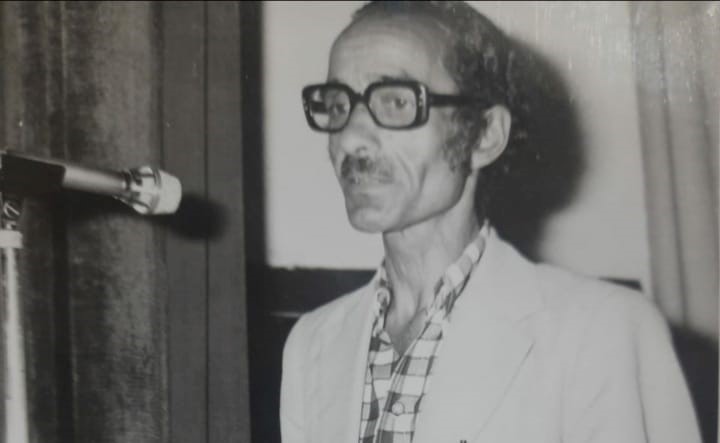
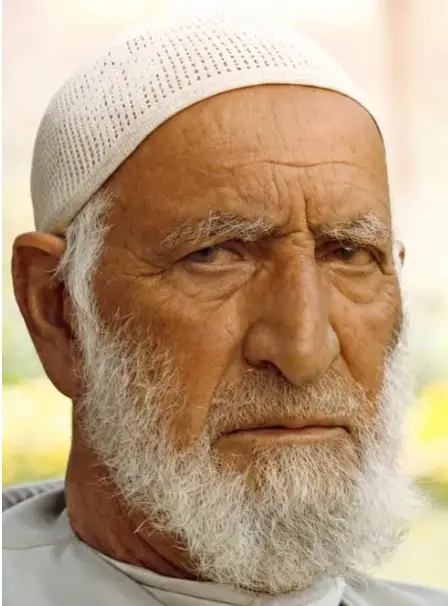
Nazki Sahib was there. Akhtar Mohiuddin was there. Amin Kamil was there, and though he was a poet and scholar of equal stature, he had chosen, that evening, to listen. There were four of us in the room. Three spoke. One witnessed.
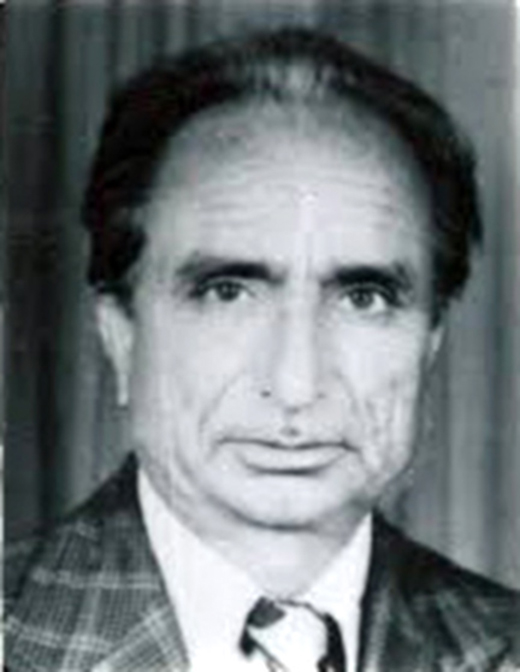
The conversation had begun with a simple question: what is the purpose of Man? And it moved through the territories these men had spent their lifetimes exploring: the Sufi mysticism that Nazki Sahib carried in his bones, the progressive humanism that Akhtar Mohiuddin had learned from Gorky and Tolstoy, the formal mastery of language that Amin Kamil guarded as a sacred trust.
I sat in the corner and said nothing. I was too young to understand what I was hearing. But some rooms mark you without your permission, and some conversations enter you before you have understood what they are saying.
It was in this context that Akhtar Mohiuddin spoke. And what he spoke was not an argument. It was a parable.
Mortal Question
Every human being arrives at a moment when the question becomes inescapable: what is the purpose of my life? This question is not academic. It is born from the knowledge that we are mortal, that our time is limited, and that death is not a distant abstraction but a fact written into our very flesh. In the face of this mortality, we ask: does my existence mean anything? Is there a purpose to this brief span between birth and death? Or am I simply a creature that lives, suffers, and dies, leaving no trace?
This is the oldest question. It has been asked in every language, in every century, in every tradition. Some say your purpose is to serve God, to achieve union with the divine. Some say your purpose is to build, to create, to leave something behind. Some say your purpose is to reduce suffering, to be good. Some say your purpose is to pursue knowledge, to understand the universe.
But what if none of these answers is true? What if the purpose of Man is something far simpler, far darker, and far more ironic than any of these grand narratives?
This is the question Akhtar Mohiuddin posed that evening. And he posed it through a parable.
Hill Parable
A sick man climbs a hill. He is driven by something: ambition, desperation, the mere reflex to keep moving. He is exhausted. His body is diseased. But he climbs. He reaches a certain place, a hilltop, a particular threshold. And there, seized by a fit of coughing, he expels something from his body: sputum, phlegm, the body’s involuntary rejection of what has infected it.
He coughs three times. Three things are expelled. Three spittings fall to the ground.
And then, in the parable as Akhtar Mohiuddin told it, these three spittings begin to speak. They converse about the man who expelled them, about his life, about what his existence has meant.
The first spitting speaks of what the man accomplished. It recounts his deeds, his efforts, his struggles to build something, to leave some mark upon the world. It speaks with a certain solemnity, even dignity. Here was a man who did things. Here was a man who tried.
The second spitting speaks of the man’s sufferings. It catalogues his miseries, the losses he endured, the illnesses he bore, the griefs that pursued him. It speaks with brutal honesty. Here was a man who paid the price of living. Here was a man who knew pain.
And then the third spitting speaks. And what it says is this:
There was no purpose to this man but to climb this hill and reach this place and spit. That is all. That is the only meaning his life has contained.
The third spitting negates both the first and the second. Your accomplishments mean nothing. Your sufferings mean nothing. The only purpose this man had was to arrive at this precise moment and expel this precise thing. Everything else, all the striving, all the pain, all the meaning he thought he had created, was merely the preparation for this involuntary bodily act. He lived in order to cough. He existed in order to spit.
And then he dies.
In that room in Rehari, when Akhtar Mohiuddin finished speaking, there was silence. The three men sat with it. No one immediately answered. No one offered consolation or refutation. The words hung in the winter light.
Philosophical Lineage
To understand the full weight of this parable, we must understand where it may come from.
In 1903, Maxim Gorky published a prose poem called Man (Chelovek), a philosophical hymn to human greatness. In it, Gorky presents Man surrounded by abstract forces: Love, Thought, Death, Deceit, Hope. At the climax, three dark birds appear, born of Weakness, named Dismay, Depression, and Despair. They circle over Man and sing him a song of diminishment: that he is small, that his Thought is powerless, that he will die and leave no mark.
And Man’s response is thunderous defiance. “You lie,” Man cries. “I am not weak. My Thought grows. I will illuminate the darkness.” In Gorky’s vision, Man rises up against the three birds and asserts his own grandeur.
But Akhtar Mohiuddin has done something extraordinary with this structure. He has taken Gorky’s three voices speaking about Man’s destiny and made them not abstract philosophical principles but biological facts. The three voices are three expelled things, the body’s own speech, speaking back to the consciousness that inhabited it. And, more crucially, he has removed Gorky’s answer entirely. There is no defiance in the parable of the sick man. There is only the third spitting’s ironic verdict: he lived only to spit.
This is Gorky inverted. This is Gorky made unbearable.
There is also a Sufi tradition that haunts the parable. In Islamic practice, there is a gesture prescribed when a devil interferes with prayer: spit three times to the left, seek refuge in Allah, and the disturbance will be dispelled. In the Sufi reading, this gesture becomes a symbol of the soul’s rejection of the false self, the nafs, and all the forces of darkness that whisper human insignificance. To spit three times is to spit at false destiny, to assert that you are greater than what fear tells you.
But Akhtar Mohiuddin’s parable inverts this too. The three spittings do not liberate Man. They define him. They do not reveal his grandeur. They reveal his irrelevance.
He was saying something almost unbearable: perhaps there is no purpose. Perhaps we live only to spit, and then we die.
Merciless Logic
What makes this parable so difficult to bear is its merciless logic.
The first spitting speaks of accomplishment. But accomplishment is only meaningful if it endures. Yet everything decays. Great works crumble. Remembered names are forgotten. Empires become dust. The first spitting’s proud recitation of deeds is, from the perspective of eternity, merely a catalogue of things that will not last.
The second spitting speaks of suffering. Suffering, at least, is real, undeniable, visceral. But what is the meaning of suffering? That you felt pain? That you endured? In the face of death, suffering becomes merely the price paid for the privilege of existing, and that price seems increasingly too high.
And the third spitting negates both. You did not accomplish in order to accomplish. You did not suffer in order to grow or achieve some spiritual height. You did and you suffered only in order to arrive at this moment, this place, this involuntary act of expulsion. You were not the agent of your life. You were its instrument.
You think you are choosing, but you are simply responding to what has infected you. You think your life has purpose, but your purpose is to react. You think you are building something that will outlast you, but you are merely coughing.
And then the coughing stops. And you die.
Nazki’s Response
After the guests had gone, after the words had settled into the room’s corners, Nazki Sahib turned to me. I was the youngest person there. The one who had said nothing. The one who had no place in that conversation.
He took from his papers a printed copy of his Dua-e-Subh, his morning supplication in Kashmiri, words composed to meet God at the threshold of dawn. And in the margin of that prayer, in his own hand, he had written four lines, a rubai, his chosen form, the quatrain he had spent a lifetime perfecting:
In English:
The walker feels the field but cannot see
If well or hollow or a grave lies beneath;
They named this strange affliction duniya,
I bear my shroud along as who knows where.
Nazki Sahib’s quatrain is not an argument against the three spittings. It is an acceptance of them. A living inside them.
The walker does not know what lies beneath his feet. He cannot see whether the ground is solid or hollow, whether at any moment he might fall into a grave. The affliction is named duniya, the world, existence, the mortal coil. It is a sickness. It is an infection. It is precisely what causes the sick man to cough.
And what does the walker do? He carries his shroud. He walks forward. He acknowledges that death walks beside him, and yet he continues. Every morning. Towards the light. In prayer.
This is not Gorky’s defiance. Gorky says: I am not small, I am great. Nazki Sahib says nothing so grand. He says simply: I am walking. I do not know where. I am carrying death. And I am praying. He accepts mortality, the three spittings’ verdict, and walks on anyway.
The shroud is not denied. It is carried. The darkness beneath the field is not lit up or refuted. It is acknowledged. And still the walker moves forward.

This is the Kashmiri answer. Not the triumph of Gorky’s Man. Not the transcendence of Sufi prayer. But something quieter and more honest: the acceptance that you are mortal, that your purpose may be nothing, that death is already with you, and still to walk, still to pray, still to carry the shroud into the next dawn.
I have carried those four lines with me since the evening Nazki Sahib placed them in my hands. I did not know then that I was being given something to spend a lifetime understanding.
Final Note
This essay records a conversation at Vaid Mandir Enclave, Rehari, Jammu, circa 1994-95, in which Mir Ghulam Rasool Nazki, Akhtar Mohiuddin, and Amin Kamil gathered. The author attended as a family visitor and silent witness. The quatrain was written by Mir Ghulam Rasool Nazki in the margin of his Dua-e-Subh and gifted to the author on that occasion. The English translation of the quatrain is the author’s own.
(The author, after retiring as IGP in Jammu and Kashmir Police, was a member of the Jammu and Kashmir Public Service Commission. Ideas are personal.)