by Sri Varshith Kumar Reddy E
A 19-year-old league now generates more per-match broadcast revenue than the English Premier League, employs half a million people, and moves the quarterly earnings of India’s largest listed companies. The question worth asking is whether anyone is governing it as such.

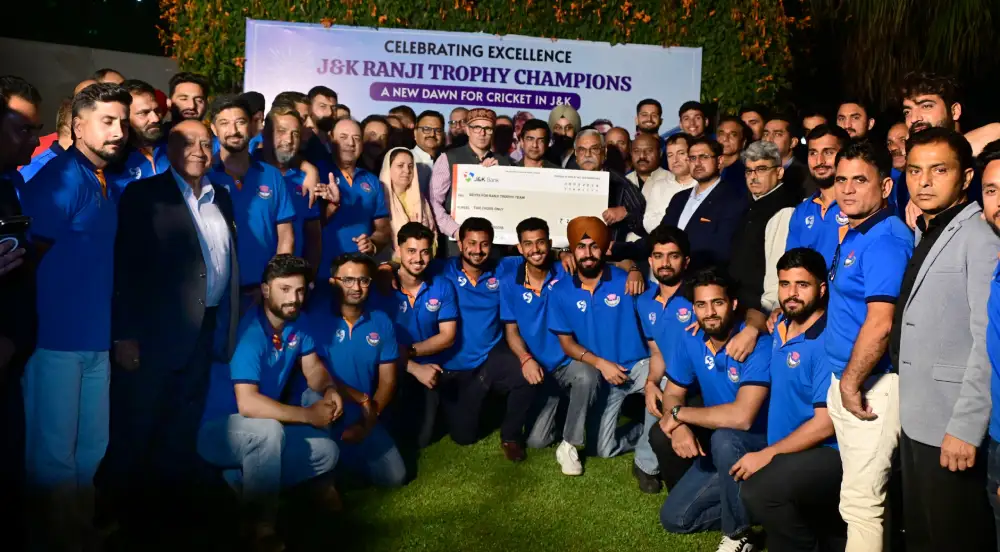
On the evening of May 31, 2026, Rasikh Salam Dar ran in from the Narendra Modi Stadium end in Ahmedabad, bowled figures of 3 for 27 in an IPL final, and sealed Royal Challengers Bengaluru’s title defence in front of 132,000 people inside the ground and over a billion watching on screen. Dar is 26. He is from Kulgam, a district in the Kashmir valley. He was bought by Mumbai Indians at the 2019 auction for Rs 20 lakh, the third cricketer from Jammu and Kashmir ever to enter the IPL. After a two-year ban, a release, and a fresh contract with RCB at Rs 6 crore in the 2025 mega auction, he finished IPL 2026 as the leading wicket-taker among uncapped players in the tournament, 19 wickets in 12 matches at an average of 21.32.
That trajectory is not a human-interest sidebar. It is the clearest illustration available of what the IPL’s economic architecture actually does at its most effective; it prices talent from geographies that formal sports infrastructure has consistently ignored, surfaces it at national scale, and rewards it at a speed no state cricket board or domestic tournament can replicate. The Rs 6 crore paid to Dar is a market signal the selectors took longer to send than the auction room did.
But the Dar story is one data point inside a far larger one. At Rs 118.5 crore per match in broadcast rights value, the IPL sits second globally in per-game media value, trailing only the NFL and surpassing the English Premier League, Major League Baseball, and the NBA. A tournament that did not exist before 2008 now occupies the same valuation conversation as sporting institutions a century old. That positioning demands an analytical framework equal to its scale, one drawn from economics, capital markets, and platform theory.
The Revenue Architecture
Broadcasting is the structural foundation. The 2022 rights auction covering the 2023–27 cycle fetched BCCI Rs 48,390 crore ($6.2 billion) for 410 matches, Star India paid Rs 23,575 crore for television and Viacom18 paid Rs 20,500 crore for digital streaming, with Times Internet securing international rights for Rs 3,258 crore. The figure was nearly three times the prior cycle’s value. The next auction covers 2028–32, and Media Partners Asia projects the total rights value will plateau at approximately $5.4 billion, broadly flat in nominal terms with per-match value declining 13 per cent as the season expands to 94 matches. For the first time in the league’s history, a rights cycle is projected to show no growth.
IPL Revenue Ecosystem (Estimated, FY26)
| Revenue Stream | Estimated Value | Share of Ecosystem |
| Broadcast & Streaming Rights | Rs 9,500–10,500 cr/yr | ~54–58 per cent |
| Advertising Revenue (TV + Digital) | Rs 5,200 cr | ~30–33 per cent |
| Franchise Sponsorships & Title Deals | Rs 1,200+ cr | ~6–7 per cent |
| Ticketing & Hospitality | Rs 700–900 cr | ~4–5 per cent |
| Merchandise & Licensing | Rs 500–700 cr | ~2–3 per cent |
Advertising commands the peak of that structure. The IPL 2026 final priced a 10-second TV slot at Rs 50 lakh, against Rs 18 lakh during group stage matches and Rs 21.6 lakh for Grade A fixtures, while Connected TV inventory added a further Rs 21 lakh per slot. Total advertising revenue for the full IPL 2026 season landed at Rs 5,200 crore, with digital ad spends rising from Rs 3,800 crore to Rs 4,400 crore and influencer marketing accounting for 16–18 per cent of total digital allocation. One structural note that analysts tend to overlook is while ad volumes rose 10 per cent in the early season, the advertiser pool contracted 31 per cent. Fewer brands wrote substantially larger cheques. Consolidation, not fragmentation, now defines IPL’s advertising economy.

India’s Attention Festival
JioStar‘s cumulative reach for IPL 2026 crossed 1.06 billion screens by mid-May, a 7 per cent jump over IPL 2025 and the highest in the tournament’s 19-year history, with six weeks still remaining in the season at that point. The opening weekend alone delivered 515 million viewers across linear TV and digital, with watch-time growing 26 per cent over the prior edition’s first two matches. Average per-match reach reached 277 million viewers, up 6 per cent from IPL 2025. Connected TV grew 26 per cent year-on-year and emerged as the fastest-growing distribution format in the ecosystem. JioStar’s FY26 revenues crossed Rs 36,248 crore, with IPL as the central engine.
That audience scale reshapes how Indian brands plan their annual calendar. Brands running IPL 2025 ads on JioStar reported nearly double the uplift in awareness, brand association, and purchase intent relative to standard benchmarks. With over 1,100 advertisers participating across both seasons, IPL has graduated from entertainment inventory into the country’s mandatory annual brand communication platform. The IPL 2026 final at Narendra Modi Stadium generated an estimated Rs 300–500 crore in advertising revenue from a single 20-over match. RCB collected Rs 20 crore in prize money for winning it.
The Consumption Multiplier
Quick commerce platforms anticipated a 25 per cent surge in orders during IPL 2026, building on the structural shifts documented in the prior season when average e-commerce order values rose to Rs 1,008 per transaction against a pre-season baseline of Rs 309. Swiggy‘s IPL 2026 food ordering data, released in May 2026, confirms that match-night food delivery has become a documented consumer behaviour pattern with consistent uplift across tier-1 and tier-2 cities. India’s quick commerce market is projected to reach $5.58 billion in 2026, with IPL season constituting the single most predictable annual demand spike within that calendar.
The economic character of this consumption is structurally distinct from a Diwali or ICC tournament spike. IPL delivers 74 match-days across 10 weeks, generating a sustained, high-frequency consumption cycle with commercially predictable audience attentiveness that platforms, FMCG brands, and delivery ecosystems price into their annual marketing calendars. Fantasy sports compounds the picture further. IPL converts audience engagement into financial product distribution at scale. Standard GDP accounting still has no adequate instrument to capture that second-order economic impact.
Employment and Urban Economics
Host cities experience IPL as a temporary, geographically concentrated economic zone. Hotels in Mumbai, Lucknow, and Delhi recorded 40 per cent increases in bookings on match days during IPL 2026, with occupancy reaching 90–100 per cent and room rates rising 20–30 per cent. The opening RCB versus SRH match saw flight searches jump 43 per cent and hotel bookings rise over 10 per cent in preceding days. Local economies in host cities reported 20–25 per cent revenue boosts on match days, with street vendors, transport operators, and retail businesses registering the gains.
A WorkIndia analysis of blue-collar job postings across seven IPL host cities, published in April 2026, introduces an important corrective to the standard employment narrative. Across 2024 and 2025, blue-collar hiring during the IPL window showed no consistent causal uplift, with security, hospitality, and delivery roles moving in opposite directions across consecutive seasons. The employment multiplier from IPL is concentrated in the white-collar economy in conjunction with digital marketing, content creation, influencer campaigns, and media planning absorbed an estimated Rs 700 crore in influencer-led brand spend during IPL 2026. That distinction matters for policymakers who cite IPL as an inclusive growth engine. The economic gains are real, substantial, and measurable. They are also disproportionately distributed toward skilled, urban, and digitally employed workers.
The Financialisation of Cricket
IPL franchises completed their transition from operating sports businesses into investable financial assets most visibly in the weeks before IPL 2026 began. Rajasthan Royals were acquired by a US-based consortium backed by the Walton (Walmart) and Ford (Hamp) families for $1.63 billion (Rs 15,290 crore). Days later, Royal Challengers Bengaluru were acquired by a consortium comprising the Aditya Birla Group, Times of India Group, Blackstone Private Equity, and David Blitzer’s Bolt Ventures for $1.78 billion (Rs 16,706 crore), the most expensive franchise transaction in Indian cricket history. Combined, the two transactions represent over Rs 31,000 crore in franchise capital formation across four days. Delhi Capitals co-owner Parth Jindal has projected each franchise will be worth $4–5 billion within a decade.
The per-match broadcast comparison with global leagues confirms the structural positioning. At Rs 118.5 crore per game, IPL surpasses both the EPL (Rs 91 crore) and MLB (Rs 91 crore) and sits behind only the NFL (Rs 141 crore). Those leagues required decades of institutional capital formation. IPL achieved this in 19 years, leveraging a demand base of 1.4 billion people, rising urban incomes, and cricket as cultural default that no other league in the world can replicate. CVC Capital’s exit from Gujarat Titans, acquired in 2021 and controlling stake sold to Torrent Group by early 2025, completed a PE-style value realisation cycle in four years. That precedent has been absorbed by every subsequent buyer.

The Political Economy of Hosting
State governments compete actively for IPL match allocations. The fiscal logic runs through hotel occupancy taxes, GST on food and beverage, airport passenger volumes, and local vendor revenues aggregating into measurable receipts across the season. The Narendra Modi Stadium in Ahmedabad, seating 132,000, functions as permanent IPL infrastructure with annual public-sector maintenance supported by private commercial returns. The hosting calculus resembles special economic zone economics more than conventional sports diplomacy.
Regulatory architecture around IPL warrants greater analytical attention than it currently receives. The fantasy sports adjacency, a Rs 6,000 crore annual advertising economy with significant regulatory ambiguity, attracted scrutiny across multiple state jurisdictions in 2025. As Blackstone, Walton family capital, and Aditya Birla Group enter franchise ownership, the pressure for institutional governance standards comparable to listed-company disclosure requirements will intensify. The 2014 Supreme Court investigation into franchise conflicts of interest established that governance failures in a Rs 1 lakh crore ecosystem carry systemic risk. The lesson remains current.
Risks Worth Pricing
The advertising dependency is the core structural vulnerability. Current rights pricing was premised on sustained 15–20 per cent annual advertising revenue growth. Media Partners Asia’s March 2026 projection that the 2028–32 cycle will be flat at $5.4 billion reflects a structural ceiling in the Indian advertising market rather than any failure of the tournament itself. Current rights holders in the 2023–27 cycle face a cumulative loss of $1.8–2 billion, as streaming cost structures outpaced advertising yield. The next bidder cohort enters that auction with full visibility of those losses.
Expanding to 94 matches per season introduces a second risk with dilution of per-game scarcity value. IPL’s pricing power has historically rested on compressed scheduling with high drama, finite supply, and premium attention. An expanded format increases volume while per-match revenue is projected to decline 13 per cent. The TAM Sports data already shows advertiser consolidation, with fewer buyers taking larger positions, amplifying both upside and concentration risk within the advertising revenue base. These are predictable friction points of a maturing commercial institution transitioning from a hyper-growth phase into one requiring operational discipline.
A New-Age Economic Institution
The classification question for IPL comprising sports league, media company, consumer marketplace, or economic institution carries governance implications well beyond taxonomy. An entity with a $19 billion league valuation, Rs 5,200 crore in annual advertising revenues, Blackstone and Walmart family capital in franchise ownership, and the quarterly earnings of JioStar, allied match and quick commerce apps tracking its seasonal calendar requires a regulatory frame equal to its actual economic footprint.

IPL’s deeper significance lies in what it reveals about India’s attention economy at this precise developmental moment. GDP per capita for India’s top 350 million consumers stood at $39,000 in 2026, up from $8,000 in 2008. IPL was the first commercial product engineered deliberately for that demand structure showcasing short-format, high-drama, franchise-based, and capable of monetising at every layer from Rs 50-lakh final-night TV slots to Rs 99 fantasy contests. The consumption it generates is the economic story.
And somewhere in that story, a pacer from Kulgam bowled the decisive spell of the season’s final match. Rasikh Dar’s arc from Rs 20 lakh to Rs 6 crore, from the Sher-e-Kashmir Stadium to Narendra Modi Stadium, from Vijay Hazare Trophy nets to a billion-viewer broadcast, is the clearest evidence available that IPL’s platform economics, at their best, function exactly as designed. The market priced him before the selectors did. For a country with abundant talent distributed across geographies its institutions have long neglected, that is a principle worth examining well beyond the boundary rope.
(The author is a pracademic working on government policy and public institutions. Ideas are personal.)