by Aqib Rehman
For White Cane Safety Day 2026, read why the society must shift from viewing the white cane as a symbol of helplessness to recognising it as a statement of independence and autonomy.
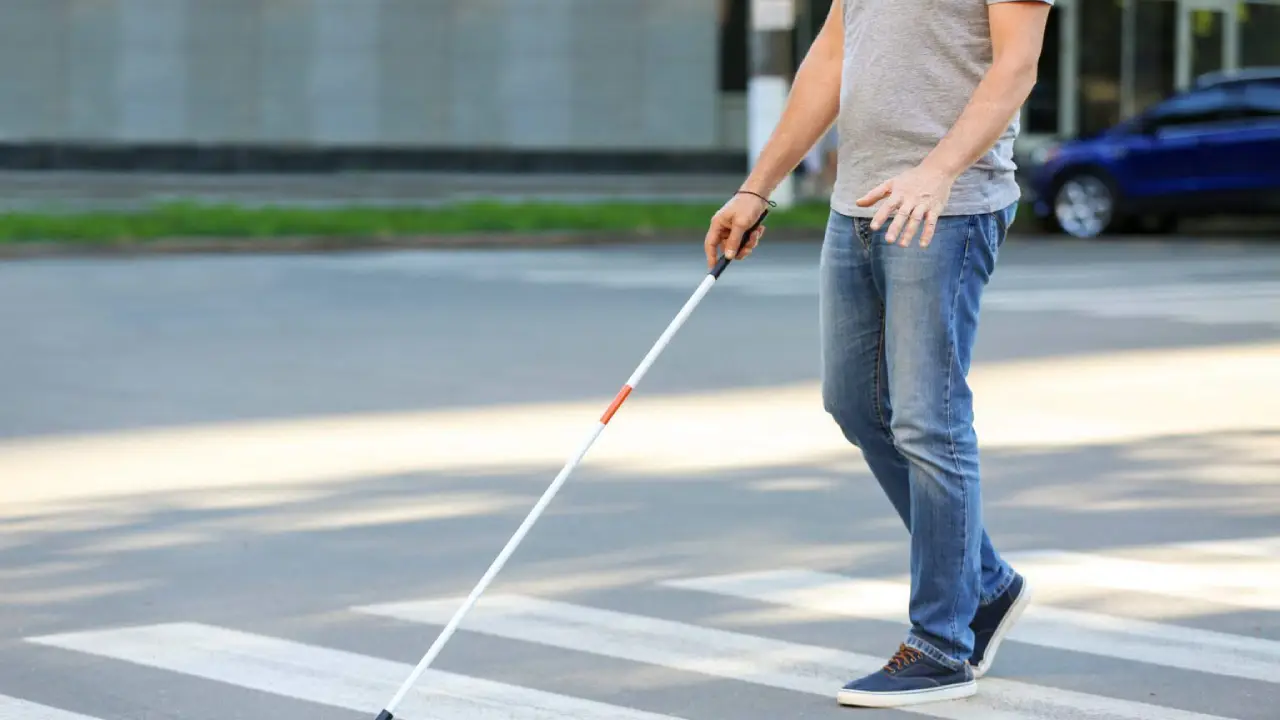
October 15 is observed as White Cane Safety Day across the world to recognise the experiences and achievements of blind and visually impaired people and to highlight the independence and mobility that the white cane can make possible. The theme for 2026, “Lack of Sight Is Not Lack of Vision,” asks sighted people to move beyond long-held assumptions about blindness.
Perhaps the first thing we need to reconsider is what we see when we see a white cane. For many people, the white cane immediately signals blindness. But beyond that recognition often comes a set of assumptions: that the person carrying it needs help, cannot travel independently, cannot work, cannot study, or must necessarily depend on someone else. The cane is visible; the ambition, capability and individuality of the person holding it are not. This is precisely what the theme challenges.
Blindness is a sensory condition. It is not a measure of intelligence, ambition, competence or potential. Yet our social understanding of blindness often collapses all of these things into one idea “dependence”. In Kashmir, this can be seen in seemingly ordinary interactions. A blind person walking with a white cane attracts unsolicited assistance even when they have not asked for it. A stranger assumes that they cannot find their way. A family becomes excessively protective of a blind child because it believes that the world is simply too difficult for them to navigate. A student is encouraged to pursue only those careers considered “suitable” for a blind person.
None of these assumptions necessarily comes from malice. Many come from concern, unfamiliarity or a genuine desire to help. But good intentions do not automatically make an assumption harmless. There is a difference between supporting someone’s independence and assuming that they are incapable of independence. The white cane represents that distinction particularly well.
For a blind person, the cane is not merely a mobility aid. It provides information about the environment, helps identify obstacles and enables navigation. More importantly, it can provide the confidence to move through public spaces without having to hold another person’s arm at every step. Yet the physical function of the cane is only part of its significance. It is also a statement of autonomy: I can move; I can make decisions; I can go somewhere without waiting for someone to take me.
This is why the social response to the white cane matters. When people see a blind person using a cane and immediately assume helplessness, the problem is not with the cane. It is with the expectations society attaches to blindness. This becomes particularly evident when blind people enter spaces that society has traditionally not imagined them occupying. A blind student entering a university, a blind researcher presenting a paper, a blind professional attending a meeting, a blind entrepreneur running a business or a blind traveller navigating an unfamiliar city can still surprise people—not because these things are inherently extraordinary, but because our expectations of blindness remain extraordinarily narrow. The question, therefore, is not whether blind people can have ambitions. Of course they can. The question is why society continues to be surprised when they pursue them.
I have often wondered whether we ask blind children early enough what they want to become, or whether we first teach them what we believe they cannot become. That distinction can shape an entire life. A child who grows up repeatedly hearing that blindness makes certain things impossible may eventually internalise those limitations. A child who is given access to technology, education, mobility training and appropriate support can develop a very different understanding of what is possible.
This is where the white cane connects with something much larger than mobility “opportunity”. A cane cannot make an inaccessible pavement accessible. It cannot remove a vehicle parked across a footpath. It cannot make a poorly designed public building navigable. It cannot make information accessible. And it cannot change an employer’s assumption that a blind person cannot perform a particular job. These are social and environmental barriers.
This distinction is central to the contemporary understanding of disability. The question is not simply what a person’s impairment prevents them from doing. It is also what society has failed to make possible. The white cane, therefore, should not be seen as a symbol of limitation. It can be understood as a symbol of the opposite: the ability to move through the world on one’s own terms. But independence should not be romanticised either. Blind people do need accessible infrastructure, mobility training, assistive technology, reasonable accommodation and support. Independence does not mean doing everything alone. It means having the choice to decide when, how and from whom to seek support. This is an important distinction for families as well.
Protection can easily become restriction. A parent who does not allow a blind child to travel independently may be acting out of love and fear. But if that protection continues indefinitely, it can deny the child the opportunity to develop mobility skills, confidence and decision-making abilities.
Perhaps this is what Kashmir needs to see when it sees a white cane. Not a person to pity, Not necessarily a person to rescue, Not an inspirational story simply because they crossed a road or completed a degree. But a person who has the same ordinary aspirations as everyone else: to study, work, travel, build relationships, make mistakes, succeed, fail, change careers, explore new places and decide what kind of life they want to lead.
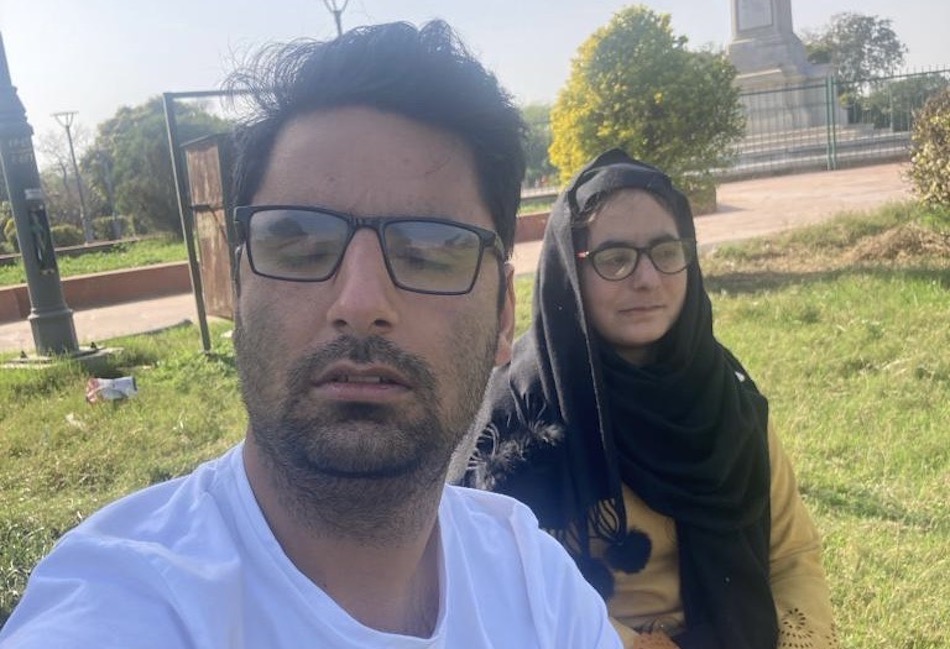
The white cane does not tell us how much a blind person can achieve. It simply tells us that the person carrying it has chosen a tool that helps them navigate the world. The rest is for society to understand. The theme “Lack of Sight Is Not Lack of Vision” is therefore more than a slogan for one day. It is an invitation to reconsider the meaning we attach to blindness.
A lack of sight may change how a person experiences the world. It does not determine how they imagine their place in it. And perhaps the real challenge this White Cane Day is not asking blind people to see differently, but asking the rest of us to see blind people differently.
(The author is Founder of Indian Society of Disability Studies and a Breaking Barriers Fellow at the Department of Empowerment of Persons with Disability, MOSJE Govt. of India. Ideas are personal.)