SRINAGAR: In the Union Territory of Jammu and Kashmir, the Higher Education Department stands at the center of an expanding academic ecosystem where enrollment figures reflect both opportunity and aspiration. In response to a starred question raised in the Legislative Assembly regarding the number of universities and the profile of enrolled students, the Government detailed the structure of higher education across the region, highlighting the scale and diversity of participation.

At present, the higher education landscape comprises nine Public Universities established under their respective statutes and two Central Universities functioning under the aegis of the Ministry of Education, Government of India. These institutions collectively form the backbone of advanced learning in the Union Territory.
The University of Jammu has a total enrollment of 3,946 students, including its offsite campuses. Of these, 3,882 are local students while 64 are non-local, indicating a predominantly regional intake with limited external participation.

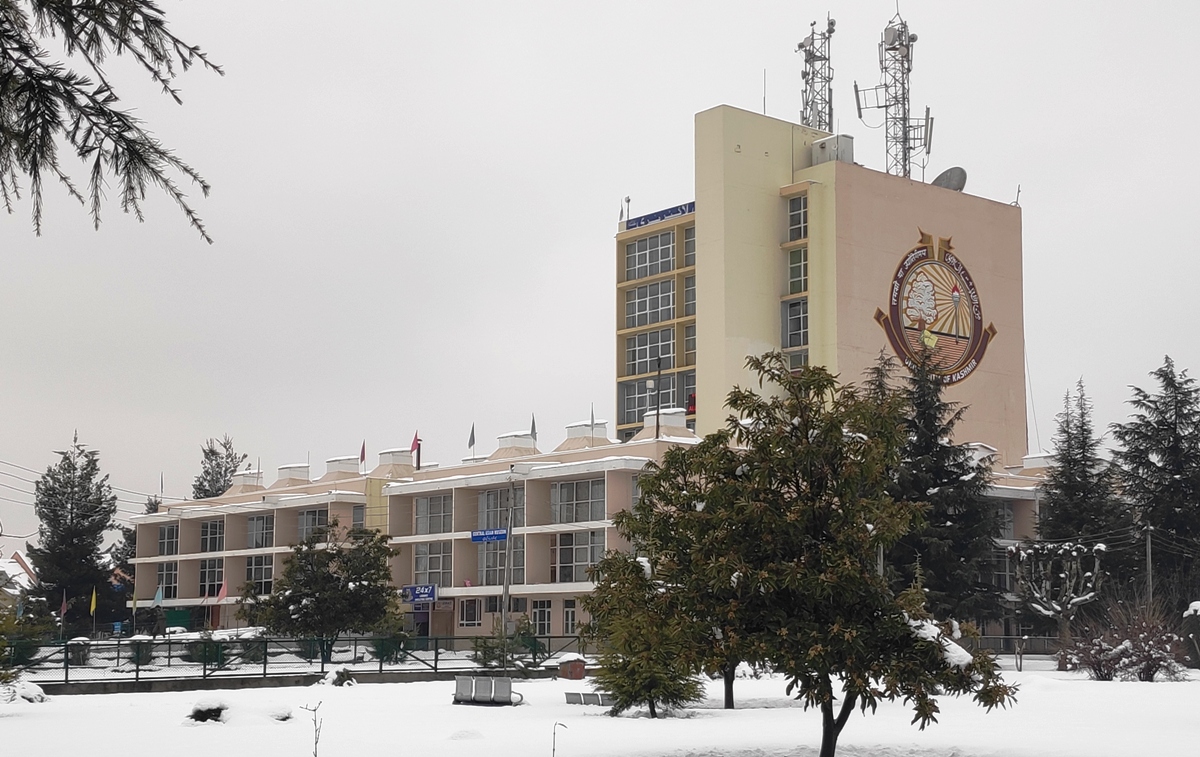
The University of Kashmir reports a significantly higher enrollment of 12,002 students, including offsite campuses. Local students number 11,869, while 133 are from outside the Union Territory, demonstrating modest interstate presence.
The Cluster University, Jammu has 16,711 enrolled students, of which 16,642 are local and 69 are non-local. Similarly, the Cluster University, Srinagar records 16,179 students, with 16,171 local students and 8 non-local students, including 2 foreign nationals and 6 students from other Indian states.
At Shri Mata Vaishno Devi University, enrollment stands at 796 students, with 464 local and 332 non-local students. This comparatively higher proportion of non-local students reflects its broader national appeal.
The Baba Ghulam Shah Badshah University has 2,401 enrolled students, comprising 2,360 locals and 41 non-local students. Meanwhile, the Islamic University of Science and Technology enrolls 4,827 students, including 4,769 local students and 58 non-local students, among whom is one foreign national.
In the agricultural education sector, Sher-e-Kashmir University of Agricultural Sciences and Technology of Jammu (SKUAST-Jammu) records 1,997 students, with 1,633 local students and 364 non-local students, including three foreign nationals. Its counterpart, Sher-e-Kashmir University of Agricultural Sciences and Technology of Kashmir (SKUAST-Kashmir), has 4,959 students enrolled, of whom 4,350 are local and 609 are non-local, including six foreign nationals.
The centrally administered institutions further expand the enrollment footprint. The Central University of Jammu enrolls 3,372 students, including 2,184 local students, with the remaining students drawn from outside the Union Territory. The Central University of Kashmir records a total enrollment of 2,592 students, with 1,993 local students and 599 non-local students.
These enrollment figures collectively illustrate the scale of higher education in Jammu and Kashmir. The majority of students across institutions are local residents, reflecting strong regional participation in tertiary education. However, the consistent presence of non-local and foreign students across multiple universities indicates growing national and international integration.
Beyond enrollment, the Government has also placed on record the sanctioned and in-position strength of teaching and non-teaching staff in each institution, categorized by local and non-local employees. These details, annexed separately, provide further insight into institutional capacity and administrative support structures.
Taken together, the data presents a narrative of expanding access, regional retention of talent, and gradual outward academic engagement. Enrollment remains the most direct indicator of institutional vitality, and across Jammu and Kashmir’s universities, the numbers signal a system that is both locally anchored and progressively outward-looking.
The Higher Education Department of the Union Territory of Jammu and Kashmir has placed on record the sanctioned and in-position strength of teaching faculty across eleven public and central universities. The data reflects both institutional capacity and the extent to which sanctioned academic posts have been operationalized.
The University of Jammu has a sanctioned teaching strength of 442 posts. Of these, 252 faculty members are currently in position. The in-position faculty includes 198 local and 54 non-local teachers, indicating that a significant proportion of sanctioned posts remain vacant.
The University of Kashmir has 570 sanctioned teaching posts, with 373 faculty members in position. Among them, 356 are local and 17 are non-local, reflecting a high degree of local representation within the existing faculty base.
At the Cluster University, Jammu, 16 teaching posts are sanctioned, of which 13 are filled. All 13 in-position faculty members are local, with no non-local representation.
Similarly, the Cluster University, Srinagar has 56 sanctioned posts, while 18 faculty members are currently in position. All 18 are local faculty members.
The Shri Mata Vaishno Devi University has a comparatively strong sanctioned strength of 277 teaching posts. Of these, 125 are filled, comprising 64 local and 61 non-local faculty members. This near parity reflects its broader national recruitment profile.
The Baba Ghulam Shah Badshah University has 241 sanctioned teaching posts, with 93 faculty members in position. Of these, 75 are local and 18 are non-local.
At the Islamic University of Science and Technology, 385 teaching posts are sanctioned, and 135 are currently filled. Among the in-position faculty, 132 are local and 3 are non-local.
The agricultural universities also present substantial sanctioned capacities. Sher-e-Kashmir University of Agricultural Sciences and Technology of Jammu (SKUAST-Jammu) has 411 sanctioned posts, with 237 faculty members in position. Of these, 146 are local and 91 are non-local.
Its counterpart, Sher-e-Kashmir University of Agricultural Sciences and Technology of Kashmir (SKUAST-Kashmir), has 540 sanctioned teaching posts, with 424 filled. The in-position faculty includes 378 local and 46 non-local members.
Among the centrally administered institutions, the Central University of Jammu has 177 sanctioned teaching posts, of which 160 are filled. The faculty composition includes 149 local and 11 non-local members.
The Central University of Kashmir has 195 sanctioned posts, with 108 faculty members in position. Of these, 63 are local and 45 are non-local.
In aggregate, across all eleven universities, a total of 3,310 teaching posts are sanctioned, while 1,938 faculty members are currently in position. This indicates that approximately 58.5 percent of sanctioned posts are filled, leaving a substantial number of vacancies across institutions. The data also shows that local faculty members constitute a clear majority of the in-position teaching staff across most universities, with certain institutions—particularly centrally administered and specialized universities—demonstrating comparatively higher non-local representation.