by Ghulam Quadir Jeelani
Teacher’s Day should prompt educators to examine their role, embrace empathy, authenticity and experiential learning, and become mentors shaping confident, responsible citizens.
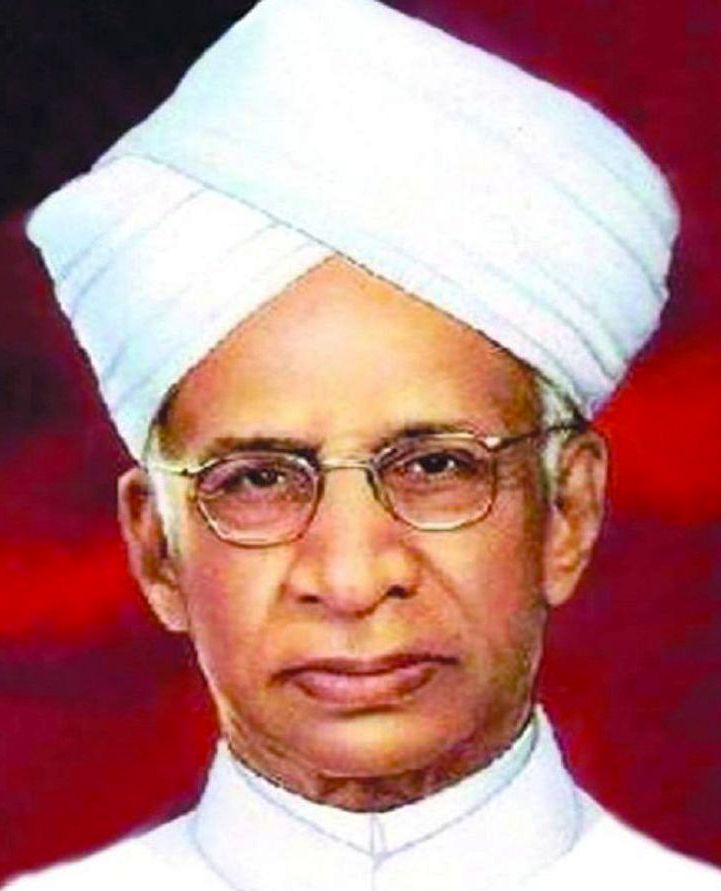
Every year, Teacher’s Day is celebrated across the nation to honour the birth anniversary of Dr Sarvepalli Radhakrishnan, the second President of India, a renowned philosopher, scholar and teacher. The day is marked by gratitude when educators are felicitated and honoured for inspiring learning, instilling values and building future leaders. While these tributes are an undoubtedly well-deserved honour for our nation builders, this occasion also calls for profound introspection. As teachers, we must look inward and ask: are we genuinely doing the job we are meant for, and how are we evolving to meet the demands of the modern classroom?
Education is no longer only about transferring knowledge, but about helping young learners become capable and self-aware to navigate an ever-changing world. In the changing and evolving world, every single action and reaction of the teacher matters deeply. An educator’s true measure is found in their behaviour, their depth of kindness, patience and acceptance. Teachers must evolve from traditional instructors standing at a podium into active mentors and facilitators. In today’s complex world, the true role of an educator is to build individuals who can think clearly and act with profound confidence and responsibility.
At the heart of any transformative education lies the profound and sacred relationship between a teacher and a student. Outside the home, no one is more deeply invested in students’ well-being than their educator. Because teachers spend such a considerable amount of time with their students, they possess a unique, daily opportunity to shape and layer their students’ personalities. Conversely, students have the time to observe their teachers closely, absorbing positive traits, mirroring good values, and learning to navigate the complexities of character. Teachers are entrusted with the responsibility to act in the best interest of the students and care for them as their own.
The relationships formed between students and teachers within the school environment are incredibly powerful. I am vividly reminded of a day I called a parent to school after noticing unhealthy behavioural changes in his son, who was one of my students. The father arrived, deeply frustrated that his son was struggling both academically and behaviorally.
Turning to him, he delivered a firm but beautiful lesson. “When you are at home, I am your father,” he said. “But when you are at school, your teacher is your father. He is your second parent.”
This dynamic highlights just how special and vital the teacher-student bond truly is. These relationships are not formed overnight; they are forged through immense patience, trust, kindness, and mutual respect. Both parties must invest in this relationship, and when these bonds are properly nurtured, it is ultimately society that reaps the benefits. Great teachers create great learners, and great learners inevitably grow into great citizens.

As the American novelist William Saroyan wisely noted, “Kids are always the only future the human race has.” For those of us currently in education, and those aspiring to join this noble profession, this must be our guiding light. Let us strive to leave a lasting, positive impact and mould the future for the better. The influence of a dedicated teacher ripples through countless lives, making a tangible difference in the world. However, this is a two-way process; students must look beyond their exams, grades, and syllabi to truly appreciate their teachers. Observe your teachers closely. If an educator is truly capable, a student can learn life’s most valuable lessons without even opening a book.
Beyond nurturing strong bonds, my years in the classroom have revealed another crucial truth: simply delivering a lesson without actively involving the students results in passive, uninspired learning. When we merely talk at our students rather than engage them, their responsiveness and comprehension fade away. This realisation was a turning point in my career, sparking a conscious journey to figure out how to truly engage a classroom. Along the way, I have discovered a few key principles that I want to share
The first and most important rule is simple: Be original. Every educator has their own unique style and their own world of communication. Some teachers speak with booming enthusiasm, while others command the room with a soft, steady voice.
Some are naturally humorous, while others are deeply serious. Some walk around the room dynamically as they teach, while others stand perfectly still at the podium. You might observe a colleague who stands quietly, weaving beautiful stories that effortlessly captivate students. But if that is not your natural teaching style, trying to copy it will likely be disastrous for your class. Students are highly perceptive; they can sense a lack of genuineness instantly. So don’t try to be a carbon copy of someone else. Instead, lean into your own strengths and go your own way. Deliver your lessons in the manner that feels most comfortable and natural to you. To be a truly engaging educator, you must first be yourself.
The second important principle is to realise that teaching and learning are not the same thing. We must move away from the outdated idea that teaching is just about transferring information. We cannot simply download knowledge into a student’s brain as if we were using fast technology. If knowledge transfer were that easy, everyone would instantly absorb everything being said, but this doesn’t work. Think about how children first learn the most critical skills in life: walking, eating, and talking.
They do not learn these things because someone gave them a set of instructions. They learn through trial and error, often without a formal teacher. Our job is simply to hold their hands and support them while they learn by doing. As modern educators, we must bring this natural method into our classrooms. Instead of constantly instructing, we must provide the right environment and support, allowing students the freedom to learn through their own experiences and mistakes.
Another important step to help students truly learn is to master the art of getting on their “eye level”.We very often do it in our personal lives. When we want to tell a story or read a book to young children at home, we drop to our knees or lift them into our arms to meet their eyes. True communication requires connection, and connection doesn’t occur when you are talking down to someone. The same principle applies in the classroom. Effective teaching requires stepping down from the podium and bridging the gap. Getting on the student’s eye level means viewing the subject entirely from their perspective. Breaking difficult and abstract concepts so that they make sense to younger minds is an empathetic art.
To foster true learning, a teacher must let go of the need to control every aspect of the classroom. Students must be invited to become active problem-solvers. By stepping back and acting as supportive collaborators, educators can create an environment rooted in shared discovery. When our lessons are designed to captivate and involve students, learning unfolds naturally.

Ultimately, genuine learning is experiential. It thrives when students are empowered to solve problems hands-on, supported by meaningful feedback that helps them refine both their understanding and their character.
In a rapidly changing, technology-driven world, a teacher’s primary role is no longer merely to impart knowledge. Today’s educators are called to be mentors, facilitators, innovators, and counsellors. To truly be the builders of our nation, they must gracefully balance tradition with modernity, academic rigour with emotional intelligence, and personal example with professional excellence.
(The author is an Educator at Govt Model Hr Sec School, Zoohama. Ideas are personal.)