by Syed Nazakat
A Kuala Lumpur discussion highlights why questioning AI’s power, governance, and consequences matters more than certainty as global investment reaches speculative heights

I have often found moderating a session more challenging than speaking. Speaking allows you to follow your own train of thought; moderating requires keeping multiple threads in mind at once. It means listening carefully, anticipating where the conversation might go, and guiding questions without overshadowing the voices you are there to highlight. The goal isn’t to control the conversation. It’s to make space. Space for questions. Space for disagreement. Space for insight to emerge.
It was with that in mind that I found myself on Thursday morning in Kuala Lumpur, moderating a session at the GIJN conference. Across from me were four remarkable women whose work, skill, and clarity have, each in their own way, helped shape the global conversation on open data and artificial intelligence.
Each of them carried a perspective honed by years of investigation, innovation, and fearless inquiry—women who had spent countless hours tracing the fault lines where technology, power, and society collide.
Natalia Viana, the Brazilian investigative journalist, has spent years tracing the fault lines where technology, power, and democracy collide. Beside her, Athandiwe Saba of South Africa leads an AI-powered newsroom initiative at Code for Africa, probing how algorithms touch the everyday lives of millions. Allison Killing, the Pulitzer Prize–winning British journalist, brings the precision of an architect and the forensic rigour of a satellite investigator. And Karen Hao, whose book Empire of AI: Dreams and Nightmares in Sam Altman’s OpenAI has rippled far beyond Silicon Valley, joined them with a voice equal parts curiosity and caution.
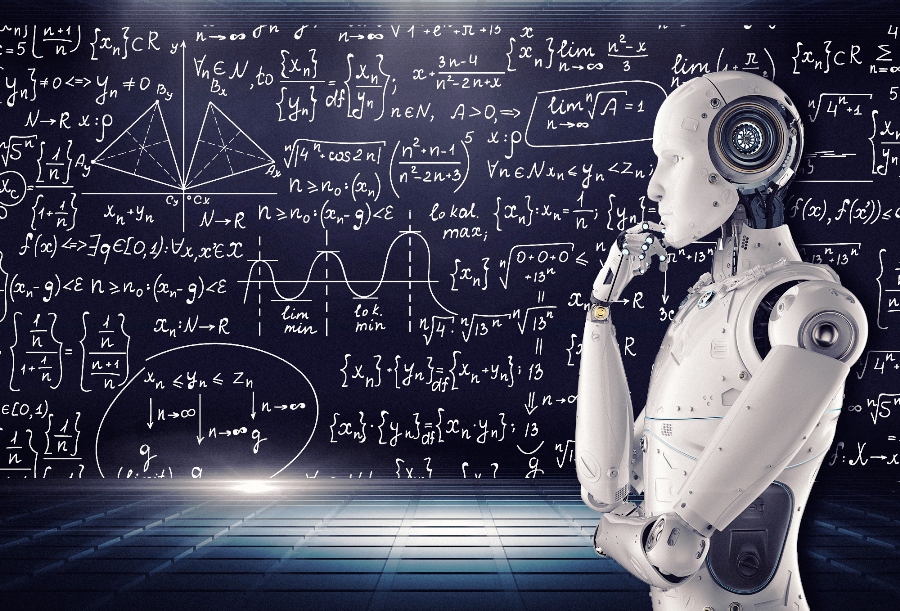
The conversation began with a seemingly simple question: Who governs AI, and who sets its rules? But that question quickly opened into far more urgent territory. Who truly benefits from these systems—and who is left behind? How might AI shape public opinion, or erode the fragile trust that binds society together? Which stories about AI are amplified, and which remain untold? And, perhaps most unsettling of all: what happens when the power to shape global information and knowledge is concentrated in the hands of a few companies, far removed from public scrutiny?
Later in the day, I found myself in conversation with another veteran journalist and great friend of DataLEADS, Paula Fray, who serves on South Africa’s Competition Commission inquiry into media and digital platforms. Talking with her reminded me of something we often forget in a world obsessed with speed and answers: Sometimes the most important thing we can do is stay with the questions.
Answers feel good. They assure us (sometimes the illusion) that the world is simple, that we’ve figured it out. But questions—they keep us awake. They keep us curious. They force us to look deeper and to reimagine things. And in a moment shaped by technologies that promise certainty, control, and prediction, asking questions also becomes an act of courage.
In the world of AI, where everyone is chasing the next big miracle, questions are our safety rails. They stop us from giving in to the hype. They push us to think, not just react. And perhaps most importantly, questions draw us into a shared conversation. They create space for collective ownership, dialogue, and scrutiny at a time when technology decisions increasingly shape daily life.
As the global discussion unfolds about the role of AI in our lives and our shared future, one question lingers: if AI becomes embedded in the routine fabric of society, what kind of world will it eventually create? And linked to that is a growing concern over the scale of current investment in the sector—whether it reflects genuine long-term potential, or signals the emergence of a speculative AI “bubble.”
Those questions echoed far beyond the room in Kuala Lumpur—and, interestingly, they are now reverberating inside Silicon Valley itself.
Just days earlier, Google CEO Sundar Pichai warned in an interview with the BBC that the trillion-dollar AI investment boom has “elements of irrationality.” Normally cautious in his public remarks, Pichai was notably forthright: if the bubble were to burst, no company—including Google itself—would be spared its impact.
“We can overshoot,” Pichai admitted, comparing today’s frenzy to the excesses that preceded the early internet crash, even as he insisted that AI’s long-term impact will be profound.
One thing is undeniable: we stand at a pivotal moment in the development of AI. Big corporations and governments are marshalling talent and capital in pursuit of their promise. From policy labs in Washington and Brussels to innovation hubs in Bangalore, Nairobi, and Shenzhen, AI is no longer a niche technology. It is a central driver of economic growth, social transformation, and global competition.
And yet, this moment demands a conversation—deliberate, informed, and transparent. Beyond the headlines and the hype, we must ask hard questions about governance, ethics, accountability, and equity. We must probe the impact on jobs, education, healthcare, and public trust, and the ever-present risks of bias, discrimination, and AI-amplified misinformation. And we must ensure that the AI boom does not obscure the fragile and human realities beneath.

As we navigate this uncharted territory, one point is becoming increasingly clear: the real question is not what AI will do to us, but what we are prepared to allow it to become.
That recognition places a responsibility on all of us. It underscores the need for dialogue—deliberate, informed, and persistent. It demands transparency—of design, of data, of the decisions embedded within these systems—so that they remain open to scrutiny and accountable to the public they affect.
AI, after all, is a story we are writing together. And the urgency lies in remembering that the mirrors we build today will shape the societies we inherit tomorrow.
(Author is CEO and Founder of DataLeads. Ideas are personal.)