by Bhat Hilal Ahmad
A data-driven reassessment of Jammu and Kashmir’s reservation structure, release of the GD Sharma report, and revisiting Rule 17 are essential to restore proportionality, fairness, and merit.
Jammu and Kashmir, with a young demographic profile, has one of the highest proportions of general category population in the country, estimated at around 60 to 70 per cent, but the lowest open merit quota, which roughly stands between 30 to 40 per cent. States across the country with comparatively smaller general category populations continue to maintain a 50 per cent reservation for the open merit share. A shift from policy decisions and demographic legal principles has led to a structural framework that significantly diverges from national norms.
This is when courts across India have always emphasised that reservation policies must rest on contemporary quantifiable evidence. Although the government claims that the present reservation framework follows the Reservation Act 2004 and its rules according to 2005, which should be read with the new notification SO-176 of March 2024, many reservations and concerns have emerged about proportionality, transparency, and the opportunity of merit.
The Supreme Court, in its verdict on November 16, 1992, in the Indra Sawhney versus Union of India case, held that reservations should not ordinarily exceed 50 per cent except in exceptional and extraordinary circumstances.
However, in 2022, in the Janhit Abhiyan case, the Court, while upholding the ten per cent reservation for economically weaker sections, observed that the fifty per cent ceiling is not a compulsory limit but a rule of prudence.
Taking a flexible and wider interpretation of this directive, Parliament in February 2024 amended the 2005 reservation rules, and reservation percentages were altered by introducing EWS at ten per cent and increasing it to 20 per cent for ST, 28 per cent for OBC, while RBA saw reductions. This was largely based on publicly available socio-economic surveys and not on an updated census or data.
Consequently, the LG administration announced new quotas like Paharis, Paddari, Koli, Gadda Brahmin, and other castes. The Social Welfare Department quickly followed by distributing new proportions, which led to a decrease in the open merit quota. As per the new policy, 61 per cent of seats in government jobs and professional admissions are reserved, and only 39 per cent are for the open merit share. This clearly shows that open merit candidates are being slowly pushed out of the system, though the government stands by its constitutional interpretation and claims that it aligns with constitutional guidelines and court rules.
In just the last two years, 8.21 lakh reservation certificates were issued in Jammu and Kashmir, of which 6.78 lakh (82 per cent) were issued in Jammu and only 1.45 lakh in Kashmir. For Scheduled Castes, more than 69,000 certificates were issued in Jammu, while only 474 were issued in Kashmir, which is just 0.64 per cent. For STs, 5.25 lakh certificates were issued in Jammu, while 76,656 were issued in Kashmir. Out of 21,386 EWS certificates, 18,963 were issued in Jammu and only 2,431 in Kashmir. Similarly, for ALC, Jammu is ahead with 85 per cent, and it is only for RBA that Kashmir is ahead with 31,804 certificates, while Jammu has 15,550.
While looking at the shares in the second-line bureaucracy, JKAS, JKAS (Accounts), and JKPS, the numbers themselves tell the story of the last three years. In 2023, only 39 selections were made for open merit in JKAS as compared to 50 selections made for reserved categories like SC, ST, and EWS.
In 2024, open merit selections were 50, while 43 selections were made for reserved categories. In 2025, 24 selections were made for open merit, while the numbers remained almost equal in all three civil services.
In the Jammu and Kashmir Accounts Service, 29, 27, and 15 selections were made from open merit in 2023, 2024, and 2025, while there remained 26, 25, and 9 for reserved categories in 2023, 2024, and 2025, respectively. Though the numbers do not violate any legal quota, they raise questions about fairness and representation.

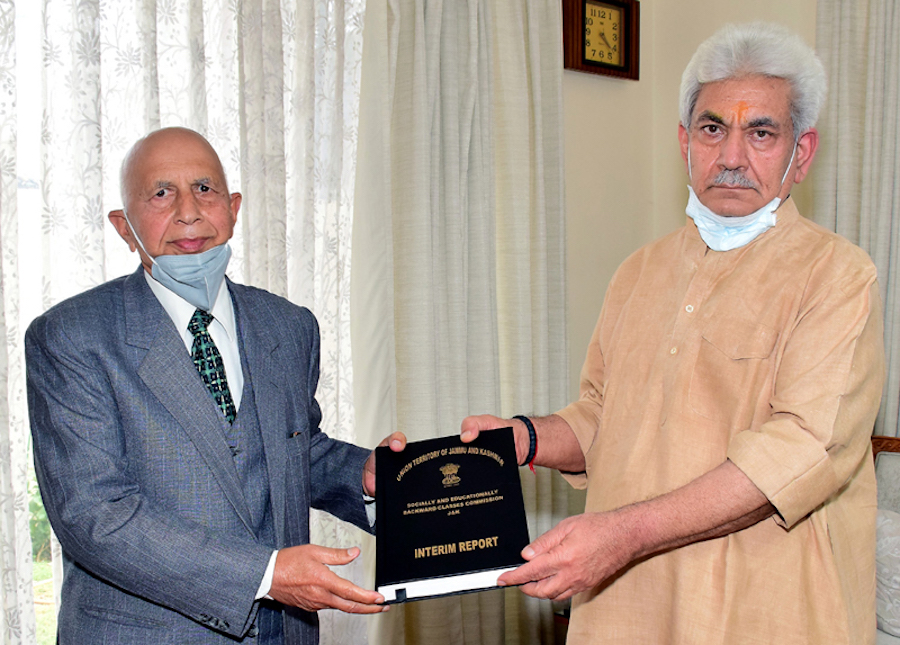
In March 2020, the Jammu and Kashmir government constituted the G D Sharma Commission to examine backwardness and rationalise reservations for different categories, and the report is yet to be made public. The current reservation structural framework stands at ten per cent for EWS, ten per cent for RBA, eight per cent for SC, eight per cent for OBC, ten per cent for ST-1, ten per cent for ST-2, and four per cent for ALC/IB, which makes a total of 60 per cent for the reserved categories. The remaining 40 per cent are shared by the general category and horizontal reservations.
The debate on reservations aggravated with NEET 2024 results when many high-scoring students were unable to secure MBBS seats, and even in certain colleges, no candidate from the general category could qualify for admissions. A central element of the debate is Rule 17, which allows reserved categories to initially take open merit seats and later shift back to their respective categories. When this happens, the seat already occupied does not automatically return to the open merit pool, thereby further reducing the share available to open category competition.
Moreover, horizontal reservations, which cover women, ex-servicemen, sportspersons, and persons with special abilities, appear to be applied largely to the open merit quota rather than proportionally across all categories. This again makes the general category bear the brunt of a disproportionate share of adjustments, which should otherwise have been distributed evenly.
In December 2024, a cabinet sub-committee was constituted to consult all stakeholders to review and revisit the existing policy to reshape a more acceptable reservation policy. The report was approved by the Council of Ministers and sent for final approval to the Honourable LG. If sources are to be believed, the Cabinet has reportedly slashed reservation for EWS by seven per cent and RBA by three per cent while managing a much-needed ten per cent quota for the general category, subject to approval from the LG administration.
As per the Civil Service Combined Competitive Rules 2018, the government accelerated the process of recruitment in the last two years, in which more than 11,000 recruitments were made in JKPSC and JKSSB, including 3,478 recruitments in Jammu and Kashmir Police Constable. This includes 621 positions in the Health and Medical Education Department and 351 clerical positions.
As of now, 17,953 positions are lying vacant in government departments, including 2,909 gazetted and 15,000 non-gazetted positions. A total of 7,285 positions remain vacant in the Health and Medical Education Department alone. If the same trend follows in filling these vacancies, it will be very hard for merit to survive, leading to an absolute brain drain. Moreover, the absence of updated data and a clear matrix raises questions about the basis of the changes and modifications.

The question is not about the reservation but about the disproportionate way in which it is distributed. The G D Sharma Committee report should be made public for scrutiny. It is high time to go for a data-driven, neutral, and transparent re-examination based on updated statistics and guided by constitutional principles. Recalibration rather than an overhaul of the structural framework will suffice.
The open merit share must reflect the demographic proportion. Distribution of horizontal reservations should be made across all categories rather than concentrating them solely on the general category. The much-controversial Rule 17 should be revisited and possibly removed to ensure a proper balance of seats. This will establish a structural framework based solely on fairness and transparency, grounded in proportionality and opportunity, while maintaining a balance between merit and constitutional limits. This will lead to an equitable and rationalised reservation system that is effective and acceptable to all sections of society.
(The author holds a Master’s and an MPhil in Biotechnology, along with an MEd degree. The ideas are personal.)