by Mir Altaf
The Chinar Book Festival offers Kashmir an opportunity to build a year-round reading culture, strengthen literary traditions, promote translation, and emerge as India’s reading capital
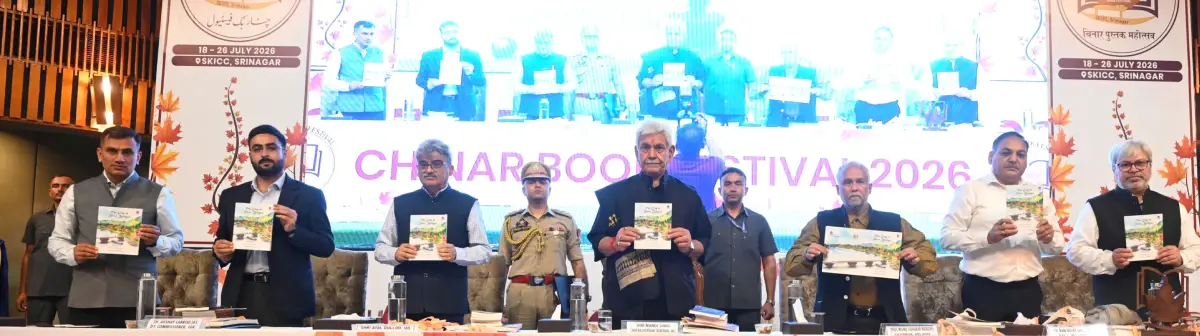
Every season, Dal Lake mirrors the changing colours of the Kashmir sky. This July, however, its tranquil waters reflected something even more beautiful: the gathering of readers, writers, publishers, educators and students at the Sher-i-Kashmir International Conference Centre (SKICC) for the Third Edition of the Chinar Book Festival from July 18 to July 26, 2026. Against the iconic backdrop of the Zabarwan hills, the festival promises to celebrate books, ideas and imagination.
Yet, the significance of this literary gathering extends far beyond its exhibition halls and bookshelves. In an age dominated by shrinking attention spans, algorithm-driven content and fleeting digital interactions, an initiative dedicated to reading represents a quiet but powerful act of cultural and literary confidence. More importantly, it invites us to ask an ambitious yet meaningful question: Can Kashmir become India’s Reading Capital?
This is not merely a rhetorical aspiration. Across the world, cities have demonstrated how sustained investment in books, libraries and literary programmes can enrich cultural life, strengthen civic identity and foster public engagement. A case in point is Hay-on-Wye in Wales which reinvented itself as the world’s first “book town”. Further, from Madrid and Sharjah to Tbilisi and Strasbourg, literary initiatives have become powerful instruments of education, inclusion and community building. Within India, cities such as Jaipur and Kolkata have likewise shown how a vibrant literary culture can become an integral part of a city’s identity and can even bring international acclaim.
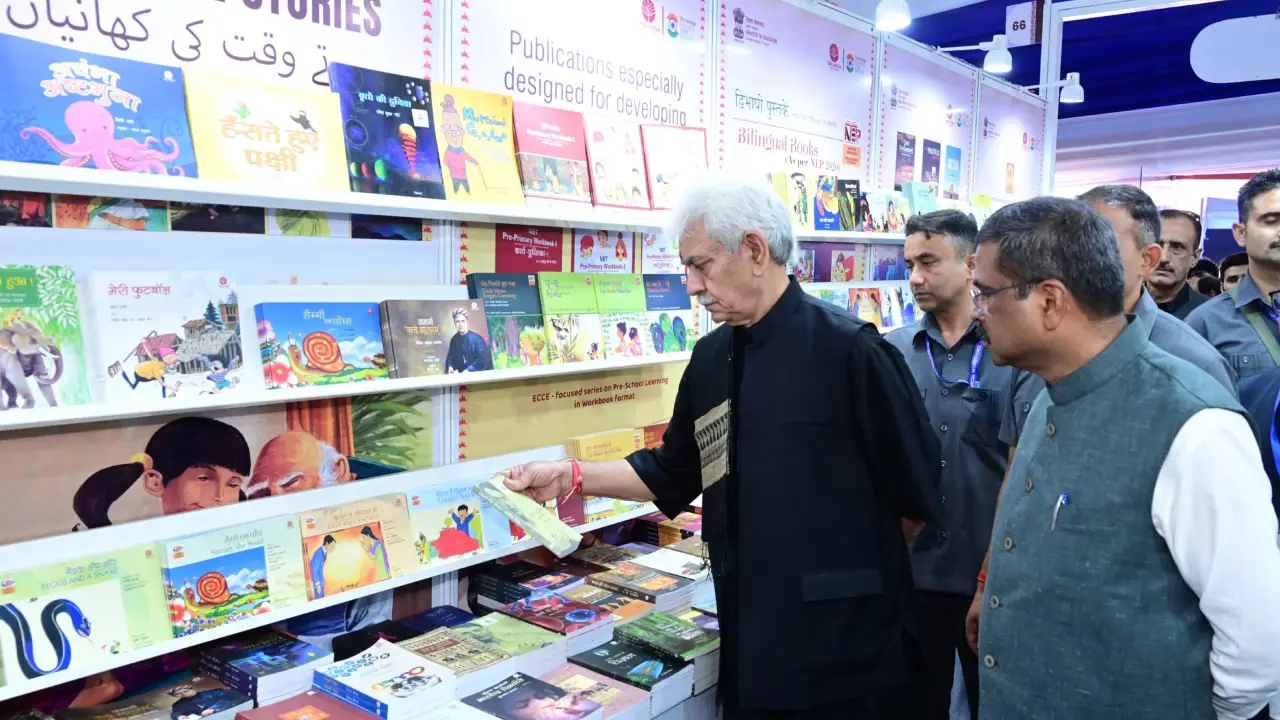
There is no reason why Srinagar cannot aspire to a similar distinction. Kashmir possesses all the essential ingredients: an extraordinary literary heritage, multilingual traditions, a growing community of young readers, reputed educational institutions and an unmatched natural setting that inspires reflection and creativity.
Imagine neighbourhood libraries bustling with readers, school reading clubs becoming as common as sports clubs, community book circles flourishing in towns and villages, annual writing residencies attracting authors from across the country, and literary walks introducing visitors to the Valley’s rich intellectual history. Such initiatives would transform the festival from an annual event into a year-round movement.
Becoming India’s Reading Capital is not about surpassing cities like Kolkata or Jaipur; it is about building upon Kashmir’s own intellectual legacy and giving it renewed relevance in the twenty-first century.
More Than a Tree
Yet before imagining Kashmir’s future as a reading capital, it is worth reflecting on the symbol that gives the festival its very name. The Chinar is far more than one of Kashmir’s most iconic trees. For centuries, it has symbolised endurance, wisdom and continuity. Beneath its expansive canopy, scholars debated ideas, poets recited verses, Sufi saints reflected upon the human spirit and communities gathered to exchange knowledge.
The Chinar has silently witnessed the Valley’s remarkable civilisational journey from the scholarship associated with the ancient Sharada tradition to the flowering of Sanskrit literature, the refinement of Persian learning, the spiritual richness of Sufi philosophy and the enduring legacy of Kashmiri and Urdu poetry. It has stood through changing eras, reminding us that Kashmir’s history is not defined solely by politics or geography but also by its profound contribution to the world of ideas.
Bridge Between Cultures
If books carry ideas, translation allows those ideas to travel. Kashmir’s literary landscape extends far beyond Kashmiri and Urdu. Gojri, Pahari, Shina, Balti and several other languages preserve remarkable oral and written traditions that deserve national recognition. Translation offers an opportunity in two directions. It enables readers across India to discover Kashmir’s literary heritage while allowing young Kashmiris to engage with the finest works produced in Hindi, Tamil, Bengali, Malayalam, Marathi, Assamese, Odia, Kannada and other Indian languages.
Translation does more than overcome linguistic barriers. It shortens cultural distances. When people encounter one another through stories, poetry and shared human experiences, stereotypes gradually give way to understanding. In a multilingual democracy like India, translation strengthens national unity not through uniformity but through mutual respect.
The Chinar Book Festival can emerge as a national platform for celebrating translators, launching multilingual editions and encouraging collaborations between writers from different linguistic traditions.
The Economics of Reading
Books enrich the mind, but they also strengthen the economy. Behind every book lies an ecosystem of writers, editors, translators, designers, illustrators, printers, publishers, booksellers and distributors. Literary festivals generate employment, encourage entrepreneurship and stimulate local businesses ranging from hospitality and transport to handicrafts and tourism.
Around the world, cities known for their literary culture have successfully integrated books into their economic identity. Visitors attend festivals, explore bookshops, participate in cultural events and contribute to the local economy. Literature becomes an integral part of sustainable cultural tourism.
For Kashmir, this presents a valuable opportunity. While the Valley is globally admired for its natural beauty, literature can add another dimension to its identity. Visitors may arrive for its landscapes, but they can also leave carrying its stories, poetry and intellectual traditions. In doing so, books become ambassadors of Kashmir’s culture far beyond its geographical boundaries.
One Book for One Child
Perhaps the true measure of the Chinar Book Festival’s success will not be found in attendance records or book sales. It will be found in the hands of a child carrying home a book. Imagine every schoolchild visiting the festival receiving a carefully selected book. Imagine storytelling sessions where children meet authors whose books they have only read in classrooms. Imagine students from Gurez, Kupwara, and the tribal belts of Jammu and Kashmir experiencing, perhaps for the first time, the excitement of a literary festival. Such experiences often shape lives.
The National Education Policy (NEP) 2020 rightly emphasises foundational literacy, multilingualism, libraries and joyful learning. The Chinar Book Festival can become a natural extension of that vision by nurturing curiosity beyond examinations and encouraging reading as a lifelong habit. After all, today’s reader becomes tomorrow’s writer, innovator, teacher, policymaker or scientist.
If Kashmir wishes to build a true knowledge society, children must remain at the centre of every literary initiative.
Knowledge Movement
The organisers have already laid a strong foundation by establishing the festival as an annual celebration. The next step is to transform it into a reading movement. A “One Child, One Book” campaign, district-level reading festivals, translation fellowships, mobile libraries, literary residencies and community reading initiatives could ensure that the spirit of the festival continues throughout the year.

Kashmir has captivated the world for centuries through the splendour of its mountains, lakes and gardens. The time has now come for it to be equally recognised for the depth of its ideas, the richness of its literature and the vibrancy of its reading culture.
If each edition of the Chinar Book Festival inspires one more reader, one more writer, one more translator and one more child to dream through books, it will do far more than celebrate literature, it will help restore Kashmir’s historic identity as a land of learning and lay the foundations for its emergence as one of India’s foremost centres of reading and literary culture.
(The author is a teacher with the School Education Department, Government of Jammu and Kashmir, with over 16 years of experience in education, and public administration. Ideas are personal.)