by M Saleem Beg
NH-701A aims to connect remote Kashmir valleys, yet construction risks destabilising slopes, harming biodiversity, and disrupting communities, highlighting the challenge of sustainable infrastructure in fragile Himalayan ecosystems.
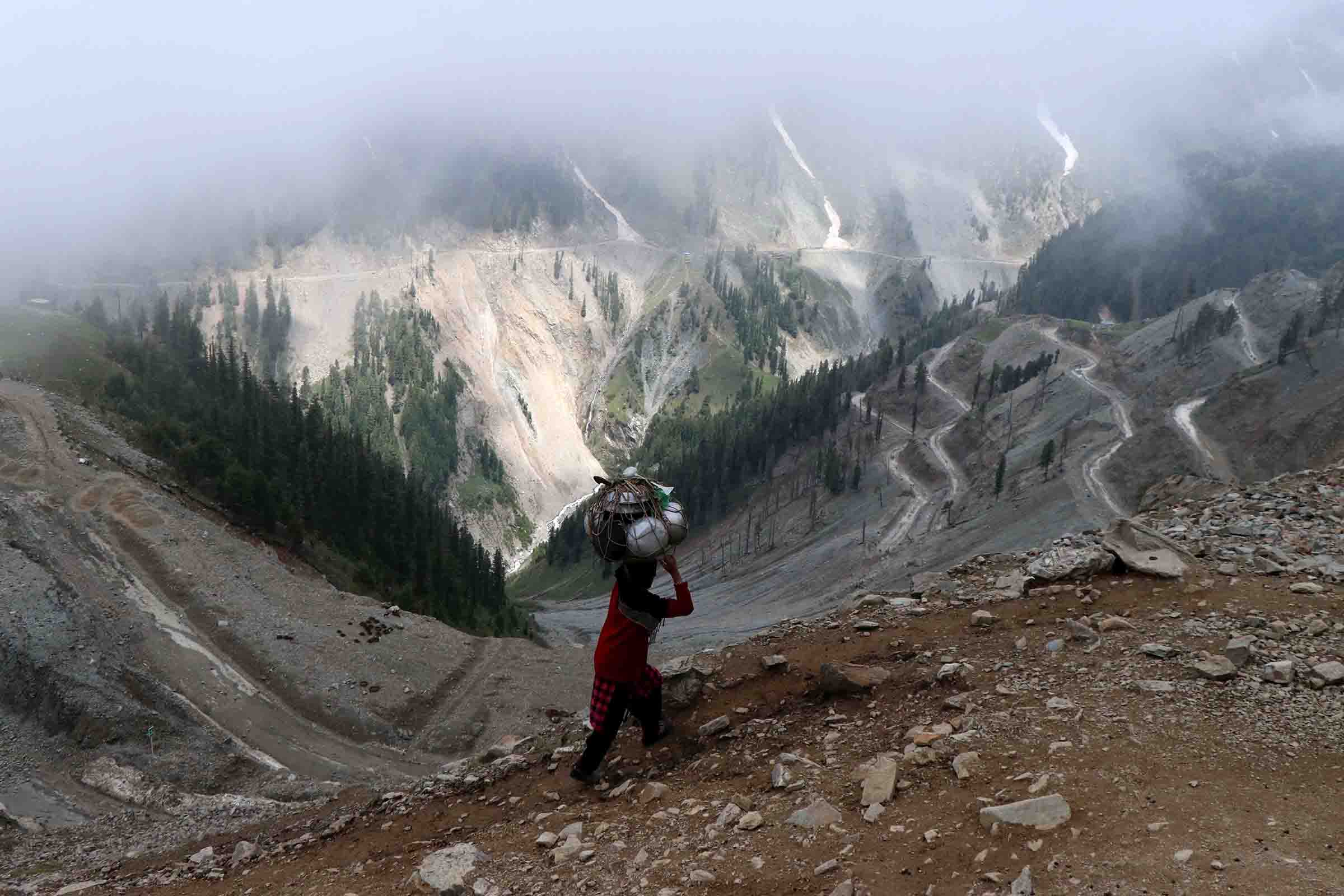
In mountainous and rural regions, roads are not merely transport corridors; they are also vital infrastructure. They connect isolated habitations with markets and social infrastructure, reducing physical and social isolation. While roads are essential lifelines in mountainous regions, their construction and expansion often come at a high environmental and social cost. The construction of these roads involves frequent road cutting that destabilises slopes, triggering landslides, rockfalls, and soil erosion.
These hazards not only damage ecosystems but also place human lives and infrastructure at constant risk. Therefore, the construction of highways is never a simple matter of connectivity and engineering. It involves navigating steep gradients, fragile soils, sensitive ecosystems, and human communities whose lives are deeply intertwined with their landscapes. This write-up is about one such road, newly designated National Highway 701A, critically located in one of the most vulnerable terrains across the Pir Panjal mountain range of Jammu and Kashmir.
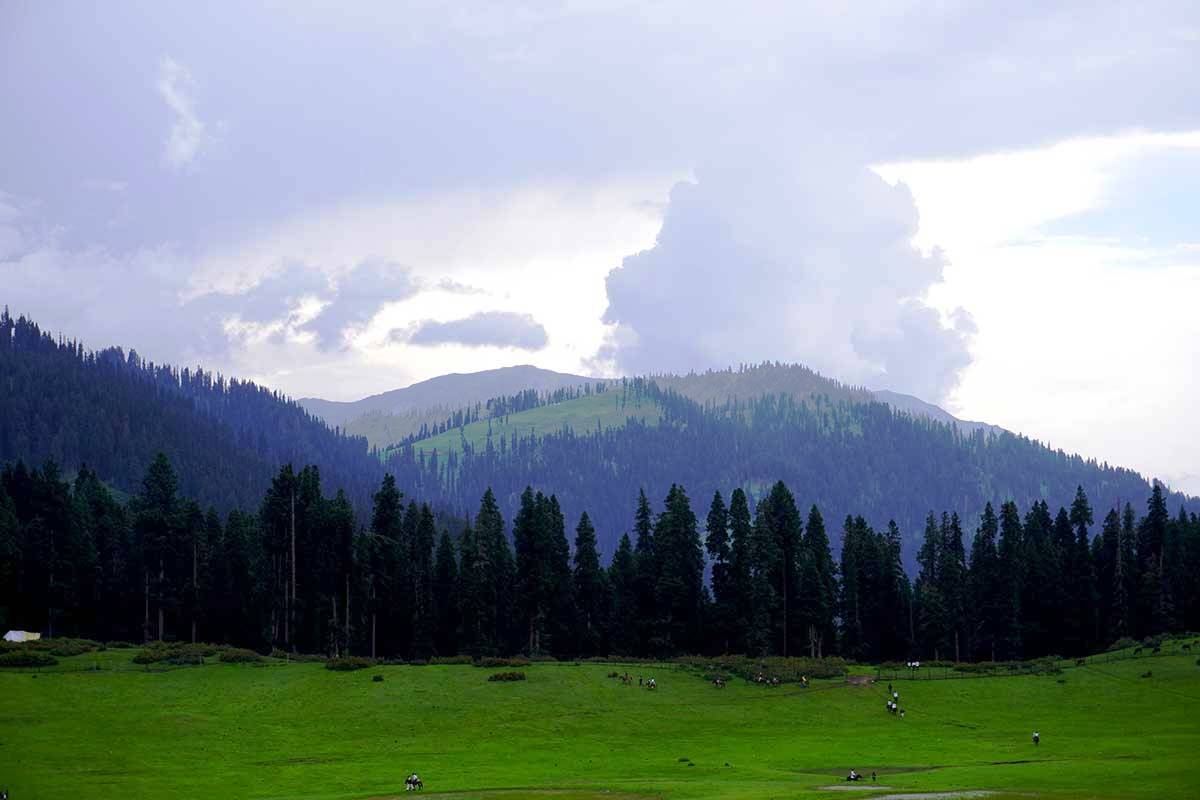
In October 2024, the Ministry of Road, Transport & Highways (MoRTH) issued a tender notice for a two-lane highway with paved shoulders, NH-701A. The road is proposed to run from Shopian to Magam via Kellar, Pakherpora, Yousmarg, and Doodhpathri, names that evoke both the pastoral traditions of Kashmir and its fragile alpine meadows. At first sight, the project appears to address a long-standing demand: better connectivity for remote valleys that remain cut off during winters, hindering trade, tourism, and healthcare access.
But the Himalayan context complicates this promise. Each cut into the slope destabilises fragile rock formations; each felling of old-growth forests removes a carbon sink and wildlife habitat; each diversion of a stream interrupts hydrological cycles that sustain both villages and downstream ecosystems. NH-701A thus brings into focus the recurring dilemma of development in the Himalayas: can connectivity be achieved without sacrificing ecological integrity and community well-being?
India’s environmental governance system has, since the 1990s, developed instruments to address precisely such dilemmas. The Environmental Impact Assessment (EIA) Notification of 2006 provides a framework for evaluating projects that may significantly alter land use, biodiversity, water systems, and social structures (MoEFCC, 2006). It requires project proponents to prepare a detailed assessment, subject the report to scrutiny, and invite public consultation. In principle, this framework ensures that development decisions are not taken in isolation but consider ecological and social costs.
Globally, similar frameworks exist. The United States introduced its National Environmental Policy Act (NEPA) in 1970, while the European Union requires environmental assessments for transnational infrastructure under its Directive 2011/92/EU. In mountainous contexts such as the Alps, strict regulations limit road expansion to protect fragile landscapes and encourage alternatives such as tunnels or railways (Bätzing, 2003). In comparison, India’s system is robust on paper but often undermined by exemptions, weak enforcement, and inadequate participation of affected communities (Menon & Kohli, 2018).
A striking example of this dilution is the 2022 notification by the Ministry of Environment, Forests and Climate Change (MoEFCC), which exempted highway projects within 100 kilometres of the Line of Control from prior environmental clearance (MoEFCC, 2022). The rationale was strategic: enabling rapid road-building in sensitive border areas was considered vital for defence. However, this exemption applies not only to strategic projects but also to civilian highways such as NH-701A, which traverse ecologically fragile zones. This exemption effectively bypasses the structured scrutiny of the EIA, particularly the crucial step of public consultation.
Yet, the Ministry itself recognised the risks of blanket exemptions. Its Office Memorandum of February 2023 listed safeguards, including mandatory risk assessments, landslide management plans, eco-fragility studies, tunnelling impact assessments, and detailed hydrological surveys (MoEFCC, 2023). These conditionalities highlight the paradox: while projects may be exempted from clearance, they are not exempted from ecological reality.
The Kashmir Valley forms part of the northwestern Himalayas, a region marked by high seismicity, complex geology, and sharp climatic variations. These conditions make large-scale infrastructure particularly hazardous.
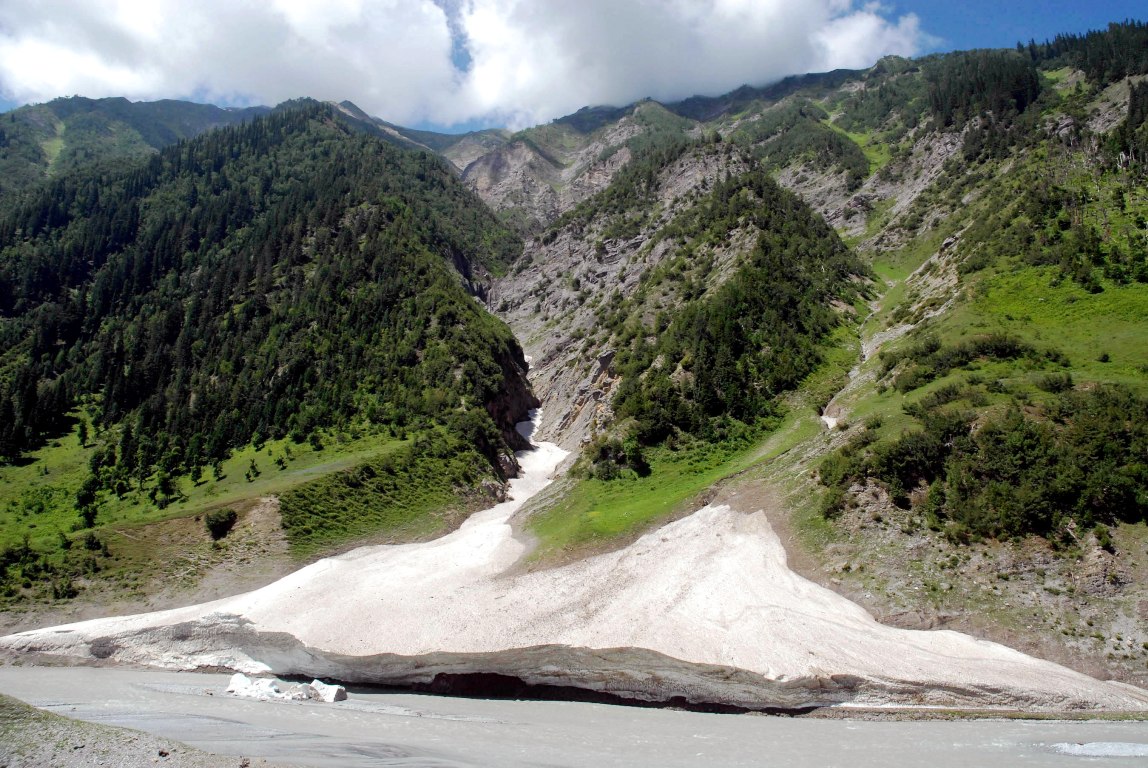
The proposed road alignment crosses zones fed by glacial meltwater streams and springs. Disturbances to these systems can have cascading effects. Sediment loads from slope-cutting may clog irrigation channels, alter stream courses, and degrade water quality (Thakur & Gupta, 2019). In the context of climate change, when glaciers in the Himalayas are already retreating at alarming rates (Bolch et al., 2012), additional anthropogenic stress compounds vulnerability.
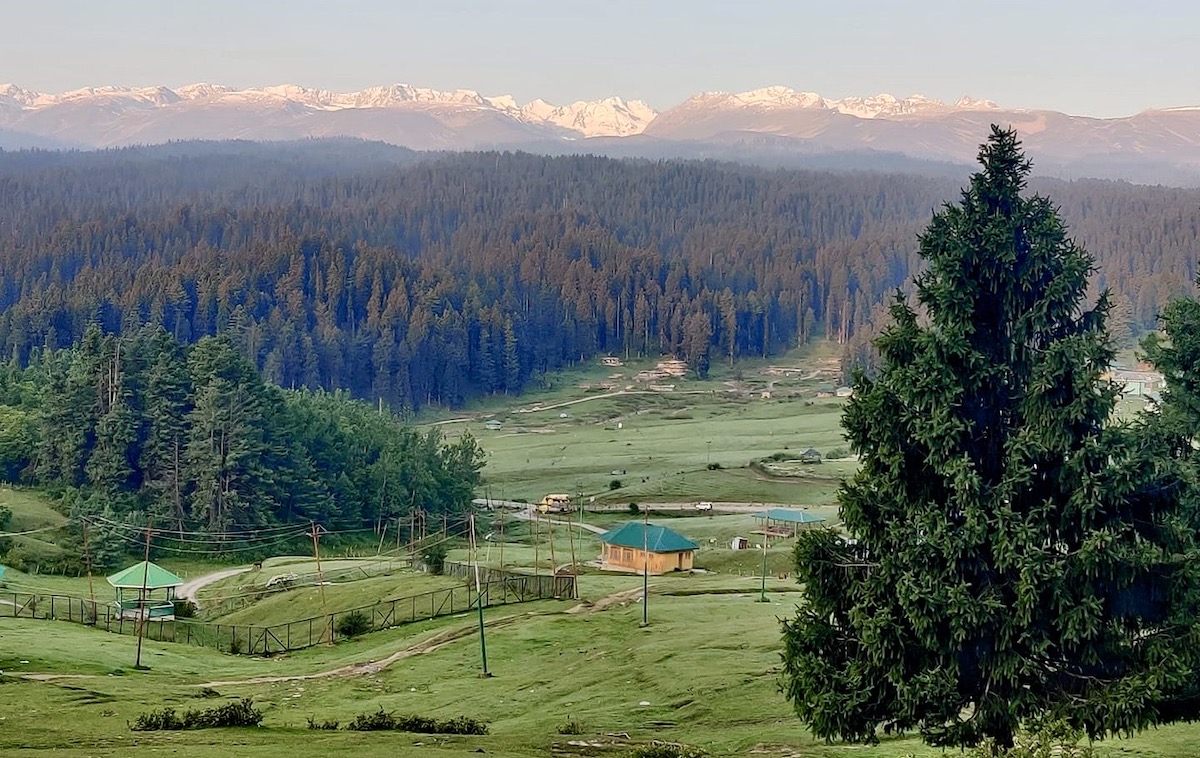
Yousmarg and Doodhpathri are biodiversity-rich zones, home to alpine meadows, medicinal plants, and wildlife corridors. Fragmentation by highways disrupts animal movement and increases roadkill. The felling of heritage-value trees not only reduces forest cover but also undermines carbon sequestration capacity, crucial in a warming climate (Rawal & Dhar, 2017). While compensatory afforestation is mandated at a 1:10 ratio, ecological equivalence is difficult to achieve; a centuries-old deodar cannot be replaced by a sapling plantation.
The Himalayas are geologically young and tectonically active. Road construction involving slope excavation destabilises terrain and increases landslide frequency. Studies across Himachal Pradesh and Uttarakhand show a direct correlation between highway expansion and slope instability (Sati, 2013). Kashmir’s own history of earthquakes, coupled with high rainfall events, makes risk assessment not optional but essential.
Beyond ecological fragility, the Shopian–Magam highway raises critical socio-cultural questions.
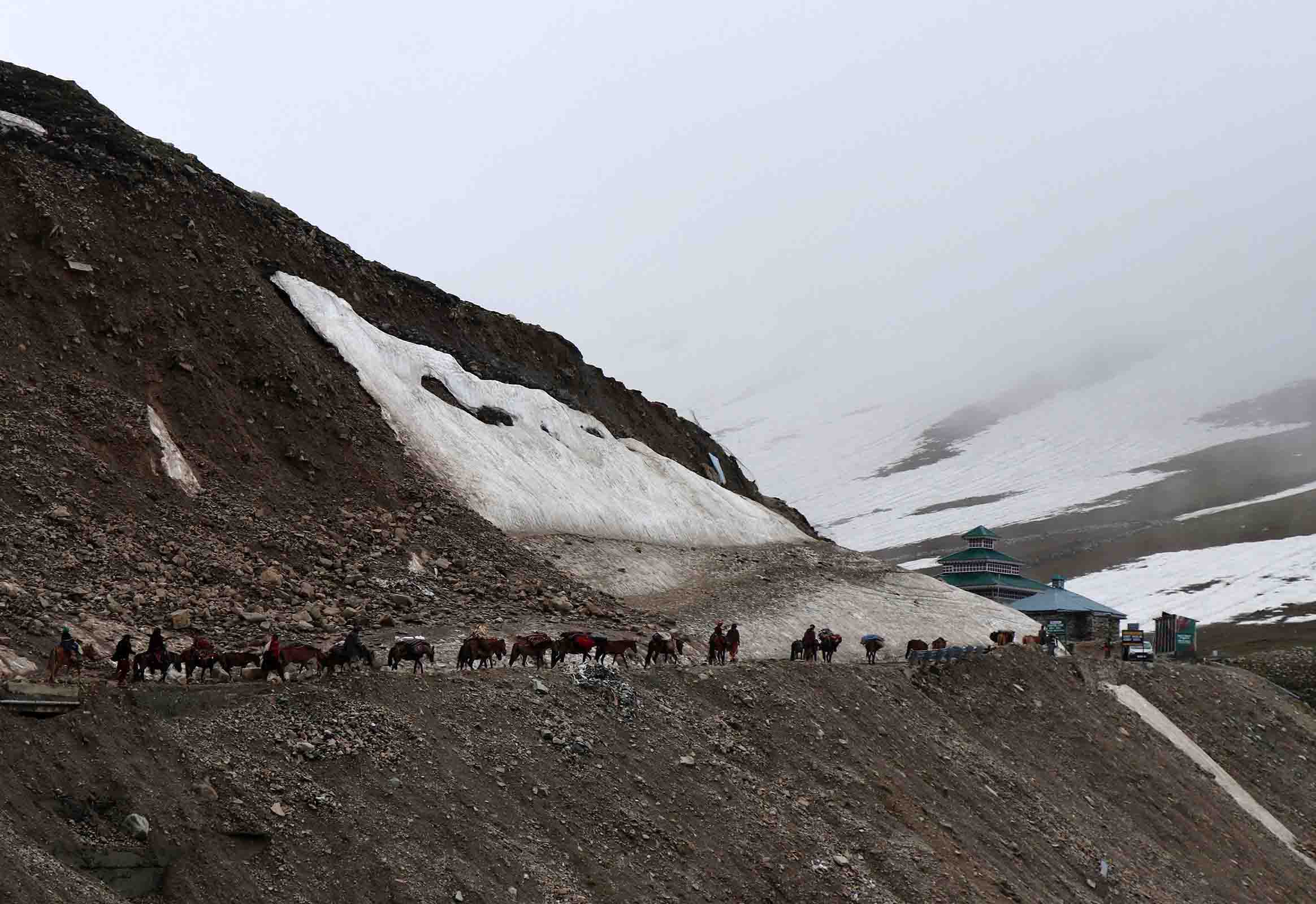
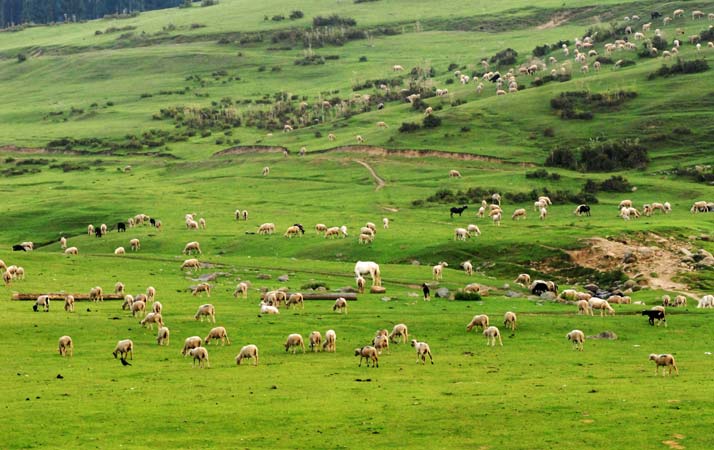
The Gujjars and Bakarwals, nomadic pastoralists of Kashmir, depend on high-altitude meadows for seasonal grazing. Roads fragment these commons, reduce pasture availability, and disrupt migratory routes (Renzetti, 2019). Loss of access to grazing lands undermines livelihoods and accelerates the marginalisation of indigenous groups already struggling against economic and political vulnerabilities.
The Kashmir Valley’s landscapes are not just ecological but cultural. Alpine meadows, glacial streams, and old-growth forests form part of collective memory, folklore, and identity. Roads that cut through these zones alter not just the physical terrain but also the symbolic geography of communities. Heritage trees, sacred groves, and traditional water systems form intangible heritage that is often invisible in engineering blueprints.
In this context, the Ministry’s memorandum of 2023 helps in identifying the multi-departmental responsibility within the governmental system. Among others, it includes the following:
The Department of Forests, Ecology and Environment must oversee biodiversity and eco-fragility studies.
The Department of Disaster Management must evaluate landslide and seismic risks.
Jal Shakti must assess water catchments and hydrology.
Animal and Sheep Husbandry must safeguard grazing rights.
Tribal Affairs and Social Welfare must address community impacts.
The debate over NH-701A is emblematic of a larger dilemma across the Himalayas: how to reconcile the urgent need for connectivity with the imperative of ecological preservation. Infrastructure in border regions is undoubtedly important for security, administration, and development. Yet, security itself is undermined when ecological degradation fuels disasters, displaces communities, and erodes livelihoods. A collapsed slope or silted stream does not distinguish between “strategic” and “civilian” infrastructure.
The proposed Shopian–Magam highway is not simply an engineering project; it is a litmus test for environmental governance in Jammu and Kashmir. The exemptions granted by the 2022 notification should not be interpreted as a license for unchecked construction. Instead, they must be balanced with the safeguards outlined in the 2023 memorandum, alongside robust institutional coordination and community participation.

If pursued carelessly, NH-701A risks triggering ecological disruptions—soil erosion, biodiversity loss, and hydrological alteration—that will outweigh its developmental benefits. It may also displace pastoralists, fragment commons, and accelerate cultural erosion. If pursued wisely, however, it can become an exemplar of how infrastructure can be designed in harmony with ecological and social realities.
The challenge, therefore, is not whether to build roads but how to build them—sustainably, sensitively, and inclusively. The answer to that question will determine whether NH-701A is remembered as a milestone of progress or a cautionary tale of loss.
(Former Director General Tourism in Jammu and Kashmir, the author is heading INTACH. Ideas are personal.)