by Asad Mirza
The US threat of secondary sanctions over Russian oil raises questions about India’s energy security, strategic autonomy, trade interests and ability to pursue an independent foreign policy
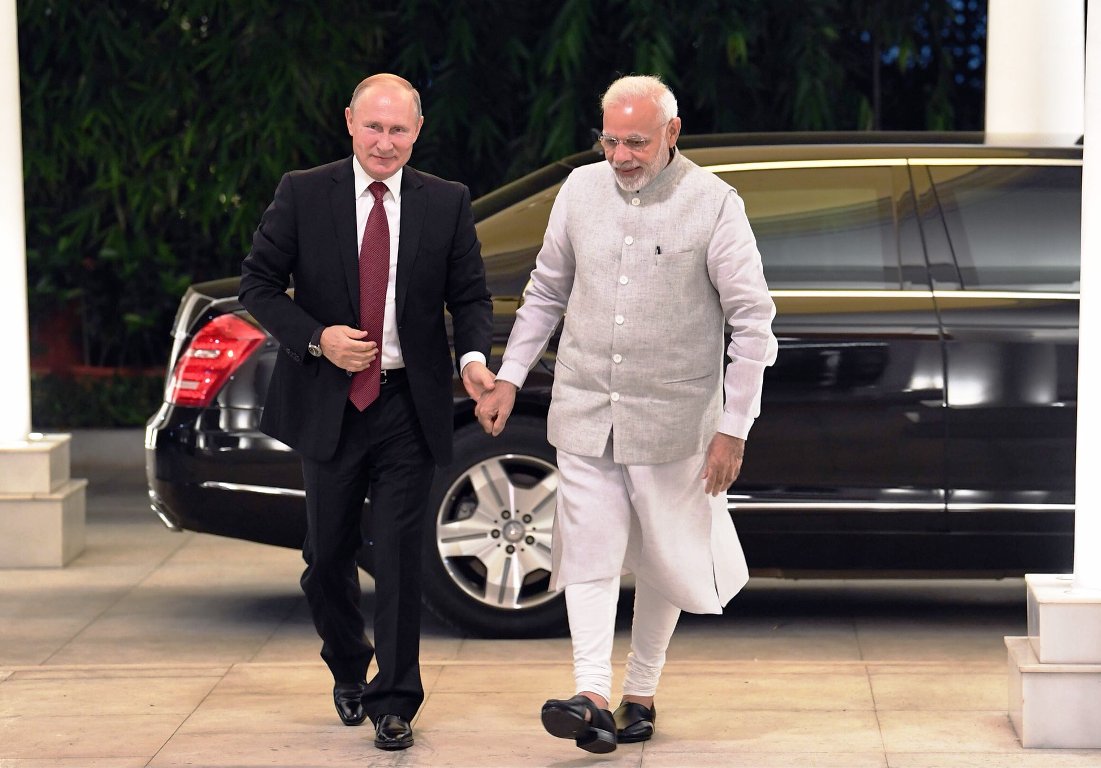
India’s warning over Washington’s Russia sanctions law is more than a tariff dispute. It is a defence of strategic autonomy, energy security, and the right to conduct foreign policy without extraterritorial coercion. China’s guarded response shows a larger contest: who sets Asia’s economic choices as war, trade, and oil converge.
The United States has moved closer to turning its Russia policy into a broad instrument of economic coercion. The US House of Representatives has approved the “Lindsey O. Graham Sanctioning Russia and Iran Act of 2026”, legislation that gives President Donald Trump powers to impose tariffs of up to 100 per cent on countries buying Russian oil and gas. The measure passed 262–159 and targets not only Russia’s energy and defence sectors but also its “shadow fleet” of tankers accused of helping Moscow evade sanctions.
For India, the issue is not simply whether a punitive tariff will make Russian crude more expensive. It is whether Washington can dictate the terms of New Delhi’s energy policy and, by extension, its foreign policy. India’s Ministry of External Affairs has warned that the proposed measures could affect bilateral relations, while asserting that the country will take “all necessary measures” to protect its energy security, trade and economic interests.
That language is carefully calibrated. New Delhi has not threatened retaliation, nor has it rejected engagement with Washington. Instead, it has placed the dispute within the framework of sovereignty. India’s argument is that it buys oil according to national requirements, market conditions and supply availability, not as an endorsement of Russia’s war in Ukraine. Its position also reflects a long-standing principle: India will not accept the automatic application of another country’s sanctions beyond that country’s jurisdiction.
The economic stakes explain the firmness of the response. Russia accounted for approximately 30.3 per cent of India’s crude-oil imports in financial year 2026, with purchases valued at about $40.8 billion. In July, Russian supplies reportedly exceeded half of India’s imported crude, outpacing shipments from the United Arab Emirates, Saudi Arabia, Venezuela, Brazil, Oman and the United States combined.
This dependence is not merely commercial. Russian oil has helped Indian refiners secure discounted or competitively priced crude at a time of conflict, shipping disruption and instability across the Middle East.
Replacing Russian supplies would therefore be neither immediate nor costless. India could buy more from Saudi Arabia, Iraq, the United Arab Emirates, the United States, Brazil or Venezuela, but alternative cargoes may be more expensive, less reliable or constrained by transport risks. The Strait of Hormuz remains a crucial energy corridor, while continuing conflict in West Asia has increased uncertainty over prices and shipping insurance. A forced reduction in Russian imports could raise the cost of fuel, transport and industrial production inside India.
The effect would extend beyond the oil market. Indian exporters are already vulnerable to US trade action. A 100 per cent tariff would make many Indian products commercially uncompetitive in the American market, placing pressure on sectors such as textiles, engineering goods, pharmaceuticals, chemicals and small manufacturing. The resulting shock could weaken employment and export earnings while complicating an already difficult bilateral trade negotiation. Analysts have consequently interpreted the sanctions legislation not only as an attempt to punish Russia but also as a bargaining weapon against India.
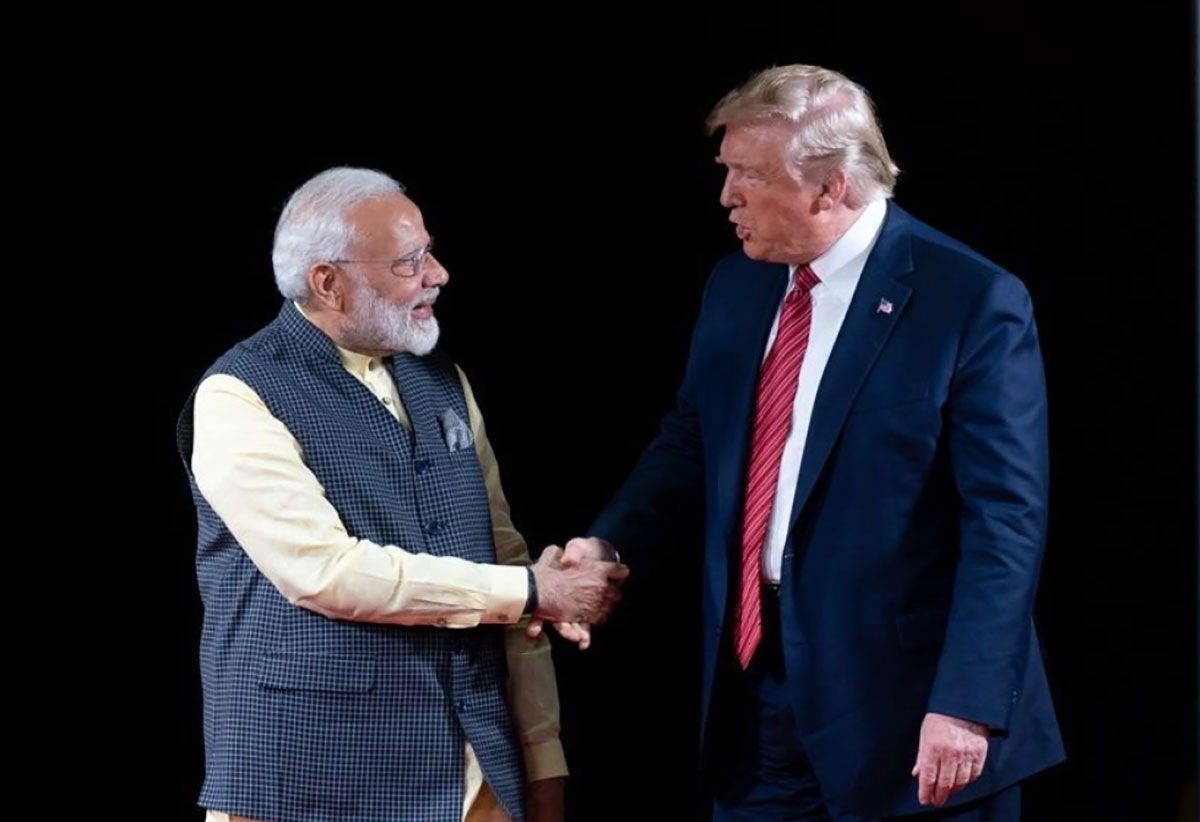
This is where the Trump factor becomes important. Trump’s approach to international relations treats tariffs as instruments of leverage rather than merely tools of commercial protection. His administration can present the measure domestically as a way to punish governments that help finance Russia’s war, while using the threat against India to extract concessions on trade, market access and energy purchases.
The legislation may also serve a negotiating purpose. India and the United States have been discussing a bilateral trade agreement, but disagreements over tariffs, agricultural access, industrial protection and regulatory standards have persisted. Threatening punitive duties creates an atmosphere in which New Delhi may be pressed to accept an agreement on less favourable terms. The argument advanced by Indian trade analysts is that the Russia issue could become a pretext for forcing India into an unequal trade settlement.
Trump’s calculation may also be shaped by domestic politics. A confrontational stance toward Russia appeals to lawmakers who want to demonstrate toughness on the Ukraine war, while tariffs appeal to voters who see trade pressure as a way to defend American industry. By combining sanctions and tariffs, the administration gains a flexible instrument: it can threaten maximum punishment without necessarily imposing it, retaining room for a negotiated settlement.
Yet the policy contains a contradiction. If the United States genuinely wants to reduce Russia’s oil revenues, forcing India to abandon Russian crude may disrupt global supply and raise prices. Indian refiners are not the only buyers capable of absorbing Russian oil, and crude displaced from India could simply move through alternative trading networks. Higher global prices could increase Moscow’s earnings per barrel even if the volume of its exports declines. The threat may therefore punish American allies and consumers without decisively weakening Russia.
China’s response adds another layer to the crisis. Beijing is a much larger purchaser of Russian energy than India, yet Chinese commentary has been cautious rather than openly confrontational. That restraint reflects calculation. China does not want to offer Washington an easy justification for a broader trade confrontation, particularly when its own economy remains exposed to American tariffs and technology restrictions. At the same time, Beijing is unlikely to accept the principle that Washington can determine which energy suppliers Asian countries may use.
China’s caution could become a form of strategic patience. Beijing can watch whether the United States actually applies the maximum tariff, whether India resists or negotiates, and whether European countries receive exemptions despite continuing energy links with Russia. Any apparent double standard would strengthen the Chinese argument that the rules-based order is being selectively enforced according to American interests.
For India, the geopolitical consequences are substantial. The dispute could weaken the momentum behind the India-US strategic partnership, which has expanded because of shared concerns about China and cooperation in defence, technology and the Indo-Pacific. Washington’s pressure places New Delhi in an uncomfortable position: it is expected to align more closely with the United States against China while being penalised for maintaining an independent relationship with Russia.
That contradiction may push India toward greater diversification, not only of oil suppliers, but also of payment systems, shipping arrangements, defence partnerships and diplomatic relationships. It could reinforce cooperation with Russia, encourage closer energy coordination with Gulf producers and create new openings for engagement with China, even amid severe bilateral tensions.

India is unlikely to abandon Russian oil solely because Washington has issued a threat. The costs of doing so are immediate, while the diplomatic benefits remain uncertain. Nevertheless, New Delhi may gradually reduce its exposure if discounts narrow, sanctions risks grow or alternative supplies become more competitive. Such a shift would be a market-driven adjustment; a decision made under tariff coercion would be viewed very differently.
The central issue, therefore, is not whether India supports Russia. It is whether a major power can preserve strategic autonomy in an era when trade, finance and sanctions are increasingly weaponised. Trump’s tariff threat seeks to turn India’s energy dependence into American leverage. India’s response seeks to prevent that leverage from becoming political subordination.
The outcome will influence more than the price of crude. It will help define the boundaries of sovereignty in a fragmented global economy, and determine whether Asian powers can make independent choices while remaining economically tied to Washington.
(The writer is a New Delhi-based senior commentator on national, international, defence and strategic affairs, environmental issues, an interfaith practitioner, and a media consultant. Ideas are personal.)