by Nasir Hamid Khan
Experts caution that behaviours initially perceived as pleasurable and engaging can trap individuals in a dopamine deficit state. Over time, these actions cease to bring joy; instead, they become a means to stave off discomfort.
“I fear the day that technology will surpass our human interactions. The world will have a generation of idiots,” warned Albert Einstein.
And here we are—a generation amusing itself to death, oblivious to what may be the last great pandemic of our time. We remain blind to the irreversible damage inflicted on young minds by the unchecked use of digital devices during their formative years. It is akin to connecting a household circuit to an ultra-high-voltage power line; the result is catastrophic.
Our brains, shaped over 1.7 million years of evolution, are ill-equipped to handle the relentless onslaught of digital information and algorithms. The consequences are stark: isolation, fractured relationships, dwindling attention spans, insomnia, stress, diminished cognition, stifled creativity, sadness, anxiety, depression, and even suicide. This is the fastest and most pervasive addiction humanity has ever faced.
Smartphones and their digital counterparts are meticulously engineered to ensnare users, stripping their lives of creativity, meaning, and purpose, transforming them into digital junkies. Neuroscientists describe the resulting dopamine deficit as “learned helplessness.”
Recently, I attended an event under the Common Interest Conversations programme at Amar Singh Club, Srinagar, presided over by Professor S A Romshoo, Vice-Chancellor of the Islamic University of Science and Technology, and chaired by the eminent senior advocate Zaffer A Shah. The discussion left me deeply unsettled. It jolted me awake from my high-octane, digitally stimulated slumber, forcing me to confront the devastating power I had allowed technology to wield over my life—measured in lost time and fractured relationships.
The expert views shared in this article are largely drawn from Dr Anna Lembke, a renowned American psychiatrist, a global authority on addiction, and Medical Director of Addiction Medicine at Stanford University. Dr Lembke is the author of three seminal books on the subject, including the New York Times bestseller Dopamine Nation. Additional insights come from Fabeha Syed, host of the popular podcast Urdunama, as well as the Netflix documentaries The Social Dilemma, nominated for seven Emmys, and Buy Now: The Shopping Conspiracy. I strongly recommend watching these, along with Fabeha Syed’s Urdunama episode on Brain Rot, to grasp the profound scale of this addiction.
Incidentally, the Oxford Word of the Year for 2024 is “Brain Rot,” a term that encapsulates the detrimental effects of excessive consumption of online content, particularly low-quality or unchallenging material. In Urdu, it translates to Zehani Zawaal.
The digital world today offers boundless opportunities for education, research, and intellectual enrichment, which responsible users harness to their advantage and that of the wider world. Yet, such individuals remain a minority. The virtual realm seems increasingly dominated by vested commercial interests, whose profits soar in direct proportion to the time users spend online. A clear distinction must be drawn between healthy engagement and problematic usage, the latter leading to impaired minds and disrupted lives. I am reminded of the poignant words of Urdu poet Vikas Sharma Raz: “Mayreh Urooj Ki Likhi Thi Dastaan Jisme, MerayZavaal Ka Kissa Bhi Uss Kitab Main Tha” (The story of my rise was written in that book, but so too was the tale of my decline).
Those connected to the online business are now among the wealthiest individuals in human history. Billions, even trillions, of dollars are amassed with little regard for the costs and consequences to humanity and the planet. Fifteen of the top twenty names on the latest Forbes Billionaires List are tied to this industry. This unchecked growth has spawned unethical practices and manipulations, as the focus remains fixed on sales and profits. Surveillance capitalism and planned obsolescence have become the cornerstones of this new business methodology. The product, in this case, is you—your attention, your screen time.
A joint study by the Shanghai Institute of Early Childhood Education and the Faculty of Education and Human Development at the Education University of Hong Kong concludes:
“Digital addiction in children and adolescents leads to structural brain changes, including reduced grey and white matter volume in regions responsible for executive function, reward processing, and sensorimotor activities. These changes impair cognitive capabilities and contribute to problematic smartphone use, internet gaming disorder, and internet addiction.”
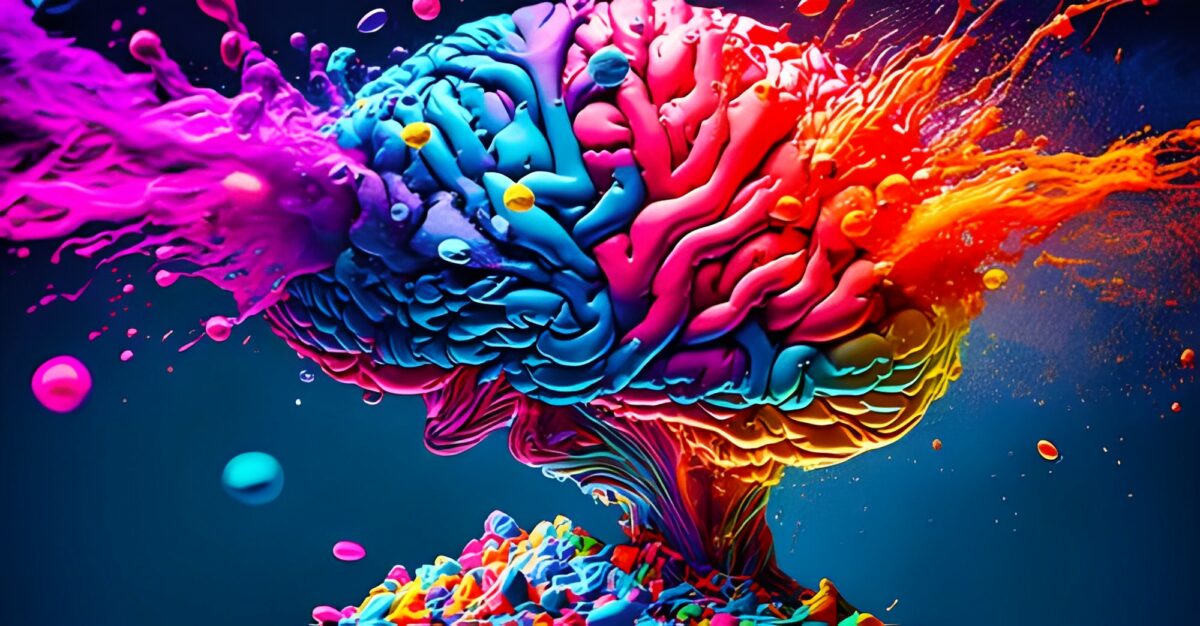
Studies have established the multifaceted negative impact of digital addiction on children and adolescents, encompassing physical, emotional, cognitive, and structural and functional aspects of the brain. Vision and hearing impairments, diminished social skills, fractured relationships, heightened aggression, increased rates of depression and anxiety, reduced attention spans, and weakened memory and problem-solving abilities are among the documented consequences. The smartphone has been likened to a modern-day hypodermic needle, delivering quick digital hits with every swipe, like, and tweet. It offers fleeting attention, validation, and distraction, feeding an obsession with instant gratification. This compels us to operate predominantly from the limbic brain, which governs emotions, rather than the prefrontal cortex, responsible for future planning, problem-solving, and personality development.
Experts caution that behaviours initially perceived as pleasurable and engaging can trap individuals in a dopamine deficit state. Over time, these actions cease to bring joy; instead, they become a means to stave off discomfort. The result is a compulsive cycle: we no longer derive pleasure from the activity, yet we find ourselves unable to resist returning to the screen.
Homeostasis, a concept first explored by French physiologist Claude Bernard in 1849 and later coined by American neurologist Walter Bradford Cannon in 1926, refers to the self-regulating processes by which biological systems maintain stability. These systems adapt to conditions optimal for survival. When homeostasis succeeds, life thrives; when it fails, disaster follows. For instance, the body maintains a steady temperature of 98.6°F through built-in regulatory mechanisms. However, when this dynamic equilibrium is disrupted, the system strives to establish a new balance—a principle that underscores the delicate interplay between stability and adaptation in both biological and behavioural contexts.
Modern psychiatrists have discovered that a minimum of 30 days of abstinence from any addictive substance or behaviour is necessary for the brain’s neuroadapters to restore homeostatic balance and alleviate the anxiety and depression induced by social media. This month-long break allows individuals to grasp the true extent of compulsive overconsumption in their lives. It provides the essential reset required for brain pathways to re-engage in recovery work and reassess personal goals. The ultimate aim is to learn how to do nothing—to simply exist. Scientific studies highlight the significance of “resting mental networks,” where, between activities, the brain exhibits a synchronicity between its various regions, each with its rhythm and flow. This state fosters creativity, original ideas, and an overall sense of well-being.
A poignant example of this can be found in an interview with the acclaimed actor Aamir Khan, who remarked, “When I stopped using the phone, I did not realise how significant a step it would be. It has completely transformed my life. Mental windows began opening rapidly, and I started thinking deeply again. Mobile devices had stifled my ability to think. I completed an assignment in six weeks that would otherwise have taken no less than two years. Now, as I used to in the past, I find myself thinking about my children, my family, and my work.”
Beyond the structural damage it inflicts on the brain, the hours squandered scrolling through trivial and meaningless content on smartphones represent a profound waste of life. Time, after all, is a measure of life itself, as are the moments that compose it.
The primary challenge in addressing digital addiction lies in the user’s lack of awareness that they are afflicted by this condition. Raising such awareness is critically important as a first step. The support of family and community must play a pivotal role in this endeavour. However, the problem is compounded by the fact that family and community members themselves are often significantly affected. A glance at the world around us confirms this beyond doubt. The sheer scale of this addiction is both unprecedented and deeply concerning.
To overcome digital dependency, experts advocate embracing a more monastic mindset. They caution against the relentless pursuit of pleasure, urging instead for its replacement with what they term “painful pursuits”—activities such as exercise, fasting, prayer, meditation, and other mentally engaging practices. It is essential to reflect on how this addiction undermines our ability to be good parents, spouses, or friends. Only by confronting these realities can we begin to reclaim our lives from the grip of digital overconsumption.

I would like to humbly suggest to readers that recent discoveries in neuroscience echo revelations made to us by our beloved Prophet Muhammed (peace be upon him) over 1400 years ago. For Muslims, the holy month of Ramadan is a time for annual introspection, requiring every Muslim to fast and reflect for a month. This sacred period is an opportunity to cultivate self-control, gratitude, and compassion. Sawm, or fasting, is the fourth pillar of Islam, with abstinence at its core. Other religions also practice fasting and abstinence for spiritual reasons.
In light of these reflections, our society must unite to combat addiction. I propose that residents of Jammu and Kashmir, regardless of their faith, come together as human beings to collectively detox from the digital world. By doing so, we can give our minds the space to breathe, think, and restore the mental balances that are vital to our well-being, both now and in the future. Let us collectively abstain from or at the very least reduce, our use of digital devices during the holy period of Ramadan.
(The author is currently the Secretary of the Amar Singh Club, Srinagar, and was formerly the Senior Vice President of the Kashmir Chamber of Commerce & Industry. Ideas are personal.)