by Dr Farooq A. Lone
A reflective essay on retirement dreams, changing times, and finding meaningful relevance in a transformed world.
 Retirement from Government Services often arrives with a quiet illusion that time will finally belong to us, and with it, the freedom to pursue all the dreams postponed by duty, profession, and responsibility. Yet the world we step into after retirement is not the same as we imagined years earlier. Technology has altered human behaviour, artificial intelligence has transformed communication, and digital platforms have redefined knowledge, influence, and public engagement.
I, too, carried many ideas into retirement.
Right from the time I worked in the Information Department a quarter century ago, one of my strongest post-retirement aspirations was to start a newspaper or a publication devoted to truthful reporting and genuine public concerns. I believed society needed a platform free from sensationalism, a space where ordinary people and neglected issues could find honest representation. But by the time retirement arrived, the landscape of print journalism had dramatically changed. Print media was steadily losing relevance, readership had fragmented, and newspapers had multiplied beyond measure. What once appeared a meaningful mission risked becoming another voice lost in an overcrowded and declining medium. Wisdom sometimes lies not in pursuing every dream, but in recognising when circumstances have overtaken an idea.
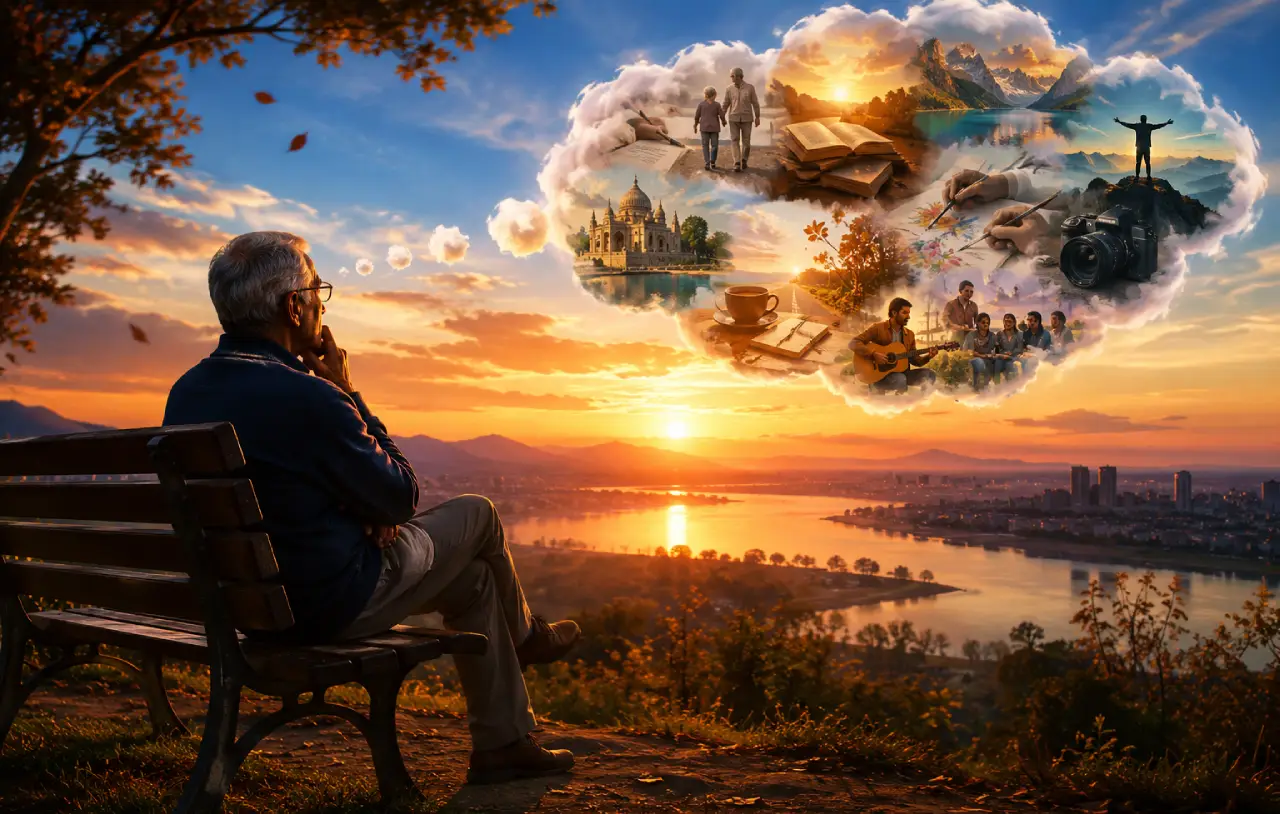
During my stints in hardcore administration, particularly as Deputy Commissioner of three districts in north, south, and central Kashmir, followed later by the stint in the Public Service Commission, another ambition emerged. It was to provide coaching for Civil Services examinations through deeply researched educational videos. The intention was noble: to guide talented students, particularly from regions with limited academic exposure, toward national-level competitive success. Yet the digital revolution had already created an enormous ecosystem of online coaching platforms, lectures, applications, and mentorship channels. Scores of educators were already offering material across every conceivable subject. Entering that domain would not necessarily have added value unless one possessed a distinctly different approach or technological infrastructure. Hence, I dropped the idea.
From my days in the Science and Technology and Education Departments early in my career, I also wished to popularise science, especially Biology, in the local language. Scientific temper and rational understanding remain essential for social progress, and I believe students could better appreciate science when taught in the language of their homes and emotions. However, social media had already opened this space to numerous educators, communicators, and content creators. The challenge was no longer merely creating content; it was its utility in an age overflowing with information.
Initially, these realities felt discouraging. One imagines retirement as a beginning, only to discover that the world has already moved ahead at astonishing speed. But gradually, I realised something important. Relevance does not always lie in scale. One need not necessarily build an institution to make an impact at this stage of life. One thoughtful article, one sincere mentorship conversation, one honest social media post, or one student guided in the right direction can still carry immense value.
Therefore, instead of chasing ventures that no longer aligned with the changing times, I chose a quieter but perhaps more meaningful path — mentoring young minds, writing columns, engaging with society through reflective commentary, and contributing wherever experience still holds value.
The modern world often celebrates visibility, numbers, and digital reach. But knowledge acquired over decades cannot be measured merely through viral content. Experience, integrity, and reflection still matter.
Technology and artificial intelligence may have transformed the tools of communication, but they cannot replace the sincerity of thought or human concern for society. Adaptation is necessary, but so is acceptance. Not every dream abandoned is a failure; sometimes it is an acknowledgement that contribution must evolve with time.
Retirement is not the end of usefulness. It is the transition from ambition-driven activity to purpose-driven engagement. The platforms may change, the methods may differ, and the audience may become virtual rather than physical, but the responsibility to contribute remains.
And perhaps that is the real lesson of our age. In a rapidly changing world, relevance belongs not to those who resist change, nor merely to those who chase trends, but to those who continue to share knowledge, wisdom, and humanity in whatever form the times permit.
I also once contemplated becoming actively associated with an NGO or an advocacy group working on social awareness, education, environment, or public welfare. After retirement, such engagement appeared meaningful because it offered the possibility of remaining connected with society at the grassroots level and contributing collectively toward constructive change.
However, over time, the functioning and public perception of many such organisations underwent significant change. Questions regarding credibility, hidden interests, politicisation, competition for visibility, and the growing doubts surrounding certain advocacy groups created hesitation. The spirit of voluntary social service, which once inspired respect and trust, often appeared overshadowed by publicity-driven activism and institutional compulsions.
For the time being, therefore, I chose to maintain a thoughtful distance, preferring independent engagement through mentoring, writing, and intellectual contribution rather than becoming formally attached to organisations whose direction and intentions sometimes seemed uncertain.
(Author is a retired IAS officer who was Chairman of Jammu and Kashmir Public Service Commission. Ideas are personal.)