by Dr Aabid Nazir
By treating a warzone as a testing lab, China demonstrates a troubling disregard for human life, reducing people to mere collateral damage in its business strategy.
Testing products in real conditions is a common practice across various industries. Yet, when the product in question is a weapon and the testing ground is an active warzone, the stakes are infinitely higher. The escalating tensions between India and Pakistan have set the stage for a disturbing trend, where China, a significant supplier of weapons to Pakistan, is reportedly using these military exchanges to evaluate its military hardware. By treating the conflict as a live experiment, China seeks to refine its weaponry, bolstering its global arms sales while reaping immense profits. This business-oriented approach, however, exacts a devastating human cost, raising profound ethical questions about the morality of profiting from war.
Pakistan’s reliance on Chinese-manufactured weapons has become increasingly evident in the ongoing military exchanges with India. From J-10C fighter jets to HQ-9 air defence systems and advanced drones, much of Pakistan’s military arsenal originates in China. Reports indicate that China is closely monitoring the performance of these weapons in real combat scenarios. Successful operations allow Chinese companies to brand their equipment as “battle-tested,” enhancing its appeal to potential buyers in Africa, the Middle East, and beyond.
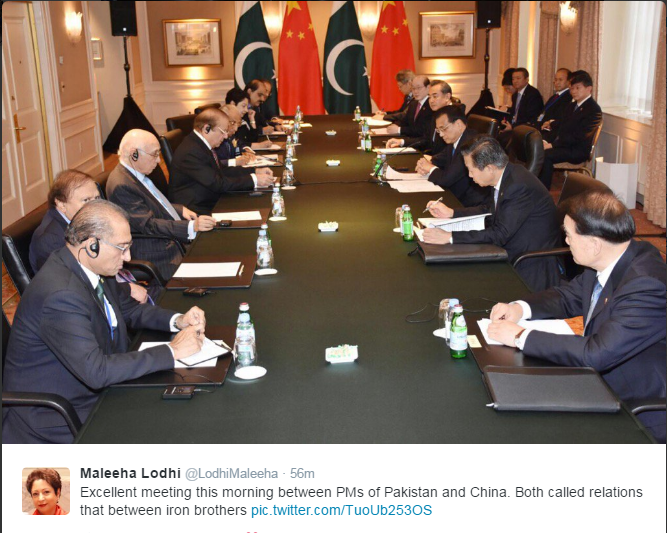
A post on X starkly stated, “Pakistan is essentially a guinea pig for China’s military tech. Drones, missile systems, and jets are being tested in live combat, and China is taking notes to sell more globally.” Security analyst Sajjan Gohel of the Asia-Pacific Foundation reinforced this assertion, noting that the clashes provide China with a unique opportunity to assess its military exports in a setting no laboratory can replicate. For China, the conflict functions as a live showroom, displaying its weapons to prospective customers.
According to the Stockholm International Peace Research Institute, China has supplied 81 per cent of Pakistan’s weaponry over the past five years. This extensive presence offers China a front-row seat to observe how its jets evade enemy radar, how effectively its missiles hit their targets, and how its drones perform under pressure. Each clash becomes an opportunity to refine designs, correct flaws, and build a compelling sales pitch for global markets. Ultimately, China’s objective is to solidify its position as a dominant arms exporter, rivalling global giants like the United States and Russia.
At first glance, the practice of testing products in real-world conditions may appear to be a sound business strategy. Yet, when the product is a weapon and the testing grounds a conflict zone, the implications are far more severe. The ongoing clashes between India and Pakistan are not controlled experiments; they are violent confrontations involving real soldiers, civilians, and communities caught in the crossfire.
China’s role in supplying weapons and analysing their performance may inadvertently incentivise Pakistan to sustain military engagements. The more data China collects, the more it stands to gain, creating a perilous cycle that perpetuates the conflict.
Every missile fired, and every jet deployed, carries the risk of civilian casualties. Families are uprooted, homes are reduced to rubble, and entire communities are plunged into perpetual fear. By treating a warzone as a testing lab, China demonstrates a troubling disregard for human life, reducing people to mere collateral damage in its business strategy.
If China’s “battle-tested” weapons find their way to other conflict zones, they could further destabilise already volatile regions. From fragile states in Africa to tense borders in the Middle East, the proliferation of these weapons could ignite fresh conflicts, making the world a less secure place.
China’s role as a major weapons supplier while remaining silent about its testing motives has eroded trust globally. Nations such as India may now question China’s intentions, complicating diplomatic efforts to de-escalate tensions.
When questioned about Pakistan’s use of Chinese weapons in recent clashes, China’s foreign ministry sidestepped the inquiry, claiming to be “not familiar with the matter.” This ambiguous response has fuelled widespread suspicion. Publicly, China continues to urge both India and Pakistan to remain calm, yet its actions suggest a different agenda. As Pakistan’s principal arms supplier, China cannot credibly plead ignorance. Some analysts assert that China’s silence is a calculated strategy to protect its business interests. With India also serving as a lucrative market for Chinese goods, acknowledging the conflict as a weapons testing ground could jeopardise trade relations.
China’s silence also aligns with a broader strategy. By keeping its weapons-testing objectives concealed, it avoids international scrutiny while discreetly collecting valuable data. This enables Chinese defence firms to refine their products and market them to global buyers without attracting undue attention. Meanwhile, the conflict rages on, and China’s arms industry continues to expand.
China’s tactics are part of a broader ambition to dominate the global arms market. A 2023 report by the Centre for Strategic and International Studies noted that China has aggressively expanded its arms exports, targeting developing nations with cost-effective, high-tech weaponry. By using active conflicts to demonstrate reliability, Chinese weapons gain a competitive edge over Western alternatives. A drone proven effective in a high-stakes clash can be marketed as superior to untested counterparts, appealing to budget-conscious buyers.
Yet the implications extend far beyond profits. The India-Pakistan conflict is already volatile, with both nations possessing advanced militaries. Any escalation could have catastrophic consequences, not only for the region but for global stability. Despite these risks, China’s focus remains on data and revenue, treating the conflict as a lucrative testing ground. As one analyst on X observed, “China is treating this war like a beta test for its weapons. It is cold, calculated, and dangerous.”
The world cannot afford to remain passive while wars are exploited for profit. Several measures can address this growing concern:
International Pressure: Major powers, including the United States, Russia, and European nations, should openly condemn China’s actions and demand transparency. Diplomatic pressure could compel China to reconsider its strategy.
Stricter Arms Rules: Existing agreements, such as the Arms Trade Treaty, should be reinforced to prevent countries from supplying weapons to active conflict zones under the guise of testing.
Support for Dialogue: The United Nations and neutral states must work to bring India and Pakistan to the negotiating table, reducing the risk of military escalation and limiting China’s testing opportunities.
Ethical Standards for Arms Makers: Arms manufacturers, including those in China, must be held to higher ethical standards. Profiting from conflict and human suffering must be deemed unacceptable in the global marketplace.
Public Awareness: Citizens and media worldwide can amplify calls for peace, urging governments to prioritise conflict resolution over arms deals. Public pressure can compel leaders to act.
The ongoing clashes between India and Pakistan are not business opportunities. They involve real people—mothers, fathers, children, and soldiers—whose lives are irreversibly disrupted or lost. China’s decision to use this conflict as a testing ground for its weapons serves as a stark reminder of the moral cost of prioritising profit over humanity.
The world must demand accountability. No corporation or country should be allowed to build its fortune on the suffering of others. It is time to prioritise peace, enforce transparency, and shift focus from weapons sales to saving lives.
(The author is a junior resident at GMC. The views and opinions expressed in this article are solely those of the author and do not necessarily reflect the official policy or position of Kashmir Life and is not responsible for the accuracy, completeness, or validity of any information presented by the author. Readers are encouraged to independently verify any information before relying on it.)