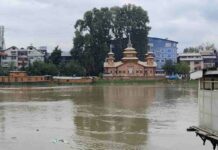
SRINAGAR: A new study found a significant decline in Dal Lake’s fish diversity, with researchers recording only eight species during a six-month survey in 2025, compared with more than 14 species reported in earlier studies. The researchers attributed the decline to untreated sewage and toxic agricultural runoff, eutrophication, invasive exotic species, overfishing, and loss of breeding grounds, and called for urgent measures to restore the lake’s ichthyofaunal diversity.
The study, Assessment of Ichthyofaunal Diversity, Threat Status and Conservation Strategies of Dal Lake Srinagar, was published in July 2026 in the Journal of Emerging Technologies and Innovative Research (JETIR).
The paper has two authors, Dr Shabana Arjamand, corresponding author, Department of Fisheries, Government Degree College Bemina, , and Dr Shamim Ahmed Malik, co-author, Department of Zoology, Government Degree College Uttersoo, Shangus in Anantnag.

Earlier Decline
The authors say previous studies had reported more than 14 fish species from Dal Lake, whereas only eight were recorded during their present investigation. They describe this as a “significant decline in the number of fish species” and say the lake is under “immense anthropological pressure”.
The study was intended not only to provide an updated assessment of fish diversity but also to determine the lake’s threat status and identify conservation measures that could help revive its natural status.
Field Survey
The research was conducted over six months, from January to June 2025, through the Department of Zoology at AAA Memorial Government Degree College Bemina, Srinagar. With assistance from local fishermen, samples were collected from three designated sites: Site I, Hazratbal beat; Site II, Nehru Park beat; and Site III, Nishat beat.
Sampling was carried out every fortnight, usually during the early hours of the day. The collected fish were transported to the laboratory in oxygen-filled bags and treated with 0.05 per cent potassium permanganate (KMnO₄) to disinfect them against dermal infections. The specimens were identified using standard taxonomic works by Kullandar and others.
Species Recorded
The survey recorded eight species: Cyprinus carpio specularis, Cyprinus carpio communis, Carassius carassius, Crossochellus diplochilus, Puntius conchonius, Gambusia holbrooki, Schizothorax niger and Schizothorax curvifrons.
Among them, Cyprinus carpio specularis was the most abundant species at all three locations, followed by Cyprinus carpio communis. Schizothorax curvifrons and Schizothorax niger were the least abundant. The authors say Carassius carassius, Crossochellus diplochilus, Puntius conchonius and Gambusia holbrooki showed a relatively normal presence at the surveyed sites.
The study recorded 52, 65 and 48 specimens of Cyprinus carpio specularis at Hazratbal, Nehru Park and Nishat, respectively. Cyprinus carpio communis numbered 48, 61 and 43, while Carassius carassius numbered 45, 53 and 42 at the three sites.
The lowest numbers were recorded for the two Schizothorax species. Schizothorax niger numbered 7, 7 and 5, while Schizothorax curvifrons numbered 4, 7 and 4 at Hazratbal, Nehru Park and Nishat respectively.
The researchers say several species reported in earlier studies were not found during the present survey. They specifically mention Botia birdi and Schizothorax curvifrons in this context.
Major Pressures
The authors link the decline in fish diversity principally to untreated sewage discharge, toxic agricultural runoff, eutrophication, introduction of invasive exotic species, overfishing and loss of breeding grounds.
The paper also points to the reported presence of alligator gar, describing it as an invasive carnivorous fish that feeds on the fingerlings and fry of native Schizothorax species, commonly known as snow trout. The authors suggest that the species may also be contributing to the decline of Schizothorax in Dal Lake.
Conservation Plan
The researchers call for immediate measures to control the factors affecting the lake. These include controlling untreated sewage entering Dal Lake, preventing agricultural runoff, managing the lake’s delicate urban ecosystem and implementing strict aquatic weed management.
They further recommend restocking native and endemic fish species, preventing the introduction of exotic invasive species and banning overfishing. According to the paper, such measures are urgently needed to save and restore the lake’s natural status.
Economic Role
The study places the fish decline in the wider ecological and economic importance of Dal Lake. It notes that fish constitute a major biotic component of the lake and says they play a significant role in the regional economy, with many people living around the lake involved in fish trade.
The authors also note that fish are an important source of protein and other nutrients and are widely preferred as food in Kashmir. They argue that deterioration of the lake therefore has implications beyond biodiversity, affecting the biological and economic functions associated with the water body.
Urgent Action
The paper warns that Dal Lake’s deteriorating condition could result in further loss of biodiversity if immediate attention is not given to the problem. Its conclusion states that the lake’s ichthyofaunal status has been “severely affected” and that some species have declined to levels at which they are currently listed as vulnerable.
The authors conclude that the findings demonstrate the need for immediate conservation strategies to protect and restore the fish diversity of Dal Lake.