by Dr Tauseef Ahmad Parray
A review assessing Dr Zafarul-Islam Khan’s annotated English translation of the Qur’an, highlighting its accessibility, scholarship, and reader-friendly approach.
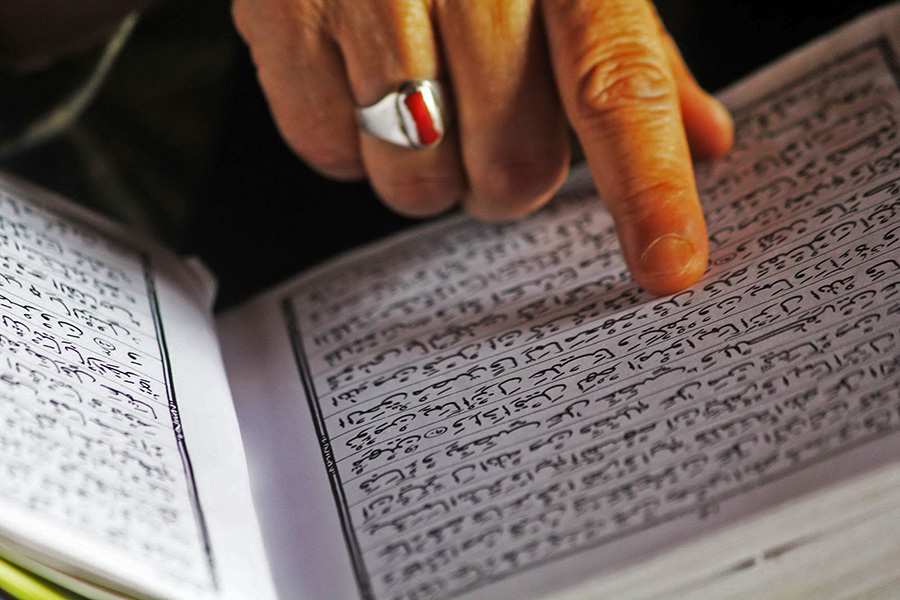
Translation of the noble Qur’an into European and Oriental languages, especially English, has a long, fascinating, and intriguing history. Several studies that document the history of the Qur’an translation show that the first English translation was done by Alexander Ross in 1649, the second in 1734 by George Sale, followed by translations by EH Palmer, JM Rodwell, Richard Bell, AJ Arberry, NJ Dawood, and many others in the subsequent centuries, mostly for polemical reasons.
However, Muslims entered this field in the early decades of the 20th century, demonstrating that it was dominated by Orientalists. Thus, several English Translations of the Qur’an (hereinafter abbreviated as ETsQ) were published in the 20th century by Muslims and (mainly) non-Muslims. This demonstrates that in the early decades of the 20th century, Muslims produced very few translations, with significant contributions from the Sub-continent, including popular works such as Muhammad Marmaduke Pickthall (1930) and Abdullah Yusuf Ali (1934).
This tradition has continued uninterrupted since the 1950s, with important translations by Abdul Majid Daryabadi (1957), Muhammad Muhsin Khan and Taqi-ud-Din Hilali (1977), Muhammad Asad (1980), and others. This situation is quite strikingly depicted by Stefan Wild in the 2015 issue of the Journal of Quranic Studies (vol. 17, no. 3, p. 158) in these words: “Until the 1940s, English translations of the Qur’an were (with a few notable exception of translations by Indian Muslims early in the twentieth century) mostly undertaken by non-Muslims and viewed with some misgiving by most Muslim scholars. … More recently, English translations by Muslims have proliferated and now flourish worldwide”.
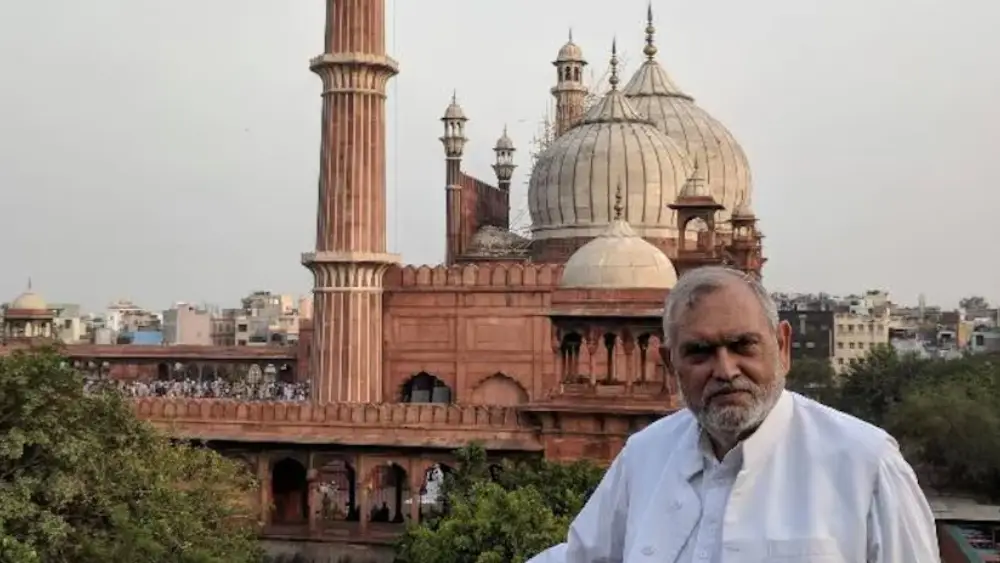
The trend has continued in the 21st century as well, resulting in the production of more lucid and idiomatic English translations. A new addition to this list is The Glorious Qur’an by Dr Zafarul-Islam Khan (an Islamic scholar based in New Delhi). Below is presented a brief assessment of his translation, highlighting its salient features.
In 2023, Dr Khan published The Glorious Qur’an: An Accurate Rendering of the Holy Text based on Earliest Authoritative Sources (hereinafter TGQ), a richly and comprehensively annotated English translation of the Qur’an. It is available in two editions: (i) one with parallel Arabic text and its translation, and (ii) the other with only the English translation.
Son of Mawlana Wahiduddin Khan, Dr Khan has studied at Madrasa-tul-Islah (Azamgarh) and Darul Uloom Nadwatul Ulama before continuing his higher studies at Al-Azhar and Cairo universities (1966-1973) and earning his PhD in Islamic Studies from the University of Manchester, UK (1987). Dr Khan, a multi-lingual translator-author, has authored and translated over 50 books in Arabic, English, and Urdu and has served as the President of the All India Muslim Majlis-e Mushawarat thrice (2008-2009, 2012-2013, and 2014-2015) as well as Chairman of the Delhi Minorities Commission (2017-2020). As a result of his positions and contributions vis-à-vis the Indian context, he has been labelled, and rightly so, as “an activist in the affairs of post-Independent Indian Muslims” and has been named to the Muslim Mirror’s list of “The 100 Most Influential Indian Muslims of 2025”.
TGQ seeks “to present the divine text as it was understood by Islam’s earliest generations”, without being affiliated with or influenced by “any ideological or philosophical interpretations of the divine text” (p. 18). That is, he has attempted to avoid any philosophical, jurisprudential (fiqhi), or linguistic discussions that may eventually result in differences, disputes, and dissension among Muslims.
On the reasons behind embarking on this venture, he states: “This translation started over a decade ago [January 2011] as a revision of Abdullah Yusuf Ali (AYA)’s English translation of the Glorious Qur’an. … Due to a thorough revision and insertion of new footnotes, this translation is now hardly a ‘revision’ of AYA’s original work … [and] may be treated as a new work” (pp. 15-16). He further states that among the over 150 ETsQ published so far, Yusuf Ali’s is most popular because “millions of copies of this translation” were distributed by Saudi Arabia, making it, “despite its shortcomings, the most accessible and popular translation of the Quran in English.” Though several attempts were made “to correct and streamline this translation, but major problems still exist”; that is why, he attempted for producing “a new, perhaps most accurate, English translation of the divine text to date” (p. 42).
Dr Khan is well aware and, indeed, states in clear terms that the “majestic and direct style of the Qur’an is lost when it is translated into another language in simple prose of varying degrees of excellence according to the literary skills of the translator” (p. 25). “Literary Arabic is”, in his consideration, “a very comprehensive and delicate language”; thus, he considers Qur’an translation a “very difficult task unless one is well-versed in literary Arabic” (p. 42). For this reason, he has used both parentheses (square brackets []) to show his filling in the gaps and copious footnotes to explain the complex elements and to deliver the intent of God’s Word clearly. This becomes evident from the following examples: “They have [true] guidance from their Lord, and it is they who will succeed [in the Hereafter]” (Q. 2: 5); “[But] those who have faith [in Allah] and do righteous deeds…” (Q. 2: 82); “[This Light illuminates] houses which Allah has permitted to be raised, where His name is celebrated…” (Q. 24: 36); “And [how He dealt] with the Thamud [people], who cut out [huge] rocks in the valley?” (Q. 89: 9); “See you one who disbelieves the [Day of] Judgement [to come]? … those who make a show [of their deeds], and refuse [to share even small] articles of need [with their neighbours]” (Q. 107: 1, 6-7).
For understanding “difficult passages” and for “determining the meanings of difficult words and terms”, he has used footnotes frequently. For these, he has mostly relied on the “most authentic and trusted” classical Tafaseer, Ahadith, and dictionaries/lexicons (pp. 17, 18). With reference to the insertion of explanatory notes and the ‘paratext’—in the form of introductory sections, such as Translator’s Note (pp. 13-20), An Introduction to the Qur’an (pp. 21-42) and appendices—which cover a range of topics on the Qur’an, the Prophet, and things Islamic—Dr. Khan remarks that the parentheses and the footnotes “do not contain academic or polemical discussions” but are aimed “to explain terms, difficult words and timings of a revelation where relevant, rules derived from an ayah, if any, and to give the reader context about events, historical personalities, places, ancient communities and prophets mentioned in the Qur’an” (p. 16). TGQ is preceded by prefatory sections like “Translator’s Note” (pp. 13-20) and “An Introduction to the Qur’an” (pp. 21-42) and ends with References and Abbreviations (pp. 973-975), appendices like “Short Biography of Prophet Muhammad (pbuh)” (pp. 977-1004), “Allah’s ‘Best Names’” (pp. 1005-1018), “The Prophets in the Qur’an” (pp. 1019-1020), “Islamic Terms”/ Glossary (pp. 1021-1072), “Subject Index to the Glorious Qur’an” (pp. 1073-1230), and Transliteration scheme (pp. 1231-32) and Signs of Waqf/ Stoppage Signs in Quranic Recitation (p. 1234).

This ‘paratext’ and Khan’s rich exegetical notes, which are well-documented and properly cited, facilitate a better understanding of the Quran. This also demonstrates that his scholarship is not only well-grounded, rich, diverse, and profound, but also alive to contemporary issues and challenges of diverse nature that Muslims face globally. Many reviewers, both in India and aboard, have praised Khan’s effort—its language and presentation, explanation, and other reader-friendly features: Prof. Abdur Raheem Kidwai (AMU) described Dr. Khan’s translation as “accurate, conveying effectively the sense of the original” and “deserves credit for having opted for simple, easy-to-understand English, [which is] free from jargon or any embellishment”. Though he has raised certain critical comments on some of his explanatory notes and has highlighted a few inaccuracies. For Prof. Muhammad Qutbuddin (JNU), Dr Khan’s rendering captures “the spirit of the Qur’anic message in standard English” and his explanatory notes help in “conveying the message of the Qur’an to English readers in a lucid and reader-friendly style”.
Considering all these, it is fair to state that Dr Khan’s The Glorious Qur’an is a significant contribution that interprets the Qur’an in accessible and idiomatic English, complemented by extensive notes and paratexts facilitating readers’ thorough understanding of the “twin beacons of Guidance”: The Divine Message and the Exemplary Messenger.
(The author is a Kashmiri academician currently working as an Associate Professor in the Department of Islamic Studies, Aligarh Muslim University.)