SRINAGAR: The Centre on Monday said fuel supplies across the country remain stable and adequately stocked despite the ongoing crisis in West Asia, with panic buying of LPG declining significantly and over 3.5 lakh new PNG connections issued in March, according to an inter-ministerial briefing.
The update was shared during a joint media briefing by senior officials from the Ministries of Petroleum and Natural Gas, External Affairs, and Ports, Shipping and Waterways at the National Media Centre, as part of regular briefings on the evolving situation in West Asia, the Press Information Bureau (PIB) said.
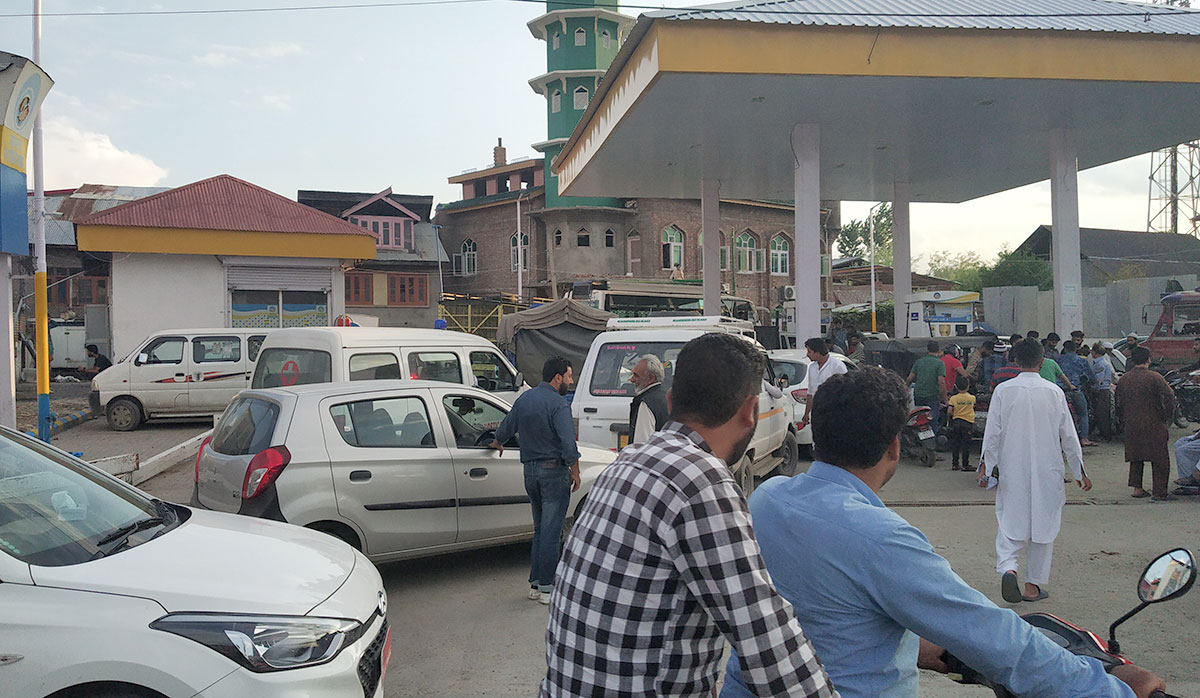
Officials said all refineries are operating at high capacity with sufficient crude inventories, ensuring uninterrupted supply of petrol and diesel. No incidents of fuel shortages or “dry-outs” have been reported at retail outlets across the country.
LPG supplies are also being closely monitored, with authorities confirming that deliveries continue as normal. “Panic bookings have reduced significantly,” the PIB said, reiterating that citizens should avoid unnecessary stocking as adequate supplies are available.
The government has accelerated the shift towards piped natural gas (PNG), with more than 3.5 lakh domestic and commercial connections issued in the first three weeks of March alone.
Priority sectors, including households and CNG transport, continue to receive 100 per cent natural gas supply, while industrial and commercial supplies are being regulated at around 80 per cent. States have been urged to expedite approvals for expanding city gas distribution networks, with incentives offered to encourage transition from LPG to PNG.
To ease pressure on LPG demand, the Centre has increased commercial LPG allocation to up to 50 per cent, prioritising essential sectors such as restaurants, hotels, community kitchens and industrial canteens.
Additionally, 48,000 kilolitres of kerosene has been allocated to states and Union Territories as an alternative fuel option. Coal supplies have also been enhanced for small and medium consumers.
Authorities have intensified enforcement actions to curb hoarding and black marketing. Over 2,400 raids were conducted in the past 24 hours, leading to the seizure of more than 800 cylinders.
So far, around 550 FIRs have been registered and about 150 people arrested. Public sector oil companies have also carried out over 2,600 surprise inspections at fuel outlets and LPG distributorships nationwide.
States and Union Territories have been directed to maintain strict vigilance under the Essential Commodities Act and related laws. As part of monitoring efforts, 32 states have set up control rooms, while 33 have established district-level monitoring committees.
Providing an update on maritime operations, officials said no incidents involving Indian-flagged vessels have been reported in the past 24 hours. A total of 22 Indian vessels with around 600 seafarers remain in the western Persian Gulf region.
The Directorate General of Shipping has facilitated the repatriation of over 547 Indian seafarers so far and continues to operate a 24×7 control room to assist those in the region.
Ports across the country are functioning normally, with no congestion reported. Additional storage and handling capacity has been created at major ports to ensure smooth cargo movement.
Evacuation efforts ongoing, 3.75 lakh returnees since February
The Ministry of External Affairs said the safety of Indian nationals in West Asia remains a top priority. Since February 28, around 3.75 lakh passengers have returned to India from the region.
Indian missions are operating round-the-clock, facilitating evacuations, visa support and logistics for stranded citizens. Evacuation routes via Saudi Arabia, Armenia, Azerbaijan and Jordan are being utilised for nationals in affected areas, including Iran, Israel, Kuwait and Bahrain.
Prime Minister Narendra Modi has also engaged with global leaders, including Iran’s President Masoud Pezeshkian, emphasising the need for stability, protection of critical infrastructure and uninterrupted maritime navigation
The government has urged citizens to rely only on official information, avoid panic buying, and adopt energy-saving practices. Consumers have also been encouraged to shift to PNG, use digital booking platforms and consider alternative cooking options such as electric or induction systems.
Officials said coordinated measures across ministries are aimed at ensuring stability in fuel supply, safeguarding maritime operations and protecting Indian nationals amid the ongoing geopolitical uncertainty.