by Dr Farooq A Lone
Despite Kashmir’s cultural reverence for elders, cases of elder abuse are rising due to family breakdown, migration, and social denial. Addressing this reality requires acceptance, reform, and renewed moral responsibility.
Some five decades back, when the famous lyrics of Rajab Hamid Afsoos Duniya were sung by the legendary Ghulam Hassan Sofi, two verses would send shivers through many, who wished them to be impossible in our society:
Tschopi laag babo chukh tse dolmut bujar saeti. (Abuse)
Chhii khaas awlaad daka laayaan yeti keho waati. (Neglect)
But the mere fact that these lines were part of popular poetry proves that the incidence of elder abuse has been a common phenomenon in society for decades.
Granny Battering
Elder abuse was first introduced as “granny battering” in the early 1970s in the United Kingdom. The consensus definition of elder abuse is “a single or repeated act, or lack of appropriate action, occurring within any relationship where there is an expectation of trust, which causes harm or distress to an older person.” This definition was developed by the United Kingdom’s Action on Elder Abuse and was later adopted by the International Network for the Prevention of Elder Abuse (World Health Organisation, 2002).
Elder abuse is considered a fundamental violation of human rights and takes multiple forms, including physical, sexual, psychological, emotional, financial, or material abuse, neglect, or serious loss of dignity and respect. As per a United Nations report of 2020, one in every six people aged 60 and above, accounting for 141 million people globally, suffered from one or another form of abuse in 2017. With every passing year, this shows an increasing global trend, with our country and region being no exception, as news reports of elder abuse of various kinds frequently emerge from different areas.
The Kashmir Scene
In Kashmiri society, “elderly abuse and neglect” remains a stigmatised topic. In most cases, neglected elders shy away from narrating stories of abuse and neglect by their children, fearing damage to their social reputation.
Last year, a viral video, unfortunately from our neighbourhood, in which extremely gentle parents were abused by a young man, brought this serious problem into the limelight once again.
Referring to the gravity of the issue in our society, a learned friend commented that perhaps “the only and bigger sin” committed by the young man was that he abused his parents publicly, whereas within the four walls of our fairly large houses, this has become almost a normal phenomenon (kuni atha shalakh te kuni katha shalakh). More worrying is the fact that we are still in denial mode rather than accepting the problem as a societal challenge.
Elderly people here usually live with their children. During childhood, special emphasis used to be laid on inculcating moral values, which included respect for elders. However, over the years, the joint family system has given way to the nuclear family system. With greater emphasis on borrowed concepts of education from the West, moral education also received a setback. The shared responsibility of parents among multiple children became nobody’s responsibility. Thus, the disintegration of the joint family structure has made the elderly population more vulnerable to neglect and abuse.
State of Hypocrisy
Like many other social evils, we tend to hide this factual reality as well. I recall that during the last decade, when we in the Social Welfare Department started proactively talking about the need for old-age homes in each district of the State to take care of neglected and abandoned elderly people, many of my colleagues felt uneasy about such initiatives, citing that society would not accept the idea as it would give a rather “bad name” to society as a whole.
The fact of the matter is that old-age homes now serve a significant number of neglected elders. Perhaps in the near future, we will also have retirement homes and paid senior citizen home services as an organised response to the problem.
The poor economic condition of children is also an important factor contributing to elderly neglect. Social security schemes of the government, such as old-age pensions for destitutes and widows, provide some relief. Though in recent years saturation of deserving beneficiaries has been targeted, the monthly amount paid, a meagre Rs 1,500, does not suffice to meet even the minimum needs. Providing opportunities for gainful employment to youth and enhancing the quantum of old-age pensions could offer some relief.
Empty Nests
Poverty alone, however, is not responsible for elderly neglect. “Empty nest syndrome” has become a major problem among affluent sections of society. Well-to-do parents often send their children for higher education to Europe and America, many of whom eventually settle there. Some children from middle and upper-middle-class families, after obtaining professional degrees locally, seek better working conditions abroad.
When such parents become elderly, emotionally and physically weak, there is often nobody to take care of them despite their income and resources. Many develop depression and dementia and end up confined to dingy ground-floor rooms of their large mansions. Due to their own compulsions, their wards are unable to spend much time with them or bring them to their adopted abodes. As a result, such elders are left to be cared for by helpers, neighbours, or relatives in the final phase of their lives.
Emotional Abuse
Another group of neglected elders are victims of emotional abuse disguised as filial love. They are emotionally blackmailed into distributing their property among children during their lifetime to see them well settled. However, when these elders become weak, fragile, and non-productive, none of the offspring is ready to take responsibility for them. Many instances have come to light where such elders end up in old-age homes and destitute centres. Never distribute your entire property during your lifetime. Once gone, children will receive their due shares. During one’s lifetime, property becomes insurance for self-care or care by prospective heirs.
While advances in healthcare have increased human life expectancy, longevity can turn into a curse if one becomes vegetative, dependent, weak, fragile, and crippled in old age. No matter how smart, intelligent, wealthy, resourceful, or powerful a person may be in their prime, we must pray and work for an honourable exit from this world without experiencing the curses of old age, though this is easier said than done and ultimately depends on the mercy of the Almighty.
Tailpiece
In a lighter vein, an elderly wise man suggests that the solution to this problem, like many others, lies in the hands of womenfolk. Whether we accept it or not, the actions of men in this part of the world are often remotely controlled by women. During their powerful years, mothers-in-law often maltreat daughters-in-law emotionally, if not physically. Expecting obedient treatment in old age from emotionally hurt daughters-in-law and their remotely controlled husbands may be demanding the unexpected. Do good in your prime days if you expect good in hard times.
Otherwise, if one is fortunate to have daughters living nearby, they remain the only real hope in dealing with the curses inflicted by old age.
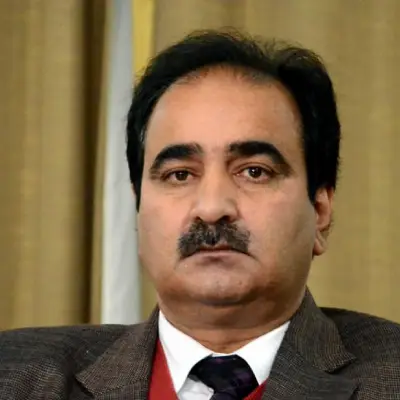
(An IAS officer, the author retired as Chairman Jammu and Kashmir Public Service Commission. Ideas are personal.)