by Iqbal Ahmad
This edited version refines language and structure while preserving original intent, highlighting Kashmir’s deep Persian-Sanskrit literary connections and the pivotal role of Kashmiri Pandits.
Although in terms of land distance Iran is hundreds of kilometres away from Kashmir, yet in human relationships it is very close to the hearts of the Kashmiri people. The recent wave of voluntary donations towards its war victims clearly symbolised not only emotional attachment but also the concern of the Kashmiri people towards the Iranian people.
In fact, the connections between Iran (ancient Persia) and Kashmir go back thousands of years and are culturally, linguistically, and spiritually very deep.
Indeed, in ancient times, parts of northwestern South Asia, including regions near Kashmir, came under the influence of the Achaemenid Empire (c. 550–330 BCE). While Kashmir itself may not have been fully controlled, it was connected through trade and neighbouring regions like Gandhara and Kashgar. During the Indo-Greeks, Indo-Scythians, Indo-Parthians, and Kushans, Kashmir became connected with Persian culture and mythology. Persian titles, and Persian gods and goddesses, appeared on Kashmir coinage, including Miro, Mao, Ordekhsho, and Oesho.
In the late medieval period, Islam reached Kashmir largely through Persianised and Central Asian Sufi saints. Mir Sayyid Ali Hamadani (14th century), from Hamadan in Persia, is credited with spreading Islam in Kashmir. He is titled Bani-e-Musalmani, the founder of Islam in Kashmir.
He brought Persian culture, crafts, and literature, and introduced arts like shawl weaving and papier-mâché. He is also credited with the introduction of the Persian language and its literature. Persian gradually became the official language of Kashmir for centuries.
Kashmir was a major centre of Sanskrit learning, while Persia developed rich literary traditions in Persian. Over time, scholars translated works between Sanskrit and Persian, especially during later Islamic rule. Texts like the Mahabharata and Rajatarangini influenced Persian historians.
This is one of the strongest connections. Interestingly, Kashmiri Pandits’ contribution towards the promotion of the Persian language and its literature has been outstanding.
Last year, a Hindi poetry collection titled Khoye Hue Prishth by Dr Satish Vimal, a noted poet, critic, and broadcaster of Kashmir, was translated into Persian as Barg-haa-e-Gum-Shudeh. Dr Mohammad Ibrahim Wani, a reputed Persian scholar, translated it beautifully. The book was released at an impressive function at the Persian Cultural Centre in the Iranian Embassy in New Delhi. It was perhaps the first time that a Kashmiri Pandit’s literary work was so valued and appreciated by Iranians.
Although I was not present at the function, the way Indian and Iranian media covered the event was impressive and significant. It created a contemporary link between Kashmiri Hindi literature and Persian literature.
At the same time, it reminded us of the ancient literary connections Kashmiri Pandits had with the Persian world. I had already read about these links in my history classes. I have also seen Persian works of Kashmiri Pandits in archival repositories and manuscript collections.
The recent translation of a Kashmiri Pandit’s literary composition into Persian should be viewed through the lens of our Persian literary history, where we find the remarkable contribution of Kashmiri Pandits in the promotion of Persian literature.
Kashmir, in terms of its Sanskrit and Persian literary heritage, has preserved immense literary treasures in official and non-official archives and libraries. These two languages have been among the oldest official as well as literary languages of this land, and most of its history and literature are recorded in them.
In simple terms, Persian is an Iranian language still prevalent there. However, for scholars and historians, its significance in the context of Kashmiri culture and history is immense. After the decline of Sanskrit, Persian filled the official and literary gap in Kashmir. Thousands of books were written in this language, covering nearly all fields of knowledge and literature.
Historically, Persian evolved in Kashmir in the late 14th century when the Shahmiri Sultans established Muslim rule. They gave initial patronage to Persian, but it was the Chak rulers who made it the official language and inscribed Persian legends on their coinage.
Later, Mughal and Durrani governors enriched the language further, adding decorative Persian inscriptions. Even during the Sikh and Dogra periods, Persian retained its official status, and Persian legends continued on coinage.
From the 14th to the 20th century, Persian had a strong foundation across Jammu and Kashmir. It served as the official language and the language of the elite. It was also taught in local pathshalas and madrasas. During the period of Sheikh Mohammad Abdullah, Persian was introduced as a subject in formal education.
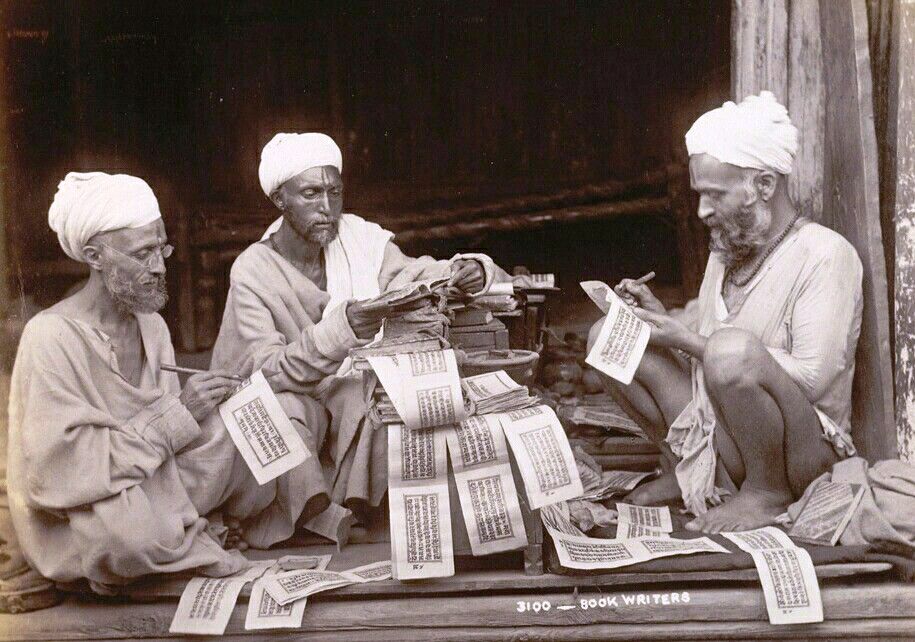
The past of this language has been bright. Patronised by Muslim, Hindu, and Sikh rulers, it was also cultivated by Hindu Pandit scholars. Interestingly, Kashmiri Pandits played a major role in promoting Persian. They had already established Sharda and Sanskrit schools, and when Persian entered Kashmir, they incorporated it into their curriculum.
Due to its religious importance, Muslim scholars learned Persian because many religious texts were available in it. It was also the language of Sufi missionaries and was taught in khanqahs and madrasas. While the role of Muslim scholars is well understood, the contribution of Pandits to Persian literature is equally remarkable.
Among Kashmiri Pandits, Munshi Bhawanidas Kachru stands out as a prominent Persian writer and poet. His Bahri-tavil compositions are highly regarded in Persian literary circles.
The term Bahri-tavil combines Bahr (verse) and tavil (long), referring to extended poetic compositions with thousands of lines.
Other notable Pandit Persian poets include Pandit Taba Ram Turki, Satram Baqaya, Daya Kachru, Aftab Bhan, Gobind Koul, and Kailash Dhar. Many others, though unrecorded, contributed significantly by teaching Persian to Kashmiri students.
Those were glorious times for the Persian language and literature. However, over time, Persian declined and could not keep pace with changing cultural and literary dynamics. Eventually, it was removed from mainstream education, replaced by Urdu and English.
Today, Persian survives in a limited capacity in universities and colleges, but it has largely disappeared from local pathshalas, madrasas, and darasgahs.
Despite its importance, Persian has suffered neglect. The issue is not revival, but preservation. Like Sanskrit manuscripts, Persian manuscripts remain scattered and under-documented.

There is an urgent need to collect, catalogue, and preserve these manuscripts. Translating them into modern languages would help uncover the philosophical, historical, and cultural knowledge they contain.
We must not wait for another Stein to undertake this work. Universities, archives, libraries, and cultural institutions in Jammu and Kashmir should collaborate to establish translation initiatives. Madrasas and darasgahs should also reintroduce Persian texts, especially those of Sufi saints.
The contributions of Kashmiri Pandits must be rediscovered and presented to contemporary audiences.
(The contributor is an archaeologist and author. Ideas are personal.)