by Khawar Khan Achakzai
Between 1500 and 1900, Kashmiri literature evolved under Persian dominance, producing enduring lyric, Sufi, Bhakti, masnawi and marsiya traditions through poets who vernacularised elite influences.
The years 1500-1700 CE in Kashmir were marked by rapid change, turmoil and instability. Even though the process of Persianization was dominant, the Sanskrit Saivite tradition continued in latent form. Persian attained the status of court language and provided a model for literary and linguistic standards. The people’s own language continued to be low in prestige, with no status in administration or education. For scholars and creative writers of the period, intellectual and literary aspiration lay largely in mastering Persian and Sanskrit.
Nevertheless, despite this marginalisation of Kashmiri, several writers achieved remarkable poetic distinction in the language. The most famous among them being Habba Khatun, Khawaja Habibullah Nowsheheri, Rupa Bhavani, Prakash Ram and Arnimal.
The Chak Poetess
Habba Khatun is often considered the most musical lyricist of Kashmir, having brought the lol lyrical tradition to its highest form of perfection. The poetry, it seems, came naturally to Habba right from her childhood, and she employed the native diction for it with great spontaneity and emotional depth.
Legend recounts that she was unhappily married to a simple village youth before encountering Prince Yusuf Shah Chak. The two fell deeply in love, after which she separated from her first husband and became Yusuf Shah’s consort.
However, Yusuf Shah eventually fell victim to political intrigue and was imprisoned in Bihar. This forced separation and the social humiliation that followed proved emotionally devastating for Habba Khatun and lent her lyrics their enduring poignancy. In the last days, she sang plaintive songs in Gurez. Her poetry remains a great example of lol tradition of Kashmir, embodying its intensity, musicality and emotional resonance. Habba was innovative in several other ways, one being the introduction of rast raq in Kashmir.

Khawaja Habibullah Naushahri (1555-1617 CE) carried forward the vak tradition of Lall Ded. Naushahri’s vakhs had longer lines and a measured, contemplative rhythm. While his diction was simple and rooted primarily in native Kashmiri, his imagery reveals a clear influence of traditional Persian poetic conventions.
The period of the Chak dynasty is widely acknowledged as the Golden Age of Kashmiri marsiya, marked by significant formal consolidation and thematic expansion of the elegiac tradition.
Rupa Bhavani
The life of Rupa Bhavani bears close resemblance to Lall Ded and Kashmiri Pandits, especially the Dhars, who have given her a quasi-divine status. The writings of Rupa Bhavani are also in Vakhs form; however, her vakhs are markedly more Sanskritised and generally less evocative in imagery when compared to those of Lall Ded.
Bhavani’s Vakhs reveal the influence of both Saivism and Islamic Sufism. Her Vakhs are difficult to understand for two reasons: they articulate esoteric mystical experiences, and they employ an extremely dense and obscure language. In certain verses, the diction is almost entirely Sanskritised, with only a minimal presence of Kashmiri vocabulary.
These reasons are responsible for her limited reception within the wider Kashmiri literary tradition. Rupa Bhavani remained essentially a part of the Kashmiri Pandit religious and devotional tradition rather than becoming an integral figure in popular Kashmiri literary consciousness
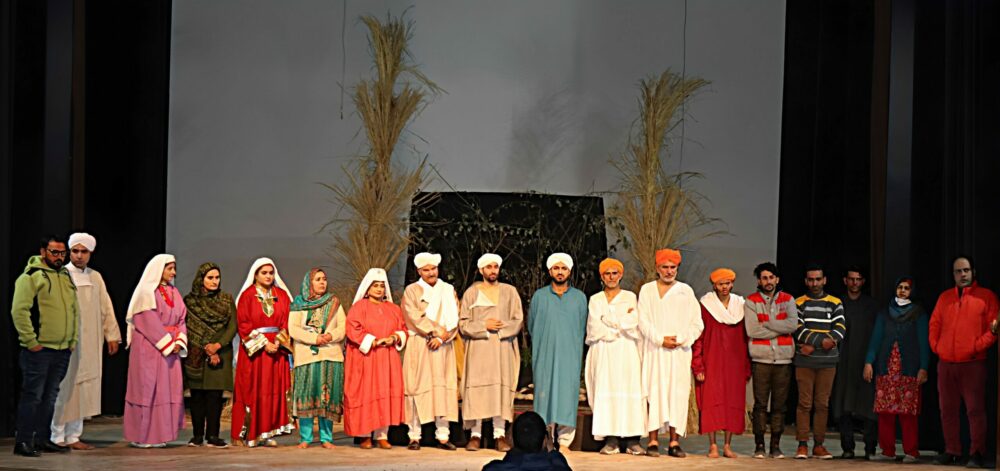
Arnimal was married to a Persian scholar, Bhavani Das Kachru, author of Bahr-i-Tavil, who is said to have mistreated and eventually deserted her. She sought solace for her hurt feelings by taking to the spinning wheel. She sang lyrics of love, of separation, frustration and complaint; transforming personal suffering into poetic expression. Her lols possess fresh imagery and a finely tuned phonaesthetics tenor with striking simplicity of expression. All these render her writings with an emotional cadence that secures her place among the finest lyric voices of Kashmir.
Persianate Classical Phase
By the 16th century, Persian was already accepted as the language of the system as well as that of education and administration. The Kashmiri literature of this era (1700-1900) is heavily influenced by Persian metaphor. However, Sankritised Kashmiri too remained in vogue.
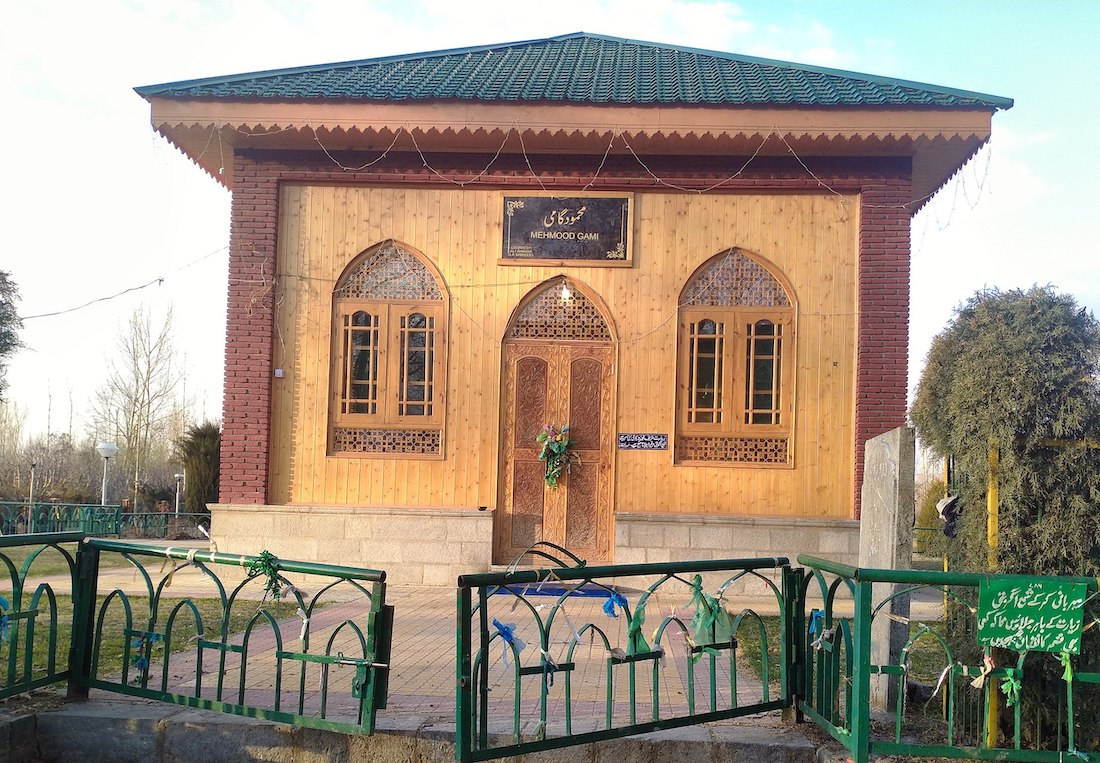
In Persian-influenced Kashmiri literature, the Persian legends like Yusuf-Zulaikha, Laila-Majnun, Sohrab, and Rustum became sources of inspiration. Even the comparison models became Persianised: Mahmud Gami of Shahbad was called Nizami of Kashmir, and Wahab Pare became Firdausi. This period was productive mainly of two types of Kashmiri poetry: Sufi and Bhakti.
According to Trilok Nath Raina, it was Mir Abdullah Baihaqi who adopted the tradition of masnawi in Kashmiri – in Kashir Akeeda and Waquaya. However, the tradition of masnawi was popularised by Mahmud Gami. There are nine masnawis attributed to him, i.e., Laila Majnün, Yusuf Zulaikha, Shirin-Khusrau, Harun Rashid, Malmüd Gaznavi, Sheikh Sanan, Sheikh Mansor, Pahalnama, and Yäkhayat. He also wrote over a hundred poems and ghazals. He was known as Mard-e-ustaad by his contemporaries.
While Mahmud Gami rendered well-known Persian epic and romantic themes into Kashmiri, Waliullāh Mattu took a different approach by choosing a native story, Himal and presenting it in the vernacular language, thereby rooting the masnawi tradition in local culture and imagination.
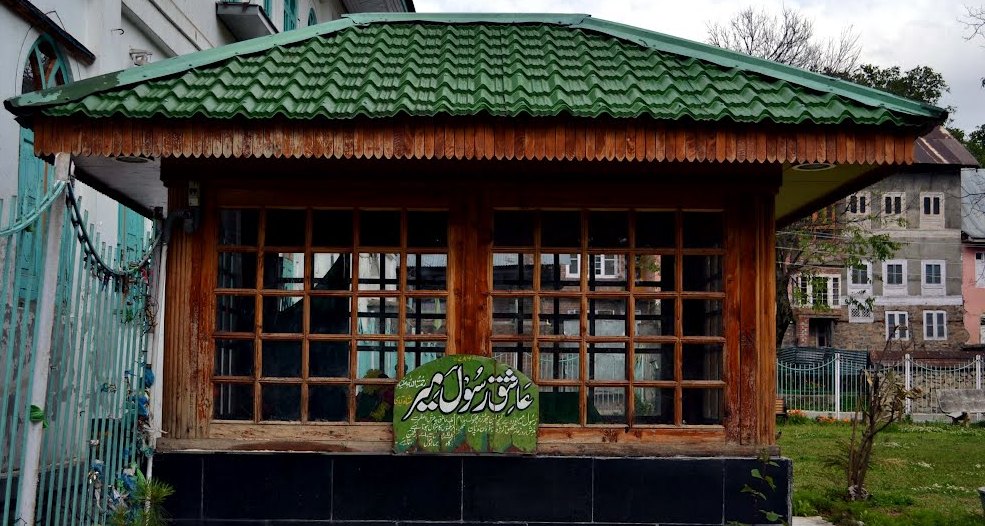
Rasul Mir’s poetry is limited to sixty-seven poems, but his popularity is not surprising since his diction is close to common speech. His poetry presents a unique specimen of great craftsmanship in both the sound and sense, making him an integral part of the Kashmiri oral tradition.
The story of Gulrez by Maqbul Shah Kralwari, based on a Persian work by the same name by Ziya-ud-Din Naksahbi, is an important work of the Kashmiri masnawi canon. Maqbul has nativised the story in his description of the valley. Besides, Gulrez other masnawis composed by him include Pirnama, Qissa–i–Hazrat Shabir and Greesnama.
This tradition was followed by several other poets of this era, like Shah Gafir, Soche Kral, Abdul Ahad Nazim, Shams Faqir, Abdul Wahab Pare, Wahab Khar, Ahmad Batwari and Abdul Ahad Nadim.
Bhakti Poetry
During this time, another Kashmir literary tradition that developed was that of Bhakti poets who followed the Rama and Krishna canon of Hindu mythology and wrote episodes of the Ramayana and Mahabharta.
Among the poets of this tradition, three figures stand out: Parmananda, Lachman Raina, and Prakash Ram. Their writings exemplify the devotional spirit of Bhakti while adapting classical epic material to the linguistic and cultural context of Kashmir.
Pandit Nand Ram, known as Parmanand, a learnt both Persian and Sanskrit very early as a boy. He was introduced to scriptural Hinduism through a family priest. His poetry is divided into various groups: dinakrandama: litanies addressed to Hindu gods, yogabhyasa: poems on yogic practices and a third group which contains lila poems in which he gives free expression to his love of God in the tradition of Radha Krishna.
The fourth group contains didactic poems, and the last one poems that deal with philosophical and Vedantic topics. Lachman Raina continued in the tradition of his preceptor and composed Samnama, Omnama, Nala Damyanti and many bhajans. Prakash Ram wrote an epic based on Valmiki Ramayana. The language he employs is very little Sanskritised; a village dialect of Kashmiri is mostly used. Zinda Kaul considers it to be the first Razmia Masnavi in Kashmiri.
New Marsiya Writing
During the late eighteenth and throughout the nineteenth century CE, a new form of marsiya writing in Kashmiri emerged, marking a major evolutionary phase in the genre. Literary critics describe this period as the age of classical marsiya or muqam bandh marsiya.
The marsiya that developed during this era is structured around four fixed stations (muqam), which determine the thematic progression of the poem. Each muqam in turn constitutes a stanza (chyir / چھیر), characterised by a parallel internal structure and formal symmetry.
Husayn Mir, popularly known as Hussi Boii, played a crucial role in popularising the new form of Kashmiri marsiya among the urban elite of Srinagar. He also introduced significant innovations in the internal structure of the marsiya. Besides, he familiarised the Mulla family poets in Srinagar, who had previously been primarily engaged in composing Persian verse, with this emerging Kashmiri marsiya form.
The earliest composition of Kashmiri marsiya by the Mulla family includes Mulla Hakim Muhammad Azim Mulla Munshi Muhammad Yusu,f and Mulla Munshi Shah Muhammad. Hakim Azim and Munshi Yusuf played pivotal roles in enhancing the poetic sophistication of the marsiya, enabling it to transcend the conventional constraints of a purely elegiac form. Over the subsequent two generations, the Mulla family produced a continuous lineage of notable marsiya writers.
This is the second part of the series on the evolution of modern Kashmiri poetry. Read the first part here
(The author is a Kashmir-based cardiologist and writer. His areas of interest include Kashmiri history, philosophy, and literature, with a particular focus on cultural memory and interpretation. Ideas are personal.)