by MJ Aslam
The titles Khan and Khakan originated as political terms among Mongol-Tartar rulers, denoting sovereign power. Over centuries, these titles evolved, gaining prominence in Muslim, Persian, and Indian traditions, with Khan becoming a common honorific for nobles and generals. While originally of royal significance, Khan later transitioned into a surname and household designation, losing its imperial stature. Similarly, Khansaman transitioned from royal steward to Anglo-Indian household butler, showcasing the evolution of titles across cultures and eras.
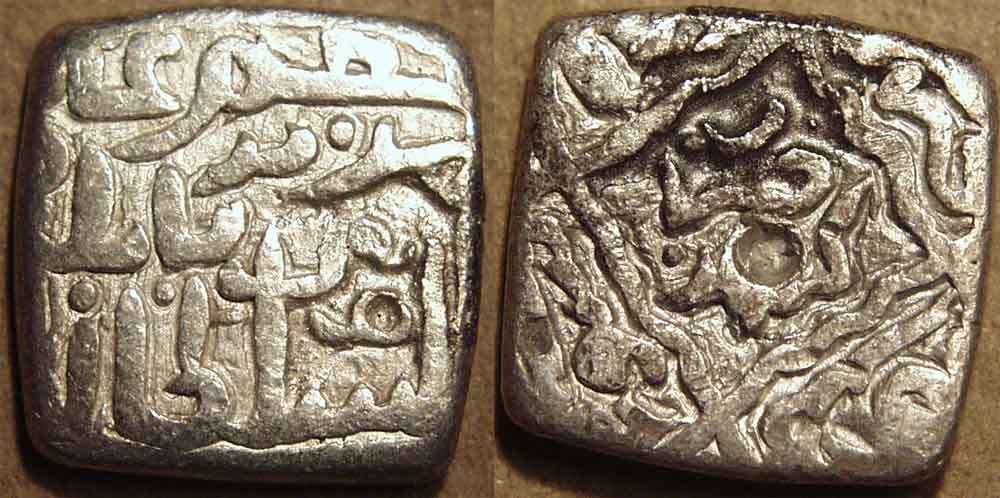
Khan and Khakan were political and not racial titles of the Mongol-Tartar kings from the mid-first millennium BC- Khan meant great, Khakan, great Khan. Khanate was the name of the empire later founded by Tartaric Turkish groups of the Central Asian states, retaining the titles of Khans and Khakans, who reigned over a vast territory afar as Karakoram Pass. (Prof de Lacouperio in 1888, relying on Chinese father-historian Szema Tsien and also deciphering from the ancient Chinese inscriptions)
The founder of the world’s greatest Mongol Empire, Genghis Khan, (Changeez Khan) was addressed by the Mongols as Great Kaan and his four sons as Great Kaans. It is how Marco Polo recorded the title of the supreme sovereign Mongol emperor. He has not used the name, Khan, for them. Kaan or Xayavos, was the title applied to the supreme sovereign Mongol rulers, by Byzantine Turks, which is equivalent to Khakan, lord of lords or king of the earth.
In Sooth, the term Khan was applied to subordinate Tartar princes under Mongol power by Arabs and Persians. They applied the term Khan to the Tartary nomad rulers who were also part of the Mongol power jointly known to history as the Golden Horde who had conquered Russia, Siberia, Caucasus, territories from the Black Sea to Caspian, Ukraine, Eastern Europe, and Tibet, High Asia.
Conversion of Genghis Khan’s grandson, Berke (d 1266) to Islam, his support to Mamluk Sultans from 1257, and opposition to his cousin, Hulagu Khan ( Halaku Khan), killer of millions of Muslims, led to further disintegration of the Mongol-Tartar power and establishment of first Muslim Khanate in the heartland of Mongol-Tartar power. Besides, the title of Khans and Khakans, latter as a matter of adulation, was applied to the rulers of Chagatai-Turkish Khanate and II-Khanate or Persian-Azerbaijani Khanate. Rockhill, commenting on the thirteenth-century journey of William of Rubruck, writes that the title Khan, though of very great antiquity was only used by the Turks after AD 560, at which time the use of the word Khatun came into use for the wives of the Khan, who himself was termed II-Khan. He adds that the earliest mention of the word Khakhan (modified to Khakan) is found in the mediaeval Cistercian chronicle of 1239.
A Title
So, originally, the term Khan was a title, equivalent to Lord or Prince, which was used among the Mongol and Turk nomad hordes. After the conversion of Tartar Mongols from paganism to Islam, the title of Khakan was retained by the Mongol rulers with Muslim names. Turk and Chinese rulers too were given the title of Khan. As the times passed, Persians and Afghans conferred the title of Khan on nobles, high-ranking offices, governors of provinces and generals. The head of the Afghan tribes was also addressed as Khan. Afghans took the title of Khan as birthright. All Afghans in the subcontinent are known as Khans.
With Turkish etymological roots, it was adopted by Persian Khans. In Afghanistan, besides the chief of the tribe or king of the country, it became the title of the nobles and generals of various tribes.
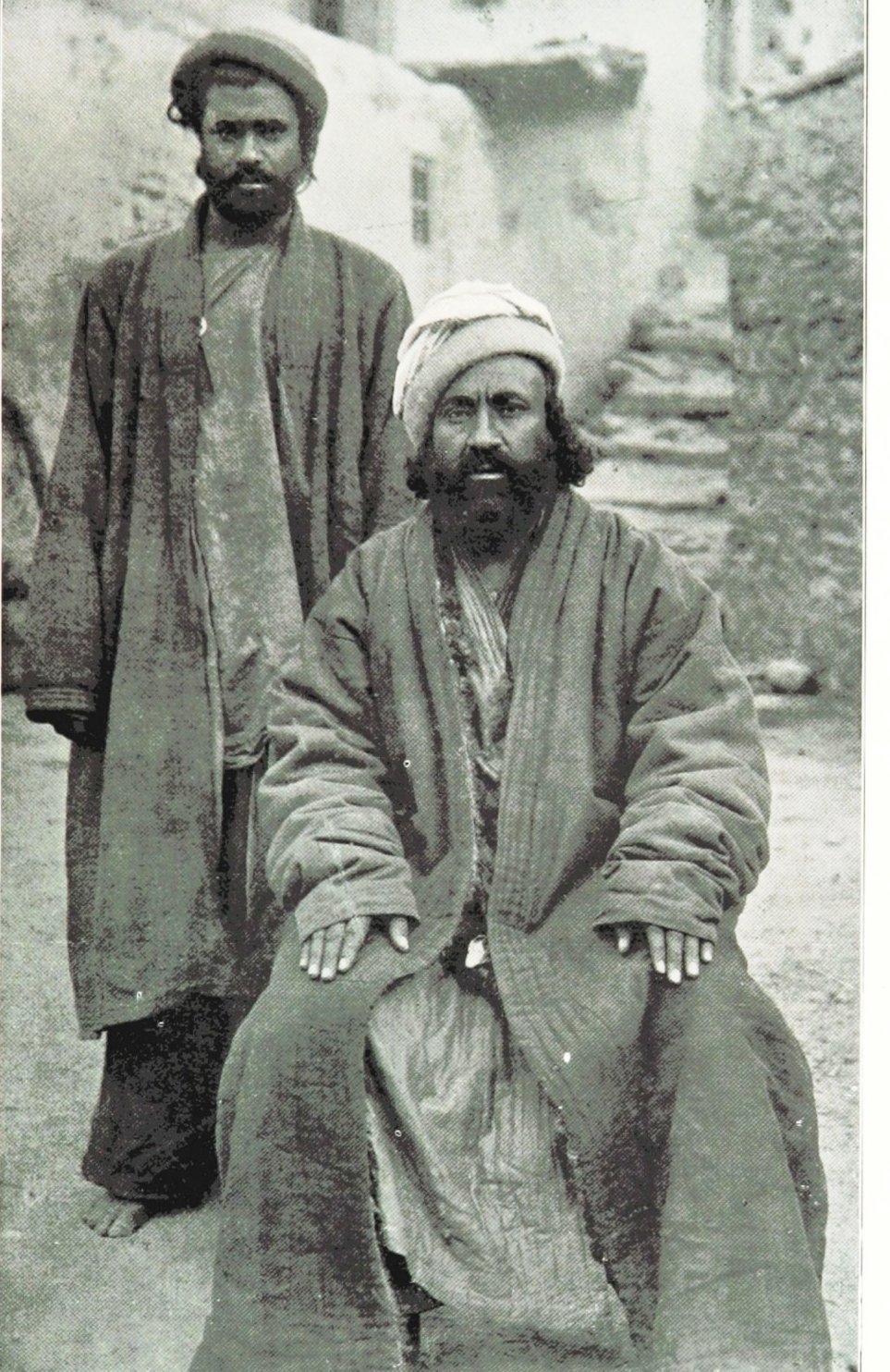
In India, like the honorific of Khakan, lord of lords, Shahanshah was the title of the Mughal Emperors. In the Mughal court, we find conferment of the title of Khan i Khanan, Khan of Khans, on the outstanding nobles, poets, councillors and commanders. To cite some examples: Mohammad Bayram Khan, Khan i Khanun, Munim Khan, Khan i Khanan; Khanzada (son of a Khan) Mirza Abdul Rahim, Khan i Khanan, in the Emperor Akbar’s court; Mohabbat Khan, Khan i Khanan, of Emperor Shah Jahan. Khan i Khanan was, thus, the title of the distinguished nobles at the Delhi court and in Persia but it was not the title of the sovereign rulers like that of Mongols, Tartars, Turks, Chinese, and Mughals.
Out of royal rank or position, as a common affix, Khan got then attached to the name of family in Hindustan. From the historical Hindustan, it is claimed as a surname from Mongol-Tatar-Turk-Persian and Pathan descent, while in Nepal, Bhutan, Sri Lanka, and Maldives, it is also traced from the same descent. With the passage of centuries, the original title has lost its historical importance of once the rulers of a vast part of the globe. Now, the title is given to almost every officer in Afghanistan, and it is no longer of historical value. But, it is still a title or surname of honour among the Muslims of the subcontinent. Khanum, to iterate, is the title of honour given to the female of Khan.
The Khansaman
Notwithstanding, the term Khan, on historical evidence, has nothing to do with the word Khwan-Saman, a house steward. Khana-saman was also pronounced by the orientalists as Khansama or Khansamah. Khwansamaan was not a chaprasi, to note. Khwan-Saman comprises two Persian-Urdu words: Khana and Saman. Briefly, Khana means a house, a dwelling, while Saman means household items, furniture, baggage, and tools, and it also denotes the order, arrangement, disposition, preparation, and foundation of a house.
In the Mughal era, the famous Khwan-Samans were: Mulla Alaul Mulki, who was also Arzi Waqai an architect of the seventeenth century; Azim Khan Mir Mohammad Baqir, was Faujdar of Sialkot, Gujrat and Punjab before he was appointed Subedar of Kashmir by Emperor Jahangir under the title of Iradat Khan. He was also Mir Bakhshi and Vazir in Emperor Jahangir’s court. His achievements as the Mughal Subedar of Kashmir are well recorded in the history of Kashmir.

Abdullah Khan and Rustum Dil Khan were Khansamans of Asaf Jah of Hyderabad Deccan in the eighteenth century. The latter became also Diwan of Asaf Jah; Afzal Khan Allami who was appointed his Khansaman by Jahangir. He was skilful in astronomy, mathematics and accounts and in Shah Jahan’s reign, he was elevated to a higher rank but he had entrusted accounts to his Peshkar, Dianat Rai Gujrati. On the death of Afzal Khan Allami, Shah Jahan said that he had never heard a bad word against anyone from him in his lifetime; Saud Ullah Khan was Mir Saman equivalent to Khansaman of the Shah Jahan’s royal Daulat-Khana. He was an army commander, Diwan and Vazir as well, well versed with the drafting of royal scripts, farmans with the seal of the Princes, and communicating them with the royal secretariat.
Rooh Ullah Khan was Khansaman of Emperor Aurangzeb. He was wise, skilled conversationalist and script, and held several high ranks like Mir Bakhshi, Faujidari and also Subedari of Hyderabad Deccan. According to Bernier, it was Fazal Khan whose counsels and address had been essentially useful to Aurangzeb was invested with the office of Khansaman, or Grand Chamberlain of the royal household.
According to Henry Eliot, Iftikhar Khan Bakhtawar Khan held the office of Mir-Saman of Aurangzeb’s court.[VII:153] Abdullah Beg, Khansaman of Nadir Shah in 1788, was asked by the master what quantity of the clothes he had brought from Iran to camp for sale. Abdullah Beg answered that there were 15,000 jackets, and 12,000 pairs of long drawers, wrote Khawja Karim Kashmiri who was an eyewitness to it. All functions are united in Khansaman.
Khansamans in British Era
From the mid-nineteenth century, after the start of the decline of the Muslim power, Khansaman was the master of the household gear, house stward, or butler, the chief table servant and purveyor in Anglo-Indian households in Bengal, always a Musalman. Over the years, Persian Khwana-saman was modified and shortened to Khansama.
With that etymology, Khansama from a personalised era of the subcontinent came to be identified with the one who was the manager in charge of management of all kinds of household items initially of the Muslim kings and nobles in charge of royal kitchens, but later, of the wealthy elite, the rich merchants who travelled from place to place in connection with their business, and of European travellers, explorers and geographers.
‘The khansamah united the duties of caterer, cook and director general of the ways and means’ for the foreign travellers to the valley and from valley to Tibet, Ladakh, Gilgit and Baltistan [ Irvy]. Dr Earnest Neve gives us a sketch of a Kashmiri Khansaman. ‘He the one who at the rest house is inclined to talk. He is short and stout. His beard is dyed with henna and he wears a voluminous turban’, he writes. At Uri Dak bungalow, there were ‘excellent old khansamah, who does his very utmost for his guests’ and at ‘a most excellent bungalow’, at Baramullah, ‘with the prince of khansamahs in charge’, foreign travellers were served with a variety of items including ‘wine’, Arbuthnot.
Henderson, Hugel, and Vigne who were in the valley in 1835 and Moorcroft in 1823 and many other Europeans who visited Kashmir in the nineteenth century and twentieth century had the company of Khansamans who took care of their accommodation, transport ( boats, horses), food and such like during their stay in the valley. Hugel mentions the name of Hingam as the name of his Khansaman who on the way to the valley, had hired two cooks (Bawarchi) who displayed their culinary skills to the satisfaction of Vigne and Hendersen who were Hugel’s guests for some time in the valley. No hotels existed in those days in the valley and Khansamans arranged their accommodation in private houses and for imperial dignitaries, quarters were built for them in the famous (then) picturesque Baghi Dilwar Khan on the left bank of erstwhile Brari Nambal and Mar Canal in the Sikh period and in Ranbir Singh’s time, the summer guest house at Lal Mandi (present-day Museum) was the favourite summer accommodation of the royal dignitaries.
Hugel writes that at Bonekote Bandipora, he was well received by Malik and that the food was prepared for him by Muslim Khansaman at the entrance of a masjid near Malik’s house where they stayed. Victor Jacquemont who was in the valley in the summer of 1831 had the company of a Muslim Khansaman but, he was very harsh on Kashmiri Musalmans in many places in his correspondence with his father.
The Bawarchi
Before parting with the discussion, I may mention the word Bawarchi which is sometimes confused with Khansaman. Some have traced the origin of the term to the Mongol Golden Horde of Genghis Khan, where Bawarchi was a high dignitary male cook [Von Hammer], but Bawarchi is a Persian word with origin from the Persian-Turkic Mamluk Khwarazmian Empire. The British orientalists mispronounced it as Babachy (see Thomas Williamson) which is a vulgarisation of the actual name.
The Persian-Turkic word Bawarchi was adopted in the Hindustani language both Hindi and Urdu scripts during the Anglo-British period. It may be noted here that Abul Fazl uses the term Mir Baqawal, master of the kitchen, for the dignitary who was looking after the kitchen of Emperor Akbar. Baqawal also means cook in Persian. There were hundreds of ordinary cooks, Baqawals or Bawarchis, working under Mir Baqawal of Akbar’s household. The Bawarchis were ordinary cooks, not especially skilled Khansamans of the royal courts who carried multiple functions other than culinary traditions. In Anglo-Indian households and Dak-Bungalows, we find the name of Bawarchi-Khana.
(The author is a historian. His 3-volume book History of Kashmir from Ancient to Present was published recently.)