by Shadab Ahmad Lone
Excessive parasocial attachments can weaken real-life relationships, harm mental health, and distance individuals from parents and loved ones who offer genuine care
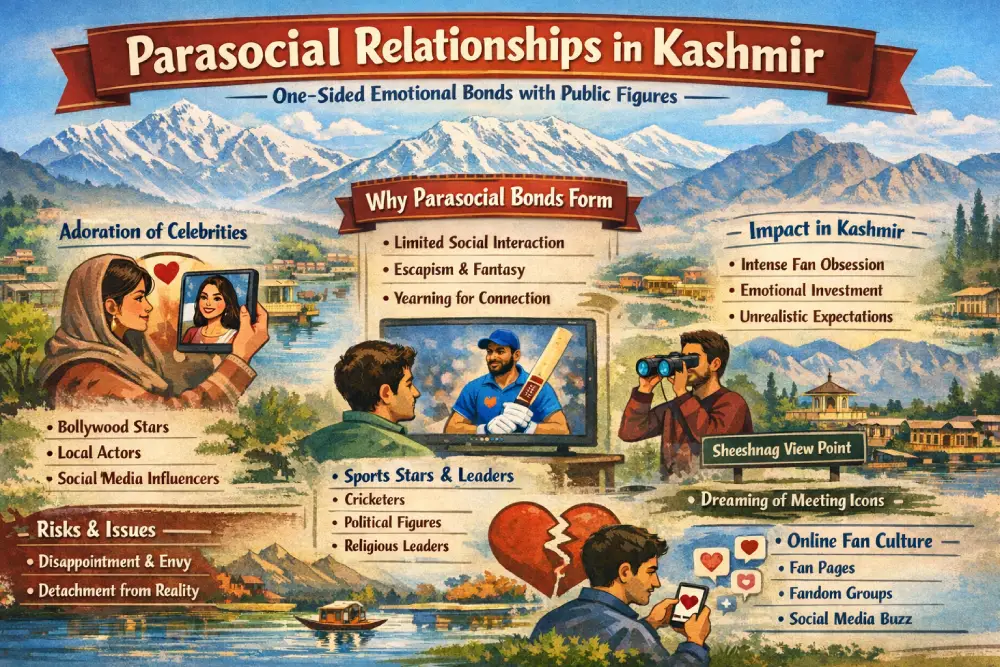
In today’s digital age, it is easy to get caught up in the glamour of celebrity culture and social media influencers. We follow their every move, mimic their styles, and hang on to their every word. But have we ever stopped to think about the people who truly matter in our lives, the ones who have stood by us through thick and thin, who have nurtured and cared for us, and who deserve our love and respect?
The concept of parasocial relationships is a fascinating one. It refers to a phenomenon in which people develop a deep emotional connection with someone they have never met, often a celebrity or media personality. They feel as though they know them, as if a bond has been formed, and they invest their emotions and time in what is essentially a one-sided relationship.
However, as the saying goes, all good things must come to an end. When parasocial relationships become unhealthy, they can have serious consequences for real-life relationships and mental well-being. Imagine a young person who spends hours watching videos of a favourite influencer, closely following their every move and attempting to emulate their lifestyle. Gradually, studies are neglected, relationships with family and friends weaken, and even physical and mental health begin to suffer. The virtual relationship becomes so consuming that what truly matters in life fades into the background.
Meanwhile, parents who have sacrificed endlessly for their child’s well-being are left feeling unloved, unappreciated, and ignored. Watching their child drift deeper into the world of social media, chasing someone they don’t even know, can be heartbreaking. This is precisely where parasocial relationships turn unhealthy. When virtual connections are prioritised over real-life bonds, we risk losing the love, support, and connection that sustain us.
Preventing this requires a conscious shift in priorities. Real-life relationships must come first. Taking time to appreciate the people who matter most, spending meaningful moments with family, engaging sincerely with friends, and investing in personal growth are essential steps. Parents, in particular, have been present since the very beginning, nurturing, caring, and loving their children unconditionally. They deserve respect, appreciation, and gratitude.
As aptly stated earlier, our parents—especially our mother, who cooks for us, cares for us, respects us, and nurtures us from cradle to grave—deserve the highest praise, just as our father, who works tirelessly with blood and sweat to provide education and security, deserves equal recognition. Making a conscious effort to value these relationships can help build healthier families and stronger emotional bonds.
Unhealthy parasocial relationships can take a serious toll on mental health, personal relationships, and overall well-being. When individuals begin neglecting real-life responsibilities, spend excessive time engaging with media figures, feel emotionally affected by the actions of someone they have never met, or constantly compare their lives with those portrayed online, the imbalance becomes evident. Feelings of sadness, anxiety, anger, or inadequacy may follow. Recognising these signs is the first step towards change.

Breaking free from unhealthy parasocial attachments requires awareness and deliberate action. Limiting social media use, taking breaks from following influencers, engaging in fulfilling real-life activities, prioritising family and friendships, practising self-care, and seeking support from loved ones or mental health professionals can help restore balance. Real relationships, grounded in presence and reciprocity, are what truly matter.
Parasocial relationships may be intriguing, but they can also lead to emotional isolation and strained real-world connections if left unchecked. By choosing to value genuine relationships and appreciating those who truly care for us, we can build healthier families and avoid the pitfalls of excessive virtual attachment. Sometimes, all it takes is putting down the phone, looking away from the screen, and reconnecting with the people who make life meaningful.
(The author is a Research Scholar, Department of Social Work, University of Kashmir. Ideas are personal.)