SRINAGAR: India on Monday rejected an award by the Court of Arbitration at the Permanent Court of Arbitration (PCA) that held the Indus Waters Treaty (IWT) remains fully in force, asserting that the tribunal was “illegally constituted” and had no jurisdiction to pronounce on New Delhi’s sovereign decision to keep the treaty in abeyance.

The Ministry of External Affairs (MEA) said India’s decision to hold the 1960 treaty in abeyance “remains in force”, and that the latest pronouncement by the tribunal would have no bearing on India’s actions, including work on hydropower projects in Jammu and Kashmir.
The rejection came after the PCA, in an award issued in The Hague on August 31, unanimously concluded that India’s April 2025 decision to place the treaty in abeyance could not be justified under either the treaty itself or applicable international law. The tribunal said the IWT therefore “remains fully in force” and India remains bound by its obligations concerning hydro-electric projects on the Indus, Jhelum and Chenab—the three Western Rivers.
In a statement, the MEA said the so-called Court of Arbitration had been constituted in breach of the terms of the Indus Waters Treaty and that India had never recognised its legal existence.
“India categorically rejects its so-called award,” the MEA said, maintaining that the tribunal had no jurisdiction over India’s sovereign decisions.
India did not participate in the proceedings concerning the status of the treaty. The PCA’s own account records that after Pakistan sought a determination on the treaty’s status in March 2026, India did not respond to an invitation to participate, and subsequently made no written or oral submissions. The tribunal nevertheless considered India’s positions insofar as they could be discerned from government communications and public statements.
The MEA said the tribunal’s pronouncements, whether issued now or in the future, would have no effect on India’s actions relating to projects being undertaken by it.
The dispute assumes particular significance for Jammu and Kashmir, where India has accelerated work on hydropower projects on rivers covered by the treaty.
PCA says treaty cannot be placed in unilateral abeyance
The PCA’s award arose from Pakistan’s request of March 4, 2026, seeking a determination of the treaty’s status after India announced in April 2025 that it would hold the IWT “in abeyance” until Pakistan “credibly and irrevocably abjures its support for cross-border terrorism.”
The tribunal said the term “abeyance” is not used in the Indus Waters Treaty and has no technical meaning in international law. It therefore proceeded on the basis that India was effectively claiming either suspension or termination of the treaty.
It then examined whether either course was legally available to India.
On the treaty’s own terms, the tribunal found that the IWT does not provide for unilateral suspension or termination. Instead, it said, the treaty remains in force unless India and Pakistan jointly modify or terminate it through a further treaty.
The tribunal also rejected India’s argument that sovereignty provided a basis for unilateral suspension, invoking the international-law principle of pacta sunt servanda—that treaties must be honoured.
It further examined three potential grounds for unilateral suspension or termination: material breach, fundamental change of circumstances and armed conflict.
On India’s contention that Pakistan’s support for cross-border terrorism constituted a material breach of the treaty, the tribunal said it had considered the allegation “extremely seriously”.
However, it concluded that even if India’s allegation were assumed to be true, it would not constitute a material breach of the IWT.
The tribunal noted that the treaty does not deal with terrorism or the use of force and expressly governs the rights and obligations of India and Pakistan concerning the use of the waters of the Indus river system. It also said it found no evidence that terrorism had prevented India from constructing hydro-electric projects on the Western Rivers, noting that India had built and continued to build several such projects.
The tribunal similarly rejected arguments based on demographic changes, India’s need for clean energy, advances in dam technology, escalating cross-border terrorism and climate change, finding that the legal requirements for invoking a “fundamental change of circumstances” had not been met.
It also concluded that there was no international armed conflict between India and Pakistan at present and said that, in any event, the treaty was of a type that would remain operational during an armed conflict. The IWT, it noted, had survived several previous conflicts since 1960.
The tribunal additionally rejected the argument that India’s action could be justified as a countermeasure against an antecedent violation of international law by Pakistan.
Its overall conclusion was categorical: India’s decision to place the treaty in abeyance was “not permissible” under the treaty or applicable international law.
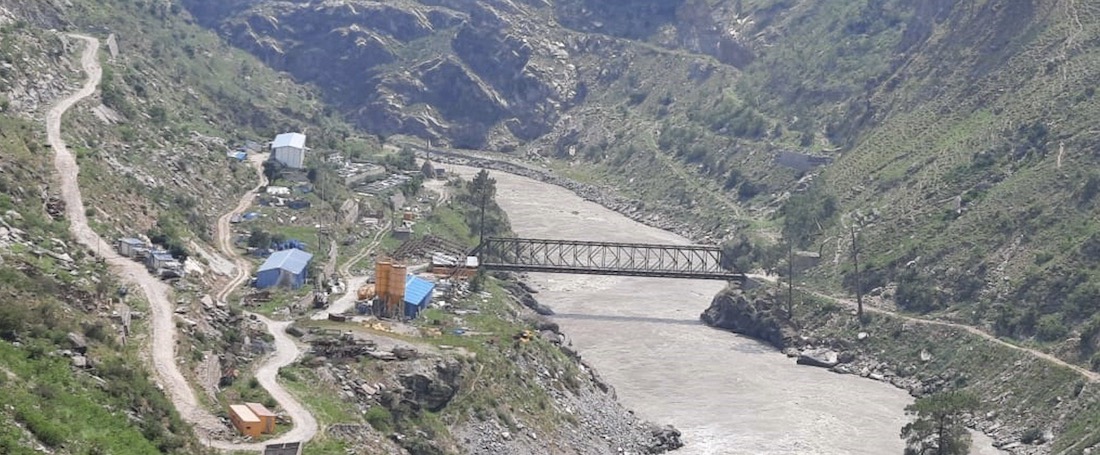
In a separate order issued alongside the treaty-status award, the tribunal also granted three interim measures sought by Pakistan concerning the Ratle Hydro-Electric Plant in Jammu and Kashmir.
The measures relate to construction work pending a decision by the Neutral Expert on whether the design of the Ratle project complies with the IWT. That decision is currently expected around July 2027.
The tribunal ordered India not to concrete portions of the Ratle dam wall above a specified level and imposed a similar restriction on the project’s power intake structure. Both measures will remain in place until 90 days after the Neutral Expert issues his final decision.
A third measure requires India to notify the tribunal, the Neutral Expert and Pakistan of changes to the Ratle construction schedule.
The tribunal, however, rejected two other measures sought by Pakistan. One would have formally affirmed that India was proceeding with construction at its “own risk”, while another sought to require India to return to full compliance with the treaty pending the tribunal’s decision.
The proceedings themselves date back to August 2016, when Pakistan initiated arbitration under Article IX and Annexure G of the IWT. India subsequently sought the appointment of a Neutral Expert to examine questions concerning the Kishenganga and Ratle projects.
The World Bank paused both processes in December 2016 before lifting the pause in 2022. The Court of Arbitration was subsequently constituted and the Neutral Expert appointed.
India challenged the tribunal’s competence, but the Court rejected those objections in a July 2023 award. The tribunal has since issued a series of decisions on interpretation of the treaty, including awards in August 2025 and May 2026. The parallel Neutral Expert proceedings concerning Kishenganga and Ratle remain underway, with his final decision currently envisaged for July 2027.
The latest PCA proceedings were chaired by Professor Sean D. Murphy of the United States, with Professor Wouter Buytaert of Belgium, Professor Jeffrey P. Minear of the United States, Judge Awn Shawkat Al-Khasawneh of Jordan and Dr Donald Blackmore of Australia as the other members.
The PCA said the full award and order would be published after confidential material from the parallel Neutral Expert proceedings is identified and redacted.