by Zakir Malik Bhallesi
Assu, the autumn grass-harvest season in Jammu and Kashmir, embodies cooperation, gratitude, and harmony with nature, reflecting the enduring cultural pulse of mountain communities like Bhallesa
The lush valleys and high pastures of Jammu and Kashmir are renowned for their beauty, industrious people, and deeply rooted pastoral traditions. Here, cattle rearing is more than a livelihood; it is a heritage, passed down through generations as a symbol of endurance, unity, and respect for nature.
Each year, from mid-September to mid-October, this rhythm of rural life takes on a distinct hue. According to the Punjabi and Nanakshahi calendars, the period is called Assu, known locally as Aeshid in Kashmiri and Asuj in Bhaali Bhaderwahi. It marks the season when grass on meadows, fields, and mountain slopes ripens perfectly, and people begin to reap the fruits of a year’s hard labour.
Assu is not just a season; it is a turning point in the agricultural and social calendar. The monsoon has retreated, leaving the soil moist and skies clear. The grass stands tall—neither too wet nor too dry—ideal for harvest. This is when farmers take up their sickles and step into the fields, their day’s work guided by sunlight and song.
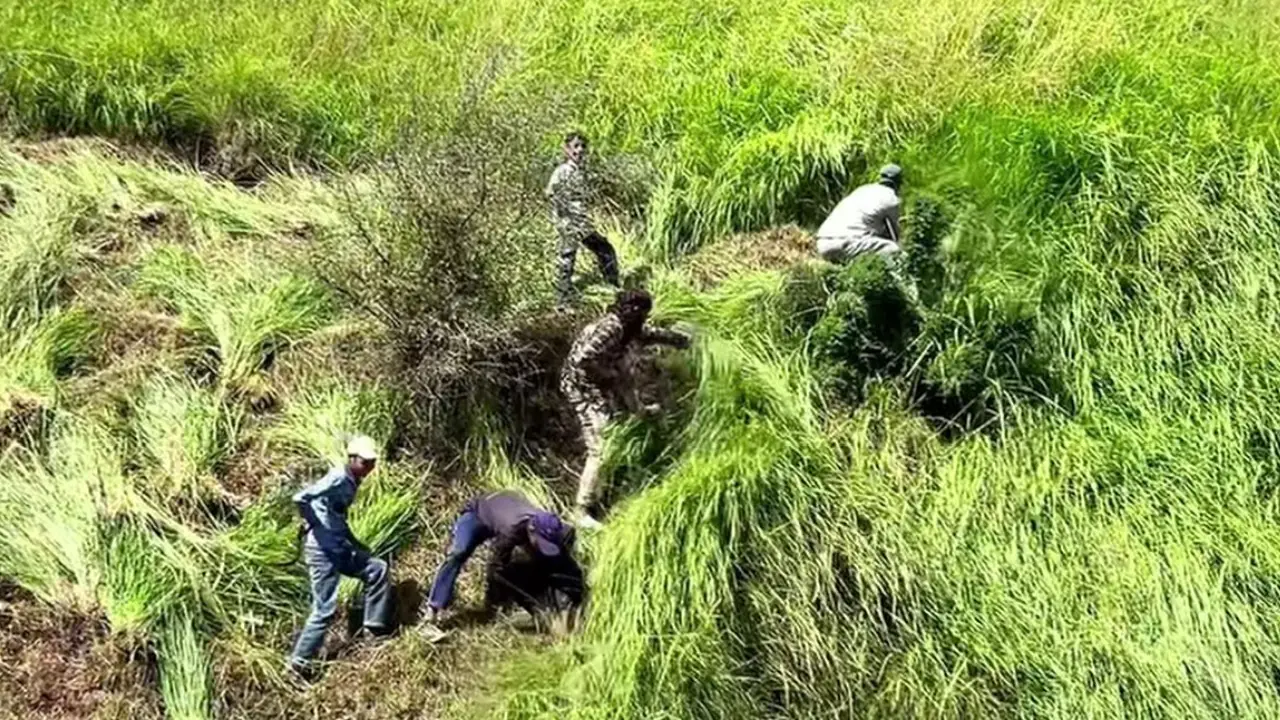
In many parts of Jammu and Kashmir, especially Bhallesa, grass-cutting, locally called Laitri or Kamiri, is a collective activity. It is work performed together, a living emblem of cooperation and community spirit. Villagers labour in one another’s fields in turns, strengthening social ties and nurturing affection and solidarity. Such traditions continue to define mountain life, binding people through mutual service and shared joy.
The freshly cut grass, known as Kardbi, is harvested by men and women standing in long rows, moving their sickles in rhythmic precision. This simple tool bears many names across languages, Droot in Kashmiri, Dilati in Bhaali Bhaderwahi, Dhaach in Khasha and Pogli, Dhati or Draati in Gojri, Oongoo in Shina, and Dandal in Pahari and Dogri. Some even call it Toond. The words may differ, but the purpose remains shared, a symbol of survival and season.
Once cut, the grass is spread to dry beneath the mellow autumn sun before being gathered into large mounds called Ghaari. These heaps, dotting the emerald slopes, create a serene landscape—nature’s tribute to human perseverance.
When winter descends and snow buries the highlands from November to March, these grass stores become life itself for cattle. The meadows may sleep, but the labour of Assu sustains life through the freeze.
Thus, Aeshid, Kamiri, and Laitri are not mere practices; they are the living pulse of this land, a heritage of harmony between humans and nature. The glint of sickles under the autumn sun, the sight of farmers aligned across golden slopes—all proclaim that the bond between toil, culture, and environment endures.

In these communal labours, hospitality plays a sacred role. The host family prepares a generous meal for all who join the work, turning labour into celebration. In some villages, the beats of Dhol and the notes of the flute accompany the cutting, a blend of festivity and function. Locals believe the music keeps snakes and harmful creatures at bay, adding safety to the song.
At its heart, Assu represents far more than hard work. It is the living expression of sincerity, unity, and love for the land. In an age of modernity and technology, the traditions of Bhallesa and other mountain regions remind us where true strength lies in cooperation, gratitude, and collective joy.
The days of Kamiri and Laitri are filled with the scent of fresh grass, the laughter of labourers, and the beat of distant drums. Together they form a timeless symphony, the heartbeat of mountain life that still echoes through the valleys of Jammu and Kashmir.
(Author is a freelance writer. Ideas are personal.)