by Shabeer Ahmad Lone
Diwali transcends ritual, symbolising the human journey from darkness to enlightenment, celebrating pluralism, renewal, and the shared pursuit of truth.
Diwali, derived from the Sanskrit Deepavali meaning “a row of lamps,” transcends ritual to become an illumination of conscience. As Sri Sri Ravi Shankar profoundly reminds us, “The real lamp is you.” To light this lamp is to awaken, not merely to light, but to truth, justice, and shared dignity. This light resonates across cultures as humanity’s enduring vow: that darkness, whether ignorance or injustice, will never define us. Each flame stands as a testament to the timeless triumph of the human spirit.
Known widely as the Festival of Lights, Diwali remains one of India’s most profound cultural and spiritual phenomena, yet its luminous significance extends far beyond geography and religion. Rooted in ancient mythologies, philosophical traditions, and living social practices, Diwali captures a universal yearning, the quest for light amid darkness, knowledge over ignorance, hope against despair, and unity above division. The festival’s vitality endures because it harmonises diverse narratives, rituals, and meanings, reflecting the mosaic of India’s faiths and communities.
More than a celebration, Diwali invites us to encounter the soul, not only the individual’s inner light but the collective illumination that sustains human interconnectedness and pluralism. Contemporary scholars such as Diana Eck and Wendy Doniger see Diwali as a living symbol of India’s pluralistic ethos, where diversity coexists with spiritual unity. Amid globalisation, digital mediation, and ecological strain, Diwali remains a vital lens to explore coexistence, ecological ethics, gender equity, and the balance between tradition and modernity.
Diwali’s pluralism finds vivid expression in its interfaith celebrations. Hindus mark Rama’s return to Ayodhya as dharma’s victory over adharma; Jains commemorate Mahavira’s liberation; Sikhs recall Guru Hargobind’s release symbolising justice; and Newar Buddhists perform rituals of cosmic renewal. Diana Eck describes this as India’s “pluralistic public square,” where traditions coexist and enrich each other. As community leader Manju Jain observes, “Diwali brings us together, beyond neighbourhoods and religions, reminding us that the light we kindle is a promise of shared respect and hope.” Such lived pluralism makes Diwali a beacon of social harmony amid diversity.
At its heart, Diwali kindles the inner flame of awareness and compassion. Beyond fireworks and grandeur, it unfolds through kindness, mindfulness, and reverence for life. By honouring diversity, it nurtures social harmony and ecological mindfulness, transforming outward brightness into inner illumination. True Diwali celebrates unity in diversity, ethical renewal, and the shared human journey from darkness to light.
Across India’s literary and mystical traditions, Diwali’s lamps transcend ephemeral festivity to embody enduring symbols of inner awakening and cosmic harmony. In Urdu and Hindi poetry, luminaries such as Kabir, Mir, and Tulsidas evoke the diya not merely as a lamp but as a fragile yet resolute flame guiding the soul from darkness to divine illumination, from ignorance to wisdom, from despair to hope. This poetic imagery draws from the Vedas and Upanishads, where jyoti (light) signifies the cosmic principle sustaining and transforming all existence.
The Rigveda venerates Agni, the sacred fire, as a divine intermediary, purifier, and messenger between the earthly and celestial, embodying transcendence and renewal. The Upanishads extend this vision, portraying light as the luminous essence of Brahman—the infinite reality—and as the flame that guides the atman (self) toward moksha (liberation). This radiance finds echoes in Jain, Sikh, and Buddhist thought, where light symbolises jnana (wisdom), ananda (bliss), and emancipation. The interplay of shadow and illumination in Diwali’s imagery invites seekers beyond the visible into the realms of consciousness and truth. Through poetic, philosophical, and mystical synthesis, Diwali’s lights endure as emblems of transformation, unity, and the sacred human aspiration for transcendence and universal truth.
Philosophically, Diwali embodies Indian concepts of moksha (liberation), karma (ethical action), and samsara (rebirth). Lighting the diya becomes a metaphor for igniting the inner spark that transcends suffering and ignorance. This symbolism resonates across Hindu, Jain, Sikh, and Buddhist traditions, uniting the Upanishadic pursuit of self-realisation with the Buddhist quest for enlightenment. Seen thus, Diwali is cosmic renewal—a radiant bridge between the human and the divine, the personal and the universal.
Diwali also celebrates the union of science and art. Its lamps symbolise knowledge overcoming ignorance; rangoli patterns weave geometry and colour into communal harmony. Aligned with lunar cycles, the festival reflects cosmic rhythm, while its sensory richness, incense, fireworks, and chants awaken joy and shared identity. Here, nature’s laws and human creativity illuminate the soul together.
Gender dimensions deepen Diwali’s social meaning. Women traditionally lead rituals and create rangoli to invite blessings, yet feminist critiques highlight how these roles both empower and constrain. Contemporary artists like Anjali Mehta reinterpret rangoli to advocate gender equity and environmental awareness, embodying Diwali’s evolving nature, rooted in heritage yet responsive to social change.
Economically, Diwali drives commerce, from sweets and gifts to artisanal crafts, sustaining livelihoods but also raising concerns about consumerism, inequality, and spiritual dilution. Marginalised communities often face barriers to full participation, exposing social disparity. Thus, Diwali also prompts reflection on material prosperity versus spiritual fulfilment.
Culturally, Diwali’s arts, rangoli, music, theatre, and dance, transmit heritage and identity across generations. In diasporic contexts, these arts foster belonging and intercultural dialogue, affirming Diwali’s global resonance.
Interfaith dialogue remains central to Diwali’s modern significance. It offers space for shared celebration and mutual respect, though political appropriations sometimes strain this harmony. Initiatives like Delhi’s “Light of Harmony,” which unites Diwali and Eid festivities, exemplify its unifying potential.
The digital age globalises Diwali through virtual ceremonies, storytelling, and social media, engaging diasporas and youth worldwide. Environmental consciousness, propelled by movements like Eco-Friendly Diwali, challenges traditional fireworks, reflecting ethical responsibility and collective care.
Environmental concerns spur innovation and reflection. Pollution and health hazards from fireworks prompt communities to adopt quieter, sustainable celebrations, laser shows, natural dyes, and eco-friendly décor. Such adaptation reveals Diwali’s strength: honouring tradition while embracing ecological imperatives.
Psychologically, Diwali nurtures well-being, bonding, and hope. Rituals of cleansing, forgiveness, and generosity bring catharsis and community cohesion. Studies affirm light’s positive effects on mood and cognition, underscoring Diwali’s role in sustaining individual and collective mental health.
Politically, Diwali’s evolution intertwines with Indian nationalism and identity formation across colonial and postcolonial eras, enriching its socio-political dimensions.
Ritual theory illuminates Diwali’s power: symbolic acts sustain social, moral, and cosmic order. Lighting lamps, sharing sweets, and offering prayers reaffirm cultural memory and cohesion, keeping Diwali’s vitality alive.
In the face of suppression and injustice, Diwali endures as luminous resistance. Its light is not spectacle but sacred defiance, that truth cannot be buried, nor dignity extinguished. The diya becomes a quiet uprising, a refusal to surrender humanity. Diwali reminds us that illumination lies in conscience, solidarity, and courage amid darkness.
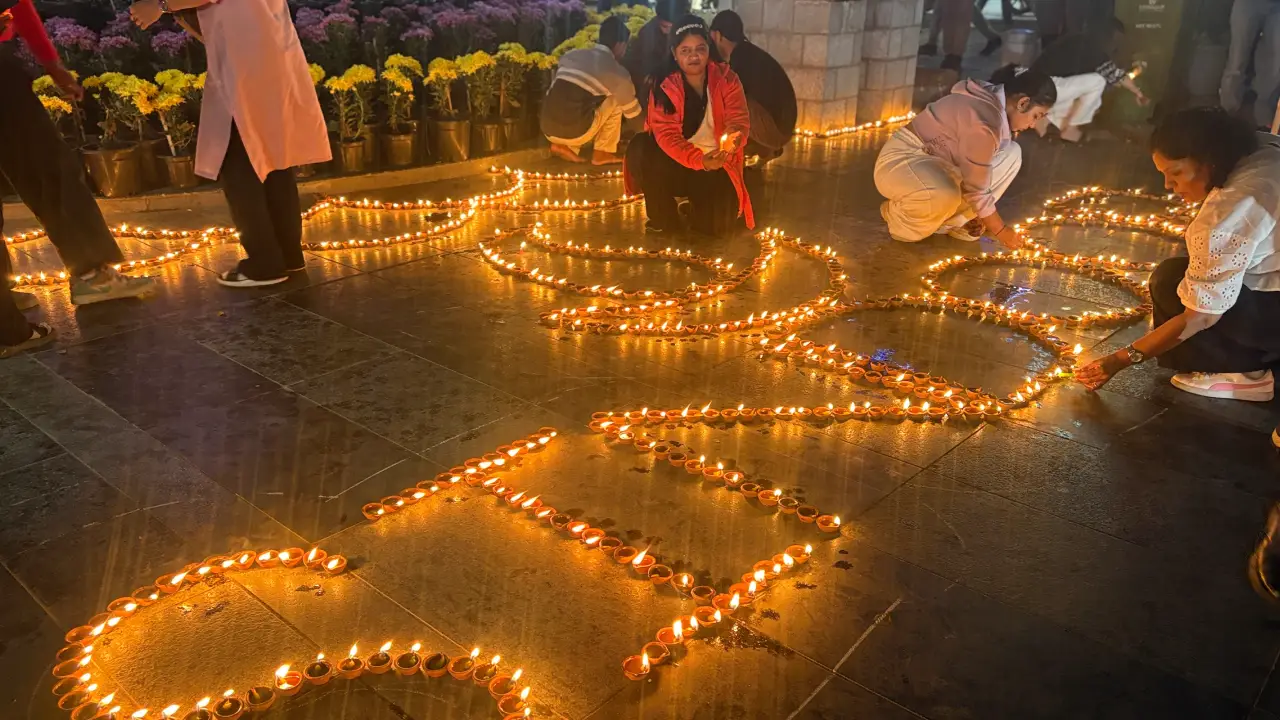
Beyond India, Diwali’s light resonates with Hanukkah’s resilience, Christmas’s hope, Ramadan’s mercy, Vesak’s awakening, and every vigil’s candle. Across faiths, it symbolises a shared vow: darkness shall not prevail. The lamp endures not in imitation, but in kinship of light.
Diwali is a living, evolving tradition, engaging contemporary political, environmental, and social challenges while nurturing timeless values of renewal, unity, and light. Its rituals, narratives, and arts sustain memory and inspire harmony. By embracing diversity without erasing difference, Diwali models inclusive, transformative pluralism. Its power lies in inspiring both personal insight and collective harmony.
In today’s fragmented world, Diwali’s message of hope and interconnectedness is both timeless and urgent. It invites all, regardless of faith or background, to kindle the inner light that unites humanity in a shared journey. Through this festival, we witness not just the illumination of lamps but of the soul, revealing a vision of coexistence, resilience, and renewal. As Wendy Doniger eloquently writes, “Diwali is a luminous celebration of life’s enduring light, where myth, history, and human aspiration converge in a shared quest for meaning and renewal.” Embracing its radiant spirit calls us to build a more compassionate, enlightened, and inclusive world.
(The author is a Bandipore resident and researcher. Ideas are personal.)