by Towseef Ahmad Mir
Policy shifts, digital transformation, and economic shocks are steadily weakening India’s vast informal employment structure.
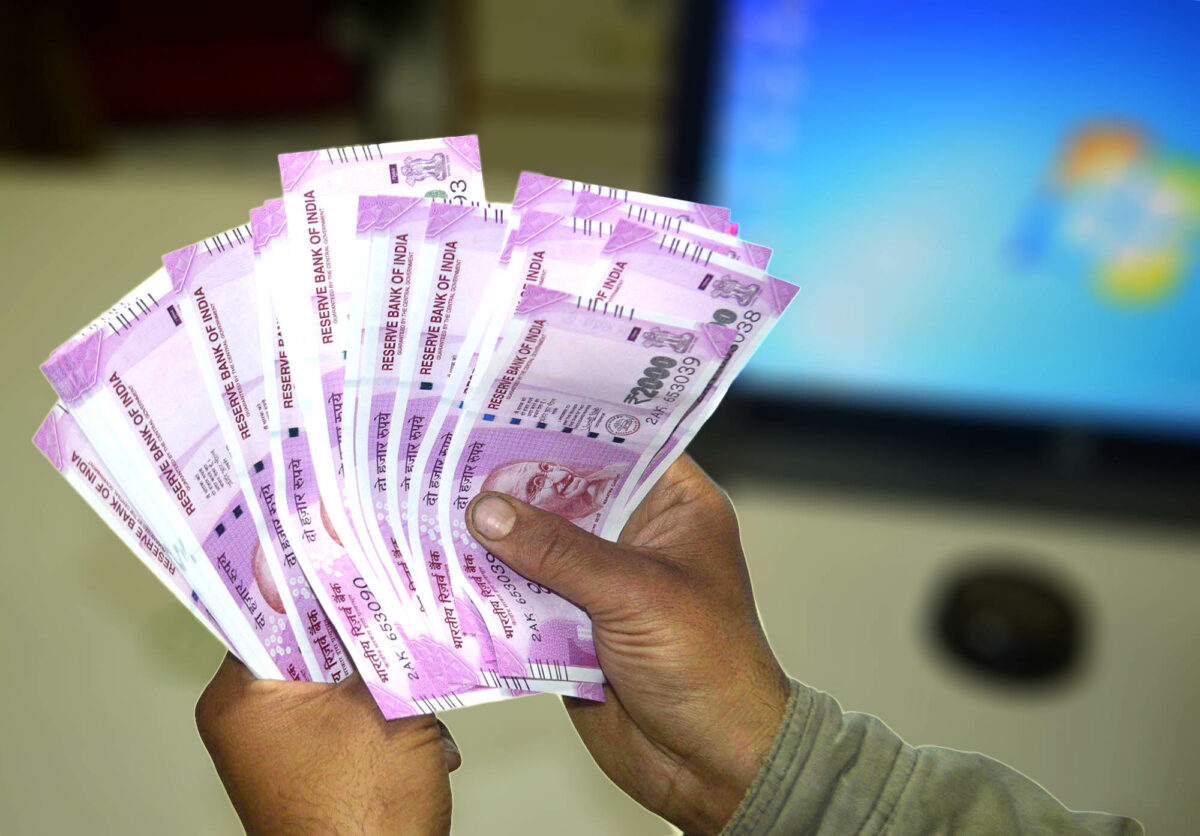
India’s informal economy is regarded as a buffer against unemployment as well as a reservoir of entrepreneurial dynamism. However, it is undergoing a gradual but undeniable contraction. According to MOSPI data, this sector employs nearly 85%–90% of the workforce, and it also contributes 45% to India’s total Gross Domestic Product (GDP).
The informal sector has historically sustained livelihoods in both rural and urban areas of India. Over the past decade, a conjunction of different policies has shifted the focus from the informal sector of our economy toward formalisation through technical interventions and structural transformations, which has led to a distortion of its efficiency and competitiveness. This gives rise to urgent concerns, with employment and economic stability at the top.
At the outset, it is very important to understand and clarify that the informal sector of our economy includes various dimensions of the market in which unregistered enterprises, self-employed individuals, casual labourers, and workers without formal contracts or social security are at the top of the list. Street vendors, small shopkeepers, daily wagers, and home-based workers form its backbone. In this sector, there are low entry barriers, but it remains vulnerable to shocks due to limited access to financial facilities such as credit, markets, and institutional support.
The demonetisation policy of 2016 was an important turning point for this sector. The withdrawal of currency notes from circulation not only affected a major portion of the economy but especially those dependent on cash transactions, of which informal enterprises were among the most affected. The formal sector recovered relatively quickly through digital integration with financial systems, while the informal sector faced prolonged liquidity constraints, which led to business closures and job losses. The impact was neither temporary nor evenly distributed, due to which the informal sector faced a severely damaged situation.
In 2017, with the introduction of the new tax system, the Goods and Services Tax (GST), the informal sector experienced another major jolt. While the GST aimed to enhance the efficiency of the economy by unifying India’s fragmented tax system, its consequences were also felt by unregistered firms and small business units, due to which this initiative became merely a floccinaucinihilipilification of their welfare.
The COVID-19 pandemic further intensified these economic vulnerabilities. In Indian history, the disruption to informal employment due to the consequences triggered by COVID-19 was unprecedented. Restrictions on mobility created a mismatch between demand and supply forces, causing market collapse and leading to the overnight job loss of millions of workers. Reverse migration to rural areas exposed the fragility of urban informal employment and highlighted the absence of social protection mechanisms. Even though recovery has been underway, employment quality and earnings remain below pre-pandemic levels for many.
Beyond these episodic shocks, larger structural changes are taking place over time. Digitalisation and the expansion of e-commerce platforms have altered market dynamics by creating new opportunities while intensifying competition for informal retailers. Large-scale firms dominate supply chain mechanisms due to economies of scale and technological advantages. Consequently, traditional informal units find it increasingly difficult to sustain themselves in such an evolving economic landscape.
In urban areas, the gradual transition in the labour market from self-employment to salaried employment has also added fuel to the fire. However, this transition is not necessarily toward secure or formal jobs; rather, it often leads to employment that reflects the inherent precarity of the gig economy, characterised by uneven incomes and limited worker safety and protections. Thus, the decline of the traditional informal sector does not necessarily imply a transition to decent work.
From a macroeconomic perspective, the withering of the informal economy has two types of implications. One is that the focus on formalisation across different sectors may enhance productivity, tax compliance, and economic transparency. The second is that the displacement of informal livelihoods without sufficient absorption into the formal sector leads to increased unemployment and inequality in the economy. Furthermore, the shock-absorbing capacity of the informal sector diminishes, making the economy more susceptible to downturns.
There must be policy responses and reviews that create a careful balance between promoting formalisation and preserving livelihoods in future policymaking. Simplifying complicated procedures for accessing different schemes and policies will improve conditions in the informal sector, while investing in digital literacy can facilitate a smoother transition for informal enterprises. Equal importance must also be given to social security frameworks for both formal and informal workers, including health insurance, pension schemes, and unemployment support during economic downturns.

The informal sector should be integrated into development strategies rather than eliminated. During policy formulation, there must be special provisions for the informal sector that will lead to healthier economic inclusion. Strengthening local markets, supporting small enterprises, and ensuring inclusive growth are necessary for economic stability.
The withering of India’s informal economy is not only a sectoral transition but also a structural transformation with heavy cost-bearing consequences. While formalisation remains a primary goal, it must be pursued in a manner that is inclusive, gradual, and sensitive to ground realities. The challenge lies not in replacing informality but in transforming it into a more secure and productive component of the economy. Without such a finely tuned approach, the costs of transition may outweigh its benefits, undermining the very foundations of India’s growth trajectory.
(The author is a scholar at the Department of Economics, Central University of Kashmir. Ideas are personal.)