by Dr Iqra Shafi Bhat
Quick commerce promises convenience in Kashmir but challenges traditional retailers, consumer behaviour, labour conditions, and the Valley’s evolving retail economy
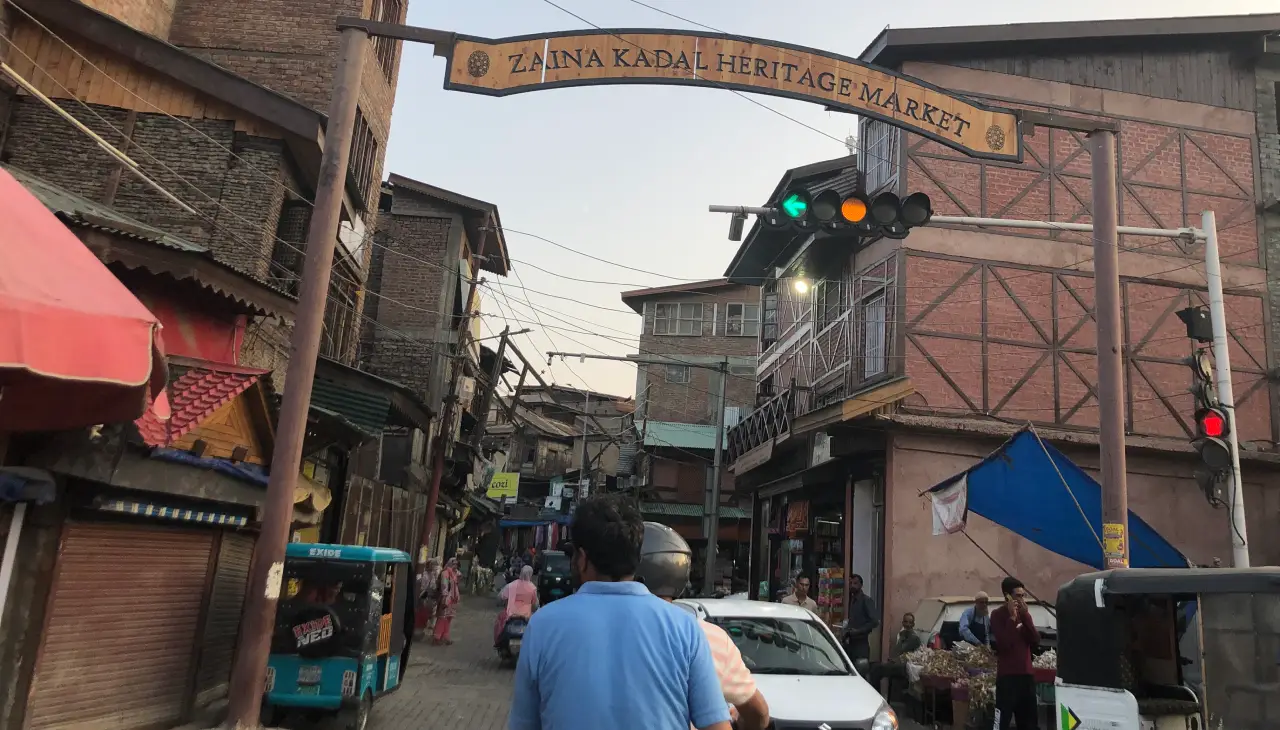
Quick commerce, app-based delivery of groceries and daily essentials at an ultra-fast speed (10 to 30 minutes), has grown at an extraordinary pace. Recent industry estimates place the country’s quick-commerce market in the US$7–11.5 billion range, with expansion now moving beyond the largest metros into tier-2 cities and steadily pushing into smaller urban markets. The next phase of growth will come from exactly such markets, where smartphone use, digital payments, and convenience-driven consumption are rising.
Pertinently, Kashmir is beginning to feel its first effects. Platforms such as Blinkit are now available in parts of Srinagar, especially in pockets like Hazratbal and Lal Bazar. This may still be an early-stage footprint rather than a full-fledged rollout, but it is enough to raise a significant question: what happens when the Valley’s intensely local retail economy meets the logic of instant delivery?

The question matters because quick commerce is not merely a new shopping option. It will change how consumers buy, how retailers compete, and how value is distributed across the local economy. From the Kashmiri consumer’s standpoint, the appeal is immediate. A household that runs out of milk, bread, baby products, medicines, or cooking staples no longer has to send someone to the neighbourhood market. A few taps on an app can replace a trip to the store. On top of that, given the harsh weather, traffic bottlenecks, and distances involved, the promise of home delivery carries obvious value. It is also inherently inclusive, as it is equally accessible to elderly residents, working couples, people with limited mobility, and families dealing with urgent, unplanned purchases.
There is another consumer-side gain: visibility. Q-commerce apps put multiple brands, prices, and pack sizes on one screen, making comparison easier than in a physical retail setting. They also create digital order histories and simplify payment through UPI or cards. For younger urban customers already comfortable with app-based transactions, this is not a trivial shift. It changes retail from a physical activity into an on-demand service.
Convenience is only one part of the equation. Q-commerce also alters consumption habits by encouraging top-up shopping, impulse buying, and frequent purchases of snacks, beverages, and non-essential items. Industry analysis shows that q-commerce not only captures a share of the traditional grocery retail market but also creates new demand by making small, unplanned purchases frictionless. While this may seem attractive from the perspective of sellers and platform growth, for households it translates into greater convenience-led spending and weaker budgeting discipline.
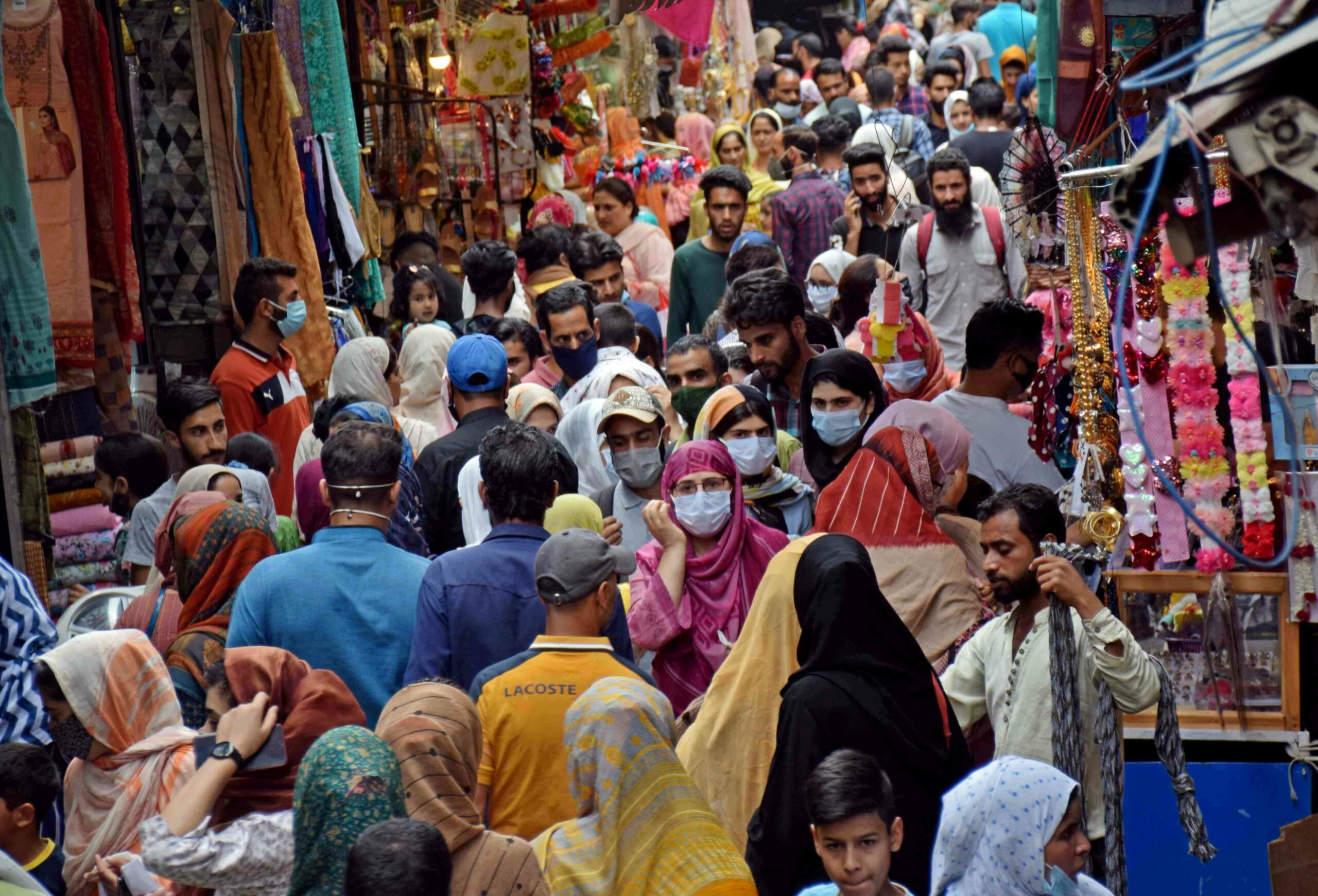
The more serious concern pertains to retailers. Kashmir’s urban retail economy still rests heavily on neighbourhood kirana stores, pharmacies, small family-run grocery outlets, and local vendors. They are woven into the social economy of the Valley in ways that a platform interface cannot replicate. Q-commerce enters precisely the categories that keep local retail stores afloat—SKUs with high rotation, thin margins, but regular turnover. If a significant portion of such spending moves to apps, local retailers will not collapse overnight, but they will lose the steady footfall that sustains their economic viability.
RedSeer estimates that kirana stores accounted for about 91 per cent of India’s grocery market in 2025 and may still retain 86 per cent by 2030. Thus, the advent of q-commerce is not a sign of the disappearance of existing retail formats, but evidence from other parts of India clearly exhibits that, even though kirana stores remain dominant in the larger grocery market, local retailers are facing mounting pressure as consumers continue to shift part of their routine spending to q-commerce platforms.

The issue becomes more pressing when placed in context. The Valley’s retail ecosystem is already operating under pressure. Recent reports on the distress facing Jammu and Kashmir’s MSME sector and the policy gaps that continue to hurt local enterprise underscore why the arrival of platform-led retail competition cannot be treated as a neutral market event. It arrives in an economy where many small businesses are already dealing with weak institutional support, financial strain, and uncertain growth conditions.
Besides, the question of whether the model itself is fully suited to Kashmir also arises. Q-commerce depends on dense delivery zones, high order frequency, reliable logistics, and predictable urban mobility. While select neighbourhoods in Srinagar may support it, Kashmir is not an easy geography for ultra-fast delivery. Snowfall, road congestion, weather disruptions, and periodic uncertainty all affect service reliability.
Even nationally, the 10-minute delivery promise is under scrutiny. Earlier this year, the government reportedly asked major q-commerce firms to stop promoting “10-minute delivery” claims amid concerns that such marketing places unsafe pressure on riders. The labour side of this business also deserves attention. While quick commerce can create delivery and warehouse jobs for local youth, these are often gig-economy roles with unstable earnings and limited protections.
On the positive side, q-commerce may force a transformation that parts of Kashmir’s retail sector have so far postponed. Retailers would need to rethink how they operate in a market where speed, convenience, and digital visibility matter more than before. That could mean adopting digital payments more systematically, using WhatsApp or app-based ordering, improving inventory planning, offering faster home delivery within neighbourhoods, and becoming more responsive to changing consumer demand.

In that sense, quick commerce may not only disrupt traditional Kashmiri retail; it may also push it to become more agile. Small retailers in Kashmir are unlikely to match large platforms in scale, discounts, or technology, but they can certainly compete in ways that matter locally: by offering trust, personalised service, flexible quantities, quick neighbourhood delivery, and stronger customer relationships.
The difficulty is that such a transformation is not cost-free. It requires digital literacy, working capital, supply-chain discipline, and, in some cases, investment in basic technology or delivery support. Many small retailers in Kashmir do not have those resources. In that sense, quick commerce may force adaptation, but whether traditional retailers can actually make that transition depends on the support available to them. If they are pushed into a new competitive environment without access to finance, training, or policy support, the burden of adaptation will fall unevenly on the smallest businesses.
Convenience has arrived, competition is inevitable, and change has to be thoughtfully embraced. Buckle up!
(The author is an assistant professor at NIFT Srinagar. Ideas are personal.)