by Tahoora Shakeel
Kashmir’s shrinking glaciers, drying springs and changing river flows signal a deeper water crisis: not scarcity alone, but uncertainty over when water arrives
Kashmir has long been imagined through water. Rivers winding through its valleys, springs emerging from its mountains, lakes reflecting its snow-covered peaks, and glaciers storing water high above its settlements. It is famously known for its stunning water bodies, including pristine alpine lakes, grand rivers, and iconic floating houseboats. Yet beneath this familiar image of abundance, a quieter crisis is taking shape.
The question is no longer simply whether Kashmir has water, but whether its rivers, glaciers and springs can continue to provide it when people need it most. As glaciers retreat and the rhythm of snowfall, rainfall and river flow changes, Kashmir’s relationship with water is beginning to look increasingly uncertain.
Kashmir is facing an increasingly uncertain water future, with consequences for daily life as well as agriculture. Urban centres such as Srinagar have experienced disruptions in drinking-water supplies, forcing some residents to rely on private tankers or purchased water. Historic sites such as the spring at Achabal Mughal Garden have also faced drying. At the same time, changes in the flows of the Jhelum and its tributaries threaten irrigation, leaving farmers increasingly vulnerable to water stress.
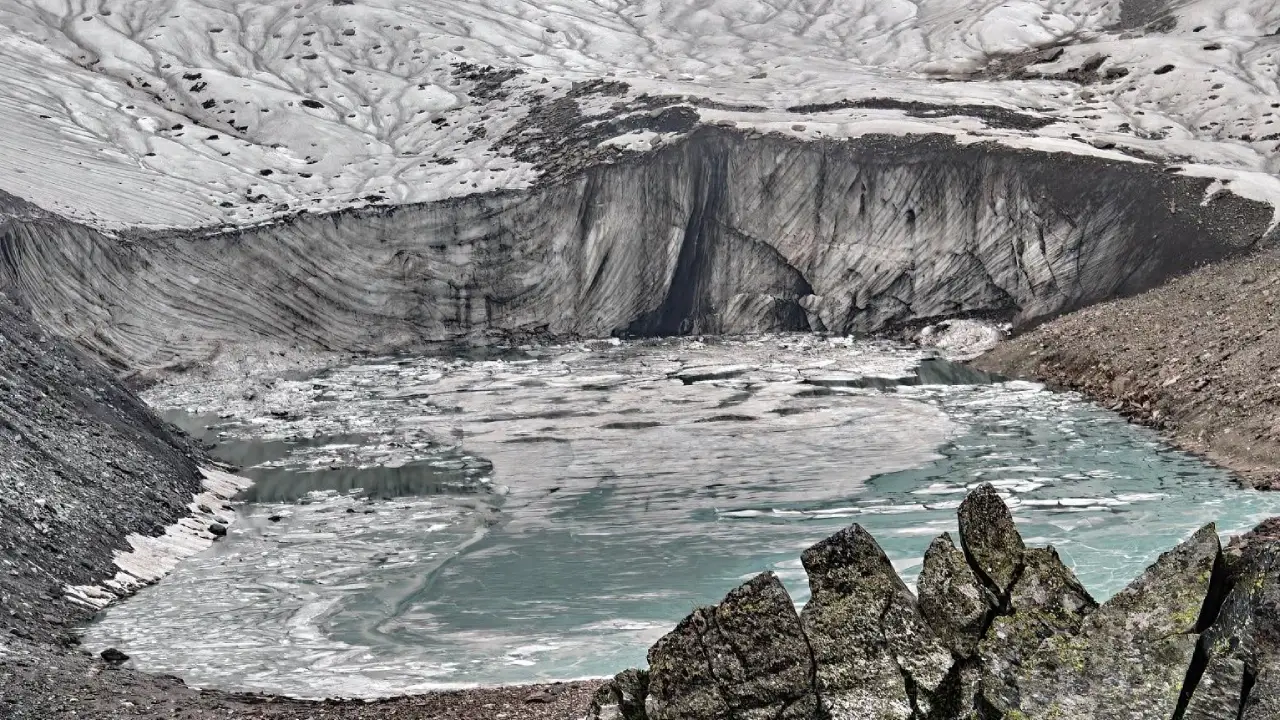
But this changing water landscape is not merely a matter of perception; scientific research is beginning to reveal what lies behind it. Research by scholars at the University of Kashmir on the Kolahoi Glacier, one of the most important glaciers in the Kashmir Valley’s Jhelum basin, found persistent and accelerating ice loss.
Between 2014 and 2019, Kolahoi lost an average of 0.83 metres of water equivalent each year, while the period between 2000 and 2010 recorded an even higher annual loss of 1.18 metres of water equivalent. But the significance of these figures lies beyond the shrinking glacier itself; the study found a strong relationship between glacier mass loss and the declining contribution of glacier melt to autumn streamflow, raising concerns about the future availability of water downstream.
A glacier is more than a frozen landscape; it is a natural reservoir, storing water in the form of snow and ice and releasing it gradually into rivers. As temperatures rise, accelerated melting may initially add more water to streams, creating the impression of abundance. But this comes at the cost of the glacier’s long-term reserves.
As the ice mass continues to shrink, there is less stored water available to sustain rivers once seasonal snowmelt declines. The concern, therefore, is not that Kashmir will suddenly run out of water, but that it may gradually lose the natural system that has regulated the timing and availability of its water for generations.
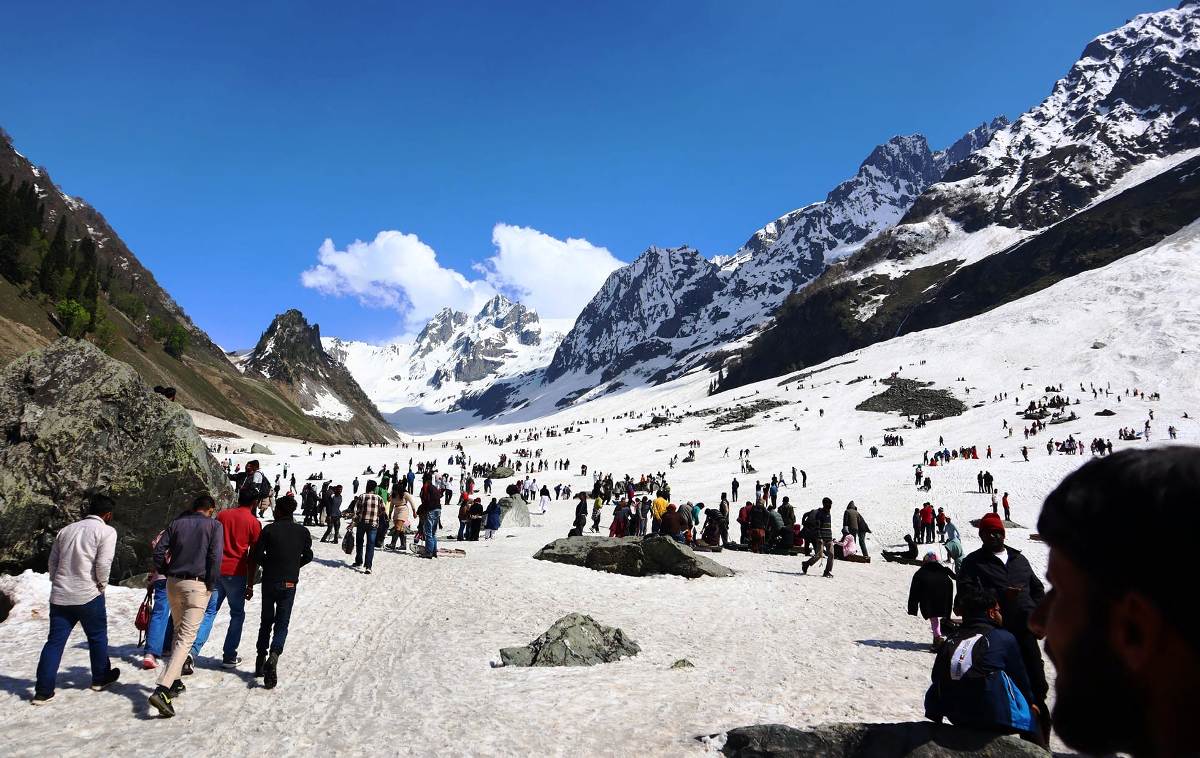
The changes in the glacier do not remain confined to the mountains. They travel downstream through the Lidder, one of the important rivers of the Kashmir Valley that ultimately feeds the Jhelum. Research on the Lidder Valley has found that its glaciers lost nearly 29 per cent of their area and about 20 per cent of their volume between 1962 and 2013. The study also found that summer streamflow, after increasing until the mid-1990s as glacier melt intensified, began to decline thereafter.
This shift suggests that the basin may have crossed a critical point: the additional water produced by accelerated melting can no longer compensate indefinitely for the loss of the glacier’s stored ice. What happens high in the mountains, therefore, eventually becomes a question of water availability for the communities, farms and ecosystems downstream.
For the people living downstream, these changes are not distant warnings confined to the mountains. They are increasingly becoming visible in everyday life. In early 2025, the historic spring at Achabal Mughal Garden ran dry for the first time in living memory, leaving the surrounding villages dependent on water tankers. The spring, which supports water needs in nearly 20 villages, became a striking symbol of a wider problem: as snowfall declines and dry periods lengthen, the springs and streams that communities have depended on for generations are becoming increasingly vulnerable.
The consequences extend far beyond drinking water. Agriculture and horticulture, two of Kashmir’s economic mainstays, depend on a predictable supply of water at the right time of the year. A disrupted cycle of snowfall, rainfall and river flow can leave farmers with water when they do not necessarily need it and shortages when they do. In a region where orchards, paddy fields and livelihoods have long been shaped by the seasonal rhythm of water, changing that rhythm can be as consequential as reducing the total amount available.

This creates a paradox at the heart of Kashmir’s water crisis: a region can face both too much water and too little of it. Intense rainfall and sudden flooding can bring large volumes of water in a short period, while prolonged dry spells and reduced snow accumulation leave rivers, springs and groundwater reserves depleted later. The crisis, therefore, is not simply one of quantity. It is increasingly a crisis of timing, storage and reliability of whether water arrives in the right place, in the right season, and in a form that can sustain people through the months that follow.
Kashmir’s water crisis, then, is not the story of a valley suddenly running dry. It is the slower story of a natural system losing its ability to store, regulate and deliver water as it once did. The glaciers are shrinking, snowfall is becoming less dependable, springs are becoming vulnerable, and rivers are showing changes in their seasonal flow.
For a region whose landscape, agriculture and everyday life have been shaped by water for centuries, the real warning may not be that Kashmir will have no water left, but that the water it has may no longer arrive when it is needed. The Kashmir imagined through rivers, springs, lakes and snow may still exist, but preserving it will require understanding that water is not an inexhaustible feature of the landscape. It is a system, and that system is changing.
(The author is a student of history at the Aligarh Muslim University, Aligarh. Ideas are personal.)