by Iqbal Ahmad
Rapid grafting of high-density apple varieties in Kashmir orchards is improving yields but raising concerns about the decline and possible disappearance of traditional fruits like the Kashmiri Delicious apple
With the change in season and increase in temperatures, the plantation drive within the valley has also been picking up. The local fruit growers have got involved in laying new orchards and have been planting high-density fruit plants in their respective orchards. In fact, usually with the emergence of the spring season, the tradition of planting different varieties of fruit and non-fruit trees on vacant lands takes place.
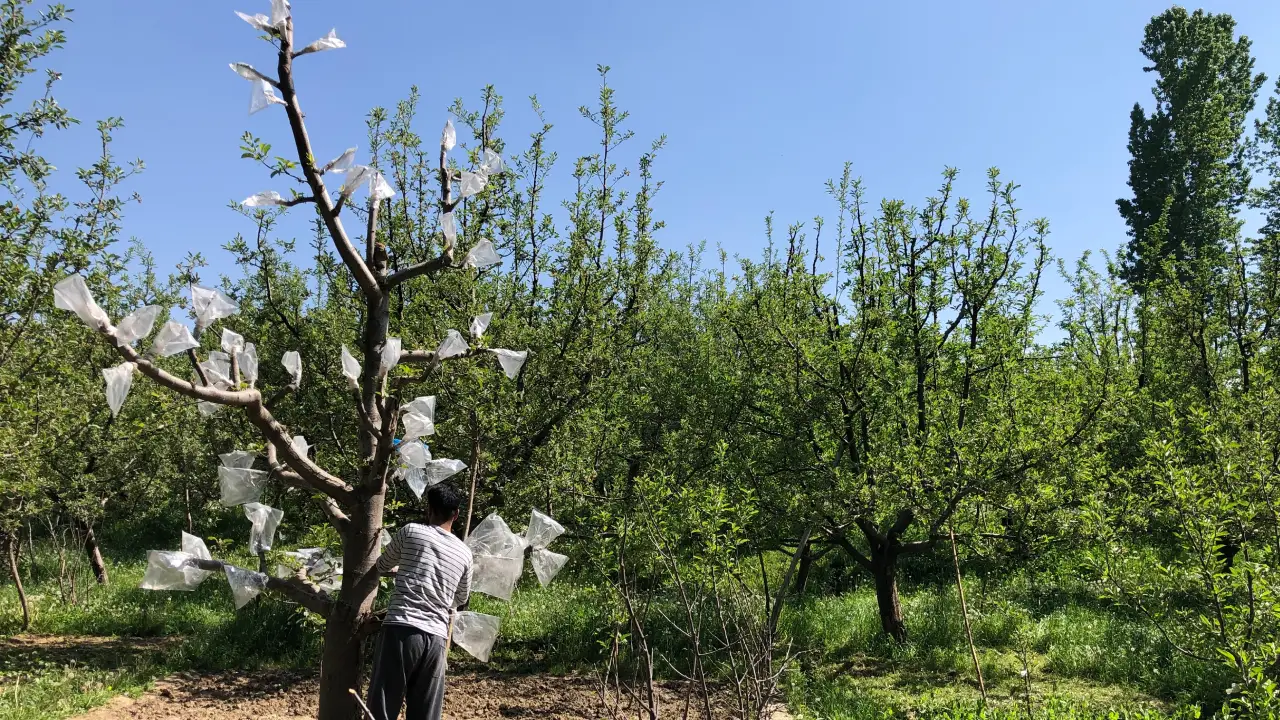
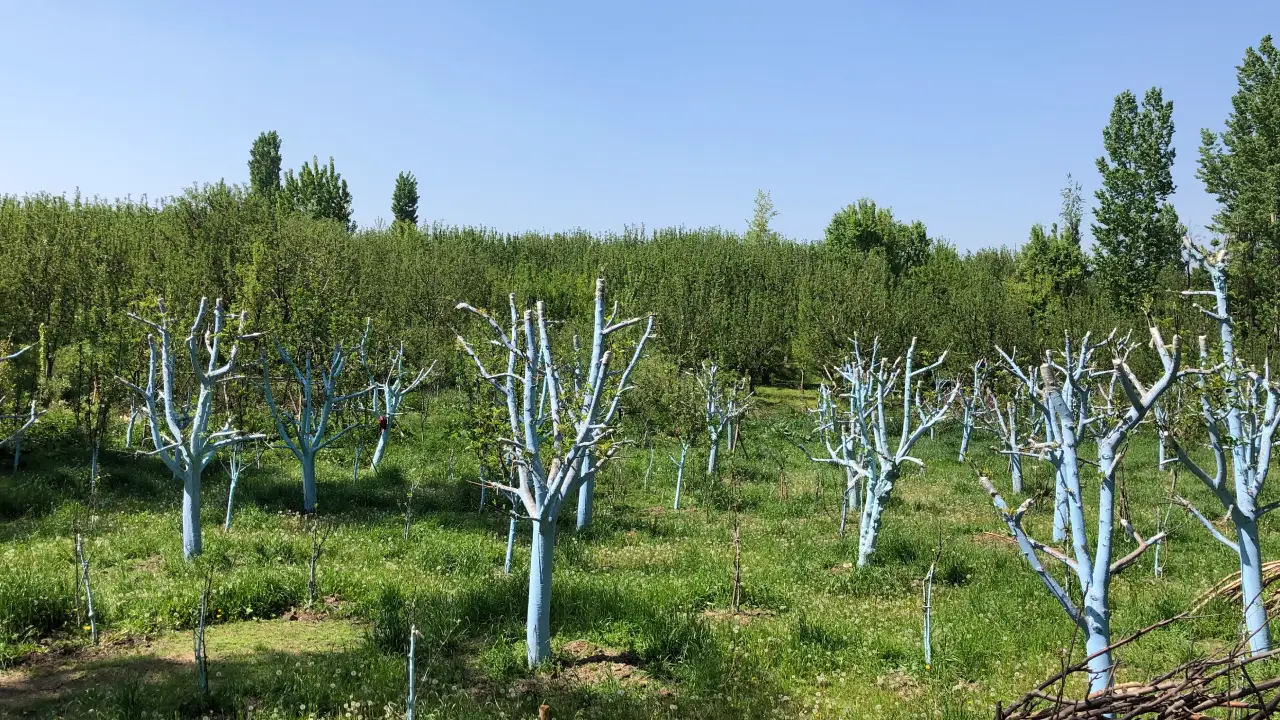
But this year, within the plantation drive, the grafting of fruit trees, particularly apple trees, has picked up at a very fast rate. The age-old fruit-giving trees are brutally axed and grafted.
The most popular and common Delicious variety of the Kashmiri apple tree has fallen victim to this new trend of grafting technique, and fruit-giving trees of Delicious apple are being brutally axed and grafted into a few non-Kashmiri high-density varieties of apples. In this new grafting technique, a portion of one (bud) is fixed into or on a stem, root or branch of another stock in such a way that a union is formed and the desired variety is grown on the base of the earlier one. This trend in horticulture is explored to promote new and better-yielding varieties of various fruits.
In fact, Kashmir has already lost several varieties of its traditional fruits, and now it looks like the turn of the Kashmiri Delicious apple, which has been abundantly grown here for several decades. For the last few decades, apple has been grown here in abundance and that too in different updated varieties like Delicious, Kalu and Krimzan. More recently, a few Italian varieties have also been introduced, which have been revolutionising the horticulture sector.
The orchards are rapidly adopting high-density apple varieties imported primarily from Italy, such as Jeromine, King Roat, Gala Scarlet, Red Velox, Scarlet Spur-II, Super Chief, Redlum Gala and Auvi Fuji. These modern, early-fruiting varieties offer better colour, size and disease resistance, typically producing fruit within 1–2 years.
Indeed, this is not a bad trend. New varieties shall be preferred, and the local horticulture sector also needs to make new experiments so that the fruit production of this fruit-growing land increases. But this should not be done at the cost of already high fruit-yielding varieties like Delicious, the king of apples.
The apparently growing fruit industry has changed the social and economic status of rural Kashmir and helped its people in reshaping their economy, but in the race of cultivating commercialised fruits, the land has already lost several varieties of centuries-old traditional fruits.
It is also essential to promote the indigenous fruit culture of this land, as the fruit industry nowadays has been playing a vital role in developing the economy of the valley. Commercial fruits are fetching good income for the local producers, and this trend has changed the living standards of local people. At many places, the local farmer has discontinued the tradition of rice cultivation and have grown orchards on their agricultural lands. Superior qualities and varieties of apple and pear orchards are coming up on agricultural lands.
But at the same time, fruit growers should not neglect those traditional fruits which this land has been producing for centuries. One should also allocate appropriate space to traditional fruits and revive their cultivation on our vacant lands. Although these may have less production and demand, they very well suit the local environment.
The fruit cultivations which this land has been facilitating include Dhachh (grapes), Gilas (cherry), Baadam (almond) and Chounth (apple). Therefore, by promoting their cultivation, they can also benefit our environment. Chira (apricot) and Bahu, which were cultivated in the mountainous belts of the valley, suited those conditions and hence were grown in abundance in such areas.
Besides these traditional fruits, the land is capable of yielding good produce of walnut, apple and pear. Such fruits have been so favoured that they are produced in dozens of varieties. The Delicious and Naakh varieties have also gained a wide market and are being exported heavily to other mandies of the country.
The Cherra and Baadam apricot and almonds, which are categorised into the group of dry fruits, were also grown here on a large scale. These dry fruits were also exported to other Asian and European countries. Almonds (Baadams) were grown in considerable quantity, while apricot (Khobani) is now grown in parts of Kargil and Leh.
Baadam once became the identity of Kashmir, and its motif has been very popular among papier-mâché, shawl and wood-carving artists. These designs are encountered on a variety of Kashmir artefacts, more specifically on Kashmir textiles, wood and metal works.
In the race to commercialise the local fruit industry, several varieties of traditional fruits have either been lost or their quantity has considerably decreased. Kashur Ambur, Maharaji, Rasulbati and Trail are rarely produced. The land has already lost several old almond and apricot orchards. Many places in Kashmir were named after such fruits as Dachigam, Dachinpur, Baadam Bagh, Badamwari and Baadam Pur. Alas, it is now confined to names alone, while the fruit orchards have subsequently disappeared from such places.
Now it looks like the turn of the Kashmiri Delicious apple, which is falling victim to this new trend of grafting techniques. Since the delicious apple had become the identity and zenith of this land, most of the apple orchards carried it in their wonderful varieties. But the way these varieties are nowadays axed for providing space to high-density ones has raised concerns among many fruit growers and traders.

They say the Delicious apple has been the master fruit of this land, and the entire fruit industry would depend on this variety. It has been growing abundantly and has also got a good market. They fear that the way these are being axed would badly affect the fruit industry of this land. Since the most famous varieties of Kashur Ambur and Maharaji have already been lost, if axing and grafting of this variety is not discouraged, the time may come when Kashur Delicious apple will also meet the same fate which other traditional fruits have met.
As such, steps are required to discourage the trend of grafting of this tree. Indeed, new varieties and high-density orchards should be encouraged and promoted, but that should not be done at the cost of Delicious orchards.
The horticulture department looking after the horticulture sector of this land should also come forward, discourage this growing trend and help in the promotion and preservation of Kashmiri Delicious apple orchards.
(The author is a trained archaeologist. Ideas are personal.)