by Azad Mirza
Kazakhstan’s constitutional reforms have streamlined governance but strengthened presidential authority, while controlled political competition and strategic diplomacy shape its democratic development and ties with India.

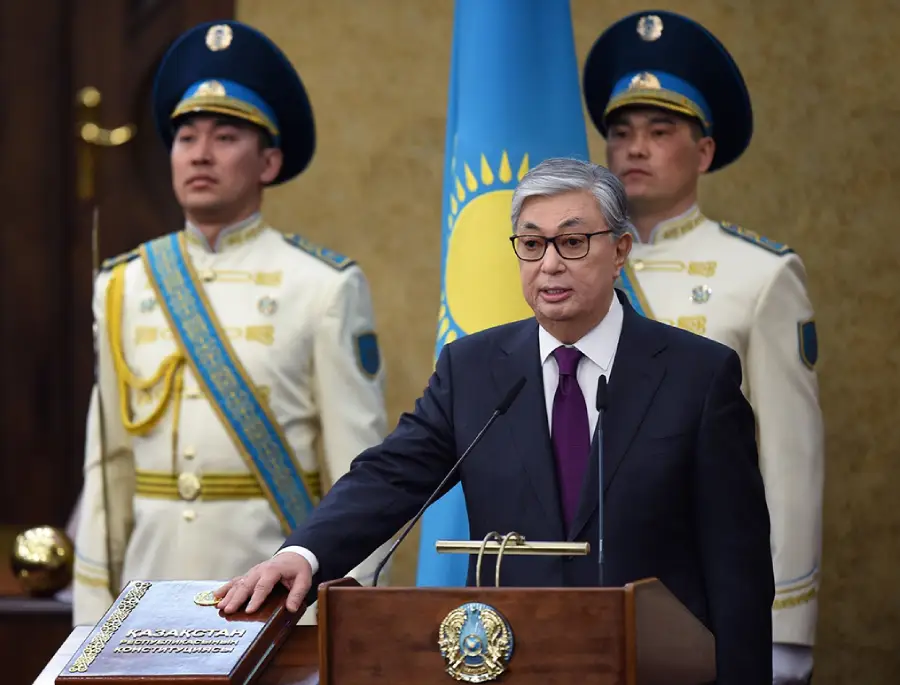
Following sweeping amendments to the country’s constitutional framework, the establishment of a new unicameral legislature, the Kurultai, marks a defining moment in Central Asian politics. While framed by the administration as a modernisation step to streamline governance and enhance representation, the restructuring reinforces the central authority of the presidency.
At the heart of this strategy is the concept of “managed pluralism”. By dismantling former power networks, altering electoral rules, and controlling party registration, Tokayev has effectively insulated the executive branch from authentic opposition. While new legislative structures create the appearance of a broader political debate, systemic barriers continue to block independent and dissident voices from entering the formal political arena.
Guise of Reform
The transition to a single-chamber legislature, the Kurultai, replaces the previous dual-chamber parliamentary structure, concentrating legislative processes into a more streamlined body. Presented as a move towards greater legislative efficiency and accountability, the constitutional overhaul serves a dual purpose: consolidating President Tokayev’s executive authority and dismantling the legacy structures left by his predecessor.
Analysts say that by realigning the country’s constitutional architecture, Tokayev has methodically dismantled old oligarchic influence networks while positioning himself as an indispensable agent of stability. The restructuring allows the executive branch to exert tighter control over the legislative agenda. Rather than distributing power outwards to civil society or local assemblies, the reforms concentrate decisive decision-making mechanisms within the presidential apparatus.
Systemic Barriers
Further reportage describes that despite rhetoric highlighting democratic progress, independent political parties in Kazakhstan face severe administrative and legal barriers to entry. Requirements for political party registration remain strictly controlled, enabling state authorities to filter out genuine opposition groups before campaign periods begin.
As a result, the ballots feature primarily pro-government parties and benign loyalist entities. These approved parties offer minor policy variations on economic or social issues but refrain from challenging the core authority of the presidency or questioning foundational government policy.
Implications and Stability
The practice of blocking independent opposition and maintaining controlled elections carries significant long-term consequences for Kazakhstan’s democratic development across key operational dimensions:
Where democratic systems prioritise transparent elections with diverse choices, Kazakh practice leads to widespread voter apathy and a growing public belief that participating yields little systemic change.
Rather than serving as an independent check on executive oversight, the legislative body functions primarily as a rubber stamp for presidential decrees.
In contrast to systems that enable the peaceful transfer of power through competitive contests, closing formal channels for political grievances creates a heightened risk of unorganised civil unrest over time.
Analysts comment that by closing institutional pathways for dissent, the political system risks driving political frustration underground. While “managed pluralism” offers short-term political control for the ruling elite, it deprives the state of genuine feedback loops necessary to address socioeconomic grievances effectively.
Kazakhstan’s multi-vector foreign policy, a diplomatic framework originally conceptualised in the post-Soviet era and reinforced in the updated Foreign Policy Concept signed by President Tokayev, serves as the foundation of the country’s national security, economic strategy and sovereign autonomy.
Situated at the geopolitical intersection of Eurasia and landlocked between major global powers, Kazakhstan avoids exclusive alignment. Instead, Astana practises a strategy of “strategic hedging”, balancing security, economic and energy ties across Moscow, Beijing and Western capitals.
Foreign Policy Framework
Rather than leaning permanently towards a single bloc, Kazakhstan’s foreign relations operate across specialised functional domains:
Security cooperation is anchored primarily through regional pacts like the CSTO, while energy development, technology, and commercial partnerships are diversified across Western, Chinese, and Asian markets.
Kazakhstan regularly utilises international forums, including the United Nations, the Shanghai Cooperation Organisation (SCO) and the Organisation of Turkic States (OTS), to assert its voice as a middle-power mediator and advocate for global non-proliferation.
Under the updated Foreign Policy Concept, the state places explicit focus on protecting citizens and commercial interests abroad while preserving domestic stability and territorial integrity.
India-Kazakhstan Relationship
The India–Kazakhstan relationship serves as the anchor of India’s foreign policy in Central Asia. Built on historical Silk Route linkages and mutual trust, the bilateral framework evolved from traditional diplomacy into a Strategic Partnership.
As Kazakhstan balances relations between China, Russia and the West under its multi-vector strategy, India views Astana as an indispensable partner for energy security, counter-terrorism and trade diversification in Eurasia.
Kazakhstan is India’s largest trading partner in Central Asia. In addition, Kazakhstan is also India’s largest supplier of natural uranium, playing a critical role in fuelling India’s civilian nuclear power programme.
Oil and gas cooperation remains a priority. Indian state-owned energy enterprises (such as ONGC Videsh) have historically invested in Kazakh energy exploration (e.g., the Satpayev oil block). Amid shifts in global hydrocarbon routes, both nations routinely negotiate long-term supply deals.
However, direct physical connectivity remains the biggest operational challenge to scaling trade. Both nations leverage multimodal transport networks to bypass geographical barriers:
Kazakhstan is a crucial transit state along the Eastern Route of the International North-South Transport Corridor (INSTC) via the Kazakhstan-Turkmenistan-Iran (KTI) rail network. Freight moving from western Indian ports (like Mundra or Nhava Sheva) reaches Bandar Abbas in Iran before travelling by rail directly into Central Asia.
India and Kazakhstan coordinate via dedicated Joint Working Groups on Chabahar Port to link India’s port investments in Iran directly to Central Asian rail lines.
India and Kazakhstan routinely conduct joint military manoeuvres, most notably Exercise KAZIND, to build interoperability in counter-terrorism, mountain warfare, and peacekeeping operations under UN mandates. Both nations maintain Joint Working Groups focused on counter-terrorism, military-technical cooperation and cyber security.
Strategic Challenges
The primary strategic challenge in India-Kazakhstan relations stems from severe geographical bottlenecks and transit friction. As India lacks a direct land border with Kazakhstan, trade and energy cooperation rely on complex regional networks like the International North-South Transport Corridor (INSTC) and the Chabahar Port route.
Realising the full potential of these corridors remains difficult due to geopolitical instability, sanctions compliance issues involving transit routes through Iran and Pakistan’s denial of overland access to Central Asia.
Compounding this connectivity constraint is asymmetric regional influence. Beijing’s vast infrastructure footprint under the Belt and Road Initiative (BRI) and Moscow’s historical security dominance leave India competing against heavyweight powers in Astana’s “multi-vector” foreign policy strategy.
While both nations share crucial counter-terrorism concerns and civil nuclear interests, with Kazakhstan supplying a major portion of India’s raw uranium, unlocking deeper security and energy partnerships requires navigating regional instability in Afghanistan alongside heavy regulatory and financial conversion hurdles.
(The writer is a New Delhi-based senior commentator on national, international, defence and strategic affairs, environmental issues, an interfaith practitioner, and a media consultant. Ideas are personal.)