SRINAGAR: Six years after Ladakh’s political and social organisations joined hands to seek constitutional safeguards, protection of land and jobs, and greater democratic powers from the Centre, the movement is facing a new challenge from within. Now the question being openly asked is whether the two bodies that have led the negotiations still command the confidence of all sections of the Union Territory.
The emergence of the Civil Society Forum of Ladakh, led by former Leh Apex Body (LAB) chairman and former MP Thupstan Chhewang, has opened a fresh front in the ongoing struggle for Ladakh’s political future. The forum has questioned the representative mandate of the LAB and the Kargil Democratic Alliance (KDA), accused them of departing from the original agenda, and demanded a restructuring of the negotiating leadership.
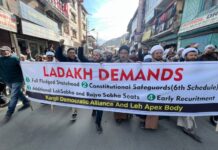
The challenge comes at a critical juncture. Talks between the LAB, KDA and the Union Ministry of Home Affairs (MHA) have stalled over the Centre’s proposed framework for constitutional safeguards and an elected body for Ladakh. A meeting scheduled for October 22 in New Delhi did not take place, while the two negotiating bodies have rejected the Centre’s latest draft, alleging that it falls short of assurances given during earlier discussions.
The developments have brought into focus a question that goes beyond the differences over the proposed constitutional arrangement: who has the authority to speak for Ladakh, and how long can a movement sustain a common front when negotiations fail to deliver a settlement?
The situation invites comparison with Kashmir, where the political parties that came together after the August 2019 abrogation of Article 370 and the division of the erstwhile state into two Union Territories initially projected a united front but subsequently saw their alliance weaken amid competing political interests. The People’s Alliance for Gupkar Declaration (PAGD), formally constituted in October 2020, brought together parties that had been rivals for decades. Its unity, however, proved fragile, with the Peoples Conference led by Sajad Gani Lone withdrawing in January 2021 over allegations of proxy candidates and a breach of trust during the District Development Council elections.
Ladakh’s present situation is not identical. The LAB and KDA are not simply electoral rivals attempting a political alliance; they are negotiating platforms representing different regional constituencies around a shared demand for safeguards. Nor has the new forum’s emergence, by itself, established that the broader movement is fragmenting. But the dispute over representation, the direction of negotiations and the credibility of the existing leadership has introduced a fault line into a movement whose strength has depended on Leh and Kargil maintaining a common position.
The New Challenge
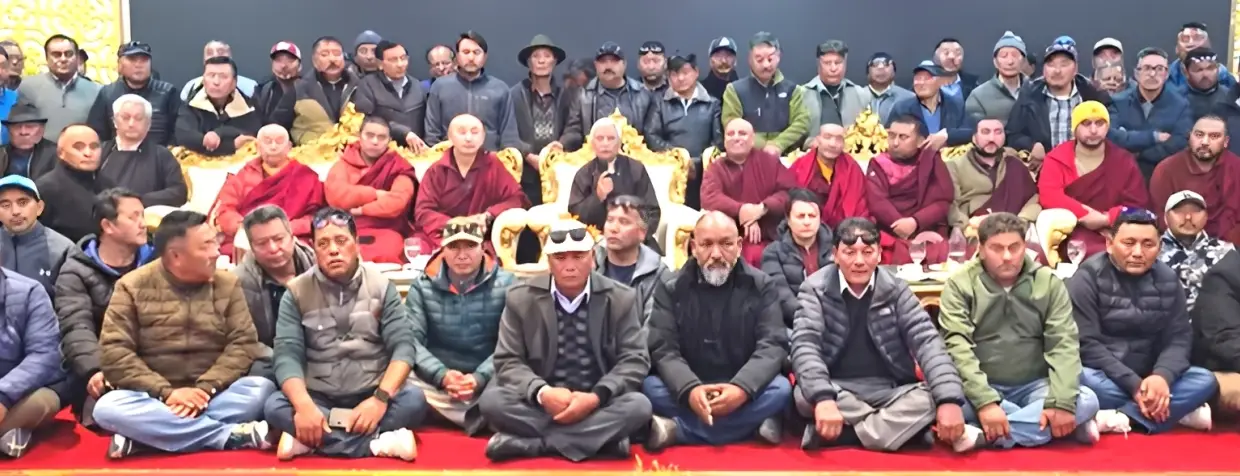
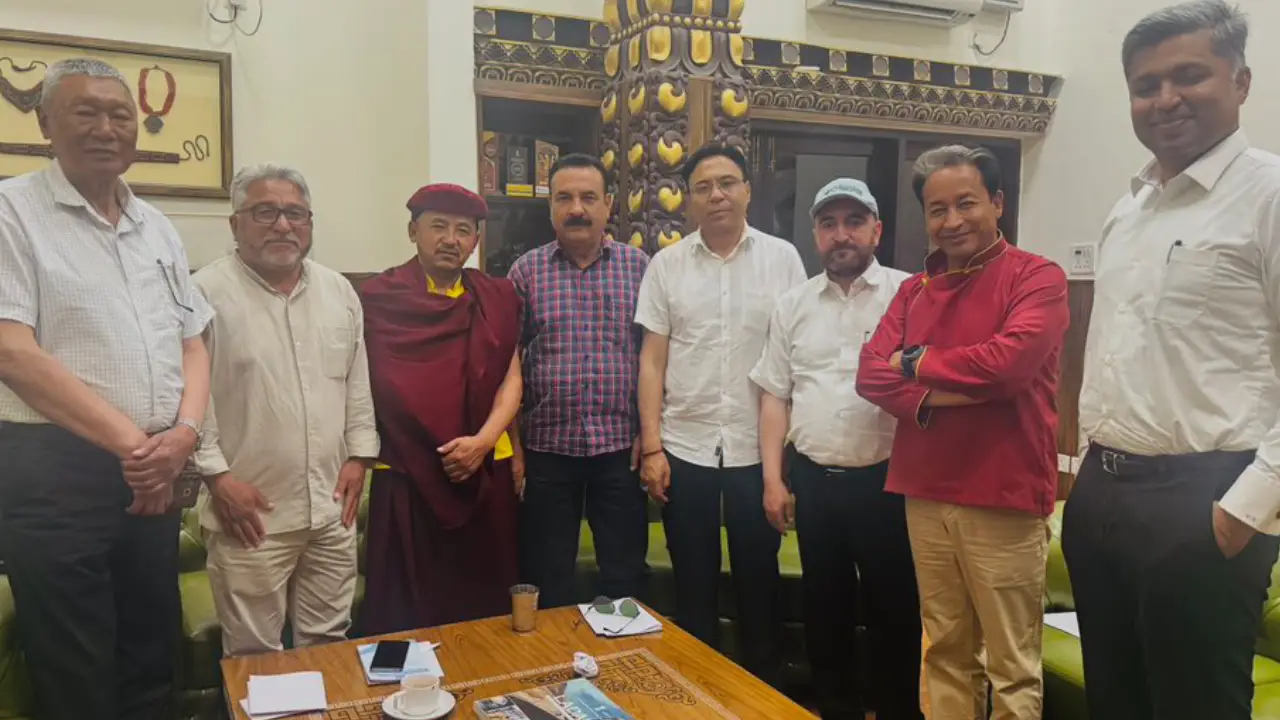
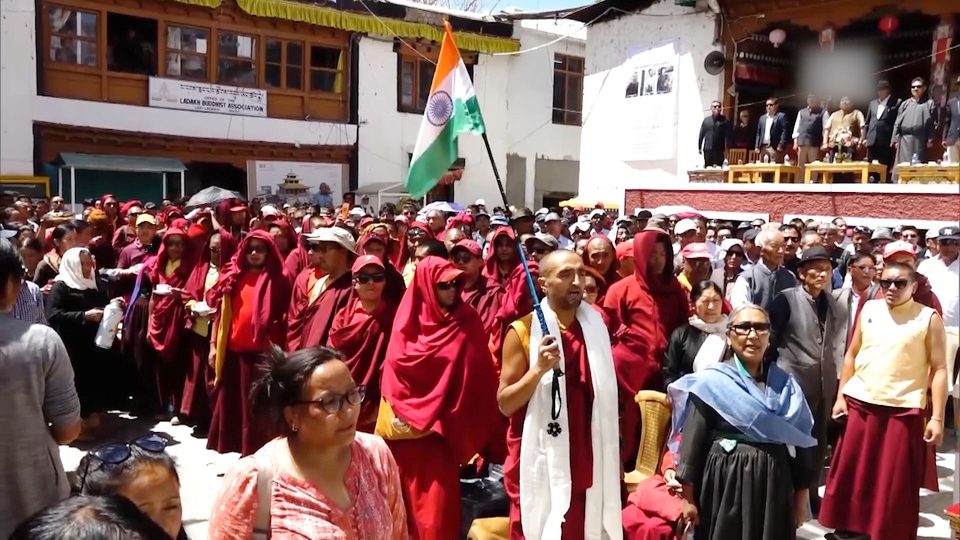
The Civil Society Forum of Ladakh convened a meeting in Leh on Thursday, bringing together around 200 people, according to Rigzin Spalbar, a member of the forum and former chairman and Chief Executive Councillor of the Ladakh Autonomous Hill Development Council (LAHDC), Leh.
The gathering included Chhewang, an erstwhile BJP MP, former MLC Tsering Samphel, representatives of Thiksey and Dukpa Thuksey Rinpoche, monks from monasteries, members of the Ladakh Buddhist Association, retired officials, nambardars and other civil society representatives.
The forum described itself as representing the religious, cultural, intellectual and democratic conscience of Ladakh. Its intervention was directed not only at the pace of negotiations but also at the composition and functioning of the leadership conducting them.
In its resolution, the forum alleged that the original agenda of protecting Ladakh’s land, employment and culture had been hijacked and that the dialogue had become increasingly dominated by climate activist Sonam Wangchuk and the KDA, to the detriment of other districts and sections of society, particularly the Buddhist community.
The forum also accused the LAB and KDA leadership of rejecting the MHA’s draft proposal without adequately examining the options available and of creating confusion about the outcomes of earlier meetings.
Chhewang attributed the failure to hold the October 22 meeting to repeated delays, misinformation and disregard for earlier understandings. He argued that the negotiations should not be held hostage to what the forum described as confrontational politics.
Spalbar said the existing leadership had failed to secure a solution despite nearly six years of engagement with the Centre. He argued that people from different sections of society had come together because the negotiations had not produced the constitutional safeguards sought by Ladakh.
The forum has demanded the early holding of Panchayat and LAHDC elections across the districts and enhanced powers for the elected councils. It has also called for the LAB to be reconstituted with democratically chosen representatives from all districts, including women, youth, tribal communities, border nomads and religious institutions.
Its central argument is that a body negotiating the constitutional and political future of the entire Union Territory must derive its authority from a broader and more demonstrably democratic mandate.

LAB Response
The existing leadership has rejected the forum’s criticism and questioned its motives.
LAB chairman Chering Dorjay Lakrook has alleged that the new group was created with the backing of the authorities to discredit the existing leadership and derail the ongoing dialogue with the Centre.
He maintained that the LAB had consistently pursued a solution-oriented approach to securing meaningful constitutional safeguards and democratic rights for Ladakh, and that its insistence on protecting the region’s interests should not be portrayed as confrontation.
The LAB’s response has also taken a documentary turn. Lakrook has released records relating to negotiations with the MHA, including the minutes of the May 22 subcommittee meeting, the Centre’s draft and responses submitted by the two Ladakh bodies.
He said the documents were being placed in the public domain because the administration and the MHA had not made them available for wider consultation. He urged people to examine the proposals and assess the progress made, the commitments recorded and the issues that remained unresolved.
The release of the records is significant because the disagreement is no longer confined to competing political assessments. The documents offer the public an opportunity to examine the positions taken by the Centre and the negotiating bodies, although their publication does not resolve the underlying dispute over representation.
The two sides are offering sharply different explanations for the impasse. The new forum says the existing leadership has prolonged the negotiations without securing a settlement and has narrowed the scope of representation. The LAB, meanwhile, maintains that it is pursuing Ladakh’s interests and accuses the new group of undermining the process at a sensitive stage.
These competing claims have yet to be independently established in full. What is evident, however, is that the negotiations are now accompanied by a contest over who should lead them.

The Stakes
The dispute has emerged against the backdrop of a long-running demand for a political and constitutional arrangement that would protect Ladakh’s distinctive social, cultural and demographic character.
Since Ladakh became a separate Union Territory in October 2019, its political organisations have pressed for greater democratic representation and protection of land, employment, customary practices and local institutions. The movement has also sought stronger safeguards for the region’s tribal population and a greater role for elected representatives in decisions affecting its future.
The LAB and KDA have been the principal platforms representing Leh and Kargil in negotiations with the Centre. Their joint position has been important because the two districts have distinct political histories, social compositions and institutional priorities, even as they have converged around the demand for greater protection and autonomy.
The recent talks have focused on a proposed Union Territory-level elected body, its legislative, executive and financial powers, and the constitutional safeguards that would govern its functioning.
In their counter-proposal, the LAB and KDA have sought a democratically elected government and Legislative Assembly for Ladakh, with authority over subjects in the State List and relevant Concurrent List matters. They have also proposed safeguards for land and immovable property, customary practices, residence and domicile, public employment, education, culture, languages and district-level institutions.
The two bodies have argued that these protections should not be displaced merely because Parliament has legislative competence over Union Territories. Their proposal also seeks to define the powers of the Lieutenant Governor and establish a framework for the devolution of authority to district-level institutions.
The Centre’s draft, however, has not met their expectations. After a meeting in Leh on October 15 ended without agreement, the two bodies rejected the proposal, alleging that it represented a departure from assurances given during earlier discussions. A further meeting expected in New Delhi on October 22 did not take place.
The failure to reach an agreement has given the new forum an opportunity to question the strategy and leadership of the negotiations. At the same time, the dispute risks shifting public attention from the substantive questions of constitutional protection and democratic authority to a struggle over who should represent the region.

The Kashmir Parallel
The comparison with Kashmir is particularly relevant because the political unity that emerged after August 2019 was also built around a shared sense of loss and a common demand directed at the Centre.
On August 4, 2019, leaders of major political parties in the erstwhile state, with the exception of the BJP, met in Srinagar and pledged to defend Jammu and Kashmir’s special status. After the Centre abrogated Article 370 and divided the state into two Union Territories the following day, the political leadership was detained or restricted, and the immediate political landscape was transformed.
The parties subsequently formalised their common position through the PAGD in October 2020. The alliance brought together the National Conference, Peoples Democratic Party, Peoples Conference, CPI(M), Awami National Conference and other regional political forces around the demand for restoration of Jammu and Kashmir’s special status.
The unity was consequential but short-lived in its original form. The Peoples Conference withdrew in January 2021, alleging that alliance partners had fielded proxy candidates against officially nominated candidates in the District Development Council elections. The dispute exposed the difficulty of maintaining a common political platform among parties with a history of rivalry and competing electoral interests.
Differences persisted over political strategy and electoral arrangements. The alliance continued in a narrower form, but its initial breadth and political symbolism diminished.
Ladakh’s emerging divisions carry a comparable question: can a movement built around a common demand preserve unity when negotiations become prolonged, the proposed settlement falls short of expectations and different sections begin to question the leadership’s approach?
There are important differences. In Kashmir, the PAGD was a coalition of established political parties, with their own electoral calculations and rivalries. In Ladakh, the LAB and KDA emerged as platforms for regional and civil society mobilisation, bringing together organisations and constituencies from Leh and Kargil. The new Civil Society Forum is challenging the legitimacy and inclusiveness of those platforms rather than announcing an electoral breakaway from a formal political alliance.
Nevertheless, both cases demonstrate that agreement on a broad objective does not automatically settle questions of leadership, strategy or representation. The longer a common movement remains without a political outcome, the more difficult it can become to contain disagreements over the route to that outcome.

Old Leaders, New Alignments
The composition of the new forum also gives the dispute a wider political and social dimension.
Chhewang is a veteran of Ladakh’s political movement. He served as president of the Ladakh Buddhist Association from 1989 to 1995, became the first Chief Executive Councillor of the LAHDC in Leh after the first council elections in 1995, and later helped build the Ladakh Union Territory Front. He won the Lok Sabha election in 2004 on the LUTF ticket and was elected again in 2014 on a BJP ticket. He resigned from the BJP and Parliament in November 2018 and subsequently returned to regional activism, including leadership of the LAB, from which he resigned as chairman in 2025.
Spalbar also has a history of involvement in Ladakh’s political and social mobilisation. Emerging from the Ladakh Buddhist Association’s activism, he later became Chief Executive Councillor of the Leh Hill Council and was associated with the Congress, which nominated him for the Ladakh parliamentary seat in 2019.
Tsering Samphel, another participant, has been associated with the Congress, the Ladakh Buddhist Association and the LUTF. Thiksey Rinpoche, a prominent Buddhist religious leader and former Rajya Sabha member, has also participated in earlier delegations seeking constitutional safeguards for Ladakh. Dukpa Thuksey Rinpoche represents the Drukpa Kagyu Buddhist lineage.
Their participation gives the new forum access to figures with political, religious and institutional standing in Leh. But the presence of prominent personalities does not, on its own, establish the forum’s claim to represent all of Ladakh. That question is likely to depend on the breadth of its support, its engagement with Kargil and other districts, and whether it develops a representative structure capable of being recognised by the wider population.
The forum’s demand for a reconstituted LAB is therefore central to the emerging contest. It is not merely asking for a change in negotiating tactics; it is questioning the institutional basis on which the current leadership claims to speak for Ladakh.
The Representation
The new group’s intervention also raises an important question about the relationship between civil society mobilisation and democratic institutions.
The LAB and KDA have led negotiations with the Centre on the strength of their role in the movement and their position as representative platforms for Leh and Kargil. The Civil Society Forum argues that this arrangement is no longer sufficiently inclusive and that the region’s elected institutions and wider social constituencies must have a more direct role.
Its demands for Panchayat and LAHDC elections, stronger council powers and a reconstituted LAB point towards a model in which legitimacy is derived more explicitly from elected representation.
This argument has significance beyond the immediate dispute. Ladakh’s constitutional future concerns not only the relationship between the Union government and regional leaders, but also how authority will be distributed among the proposed elected body, the district councils and local institutions.
If the movement’s leadership is divided over its own representative structure, it could complicate efforts to present a common negotiating position. Conversely, a wider and more transparent consultation process could help establish whether the differences are confined to leadership strategy or reflect a broader divergence in public priorities.
The LAB’s decision to release the negotiation documents may contribute to that assessment by allowing people to examine the competing proposals rather than relying entirely on statements from rival groups.
What Next?
The emergence of the Civil Society Forum does not mean that Ladakh’s movement has already followed Kashmir’s trajectory. The two cases differ in their political structures, demands and circumstances. Nor is there yet evidence that the new forum has displaced the LAB and KDA as the principal negotiating platforms.
But the latest developments mark a change in the character of the debate. Until now, the central contest has largely been between Ladakh’s representatives and the Centre over the form and extent of constitutional safeguards. The dispute is increasingly also about the authority of those representatives, the inclusiveness of the negotiating process and the political costs of continuing without a settlement.
The failure of the October 22 meeting has sharpened that debate. The Centre and the Ladakh bodies remain divided over the proposed elected institution and the safeguards that would accompany it, while a new group is questioning whether the existing leadership has the mandate to continue negotiating on behalf of the entire region.
For the LAB and KDA, the immediate challenge is to maintain a joint position on the substantive demands while addressing questions about transparency and representation. For the new forum, the challenge is to demonstrate that its call for a more inclusive leadership has support beyond its founding gathering and can contribute to, rather than further complicate, the search for a settlement.
The Centre, meanwhile, faces a movement in which the question of constitutional safeguards is becoming inseparable from the question of who should be involved in defining them.
Ladakh may not yet be experiencing a Kashmir-style political fragmentation. But the comparison is no longer merely historical. As in Kashmir after 2019, a common cause is now being tested by disagreements over leadership, strategy and representation.
The decisive issue will be whether these differences produce a broader and more credible negotiating process or weaken the collective leverage that brought Leh and Kargil together in the first place.