by Sri Varshith Kumar Reddy E
The global Silver Economy is emerging as a major growth driver. India, facing rapid ageing, must shift policy toward a longevity framework, with regions like Jammu and Kashmir offering scalable models

The world is ageing faster than it is growing. Global population growth is now decelerating below 1 per cent annually and trending toward near-zero by the century’s end. The median age is projected to climb by eleven years between 2020 and 2100. Fertility rates are falling across continents while life expectancy continues its upward march.
In this convergence, a new economic paradigm is quietly consolidating, called the Silver Economy, a system of production, consumption, and services built around the 1.2 billion people currently aged 60 and above, a cohort expanding three times faster than the global population.
By 2050, that number will exceed 2.1 billion, crossing 22 per cent of humanity. The Silver Economy is today valued at $4.2 trillion, representing 25 per cent of all spending by the 60-plus cohort, expanding at 7.6 per cent annually, with projections reaching $6.3 trillion by 2035. These are investment theses written in demography.
The Macro Framing That Matters
Ageing economies present a dual macro effect that most policy frameworks still handle imprecisely. On the demand side, older populations are asset-heavy and wealth-concentrated. The 45–64 age group holds the highest wealth share across most economies, making them formidable consumption drivers in healthcare, financial services, leisure, and assisted living. On the supply side, rising old-age dependency ratios compress labour force participation, widen pension deficits, and inflate public healthcare expenditure, with structural strains that compound as fertility falls and longevity increases.
The more productive framing sits between these poles: the longevity dividend, defined as the economic surplus generated when societies invest in healthy, productive ageing. Japan’s Long-Term Care Insurance Law, introduced in 2000, illustrates this at scale. By transferring care financing from households to insurers and stimulating consumption among the elderly, Japan converted demographic pressure into a domestic demand engine. The European Union’s Green Paper on Ageing similarly recasts older citizens as workers, consumers, and innovators rather than passive transfer recipients. The gap between demographic drag and the longevity dividend is, at its core, a policy variable.
India: Ageing Faster Than It Realises
India’s median age of 29 still evokes optimism about its demographic dividend. The more uncomfortable arithmetic lies ahead. The elderly population crossed 150 million in 2024, representing approximately 11 per cent of the total, and is projected to more than double, reaching 347 million, nearly 21 per cent of India’s population by 2050. The old-age dependency ratio, currently around 16 per 100 working-age persons, is forecast to reach 32 by mid-century. India’s demographic transition is compressed; what Europe and Japan absorbed over generations, India will face within a single one.
The economic stakes are substantial. India’s Silver Economy is projected to manage $1.5 trillion in assets by 2030 (CII–BCG framework), with the senior care sector alone forming a $50 billion market, growing at 20 per cent CAGR. Senior living units are on a trajectory to grow by 300 per cent over this decade. These growth curves collide with a stubborn structural deficit: only 10 per cent of India’s elderly receive any form of formal pension, approximately 70 per cent remain financially dependent on families, and around 75 per cent of elderly Indians live with at least one chronic disease. Healthcare expenditure on elder care is projected to triple by 2050, potentially approaching 10 per cent of GDP.
This is India’s missed longevity dividend, with a trajectory in which the demographic dividend fades before institutional infrastructure sufficient to convert longevity into productivity has been built. A large informal elderly workforce, absent pension architecture, and fragmented healthcare delivery are the fault lines along which this risk runs.
Where the Silver Economy Will Play Out
The Silver Economy spans the entire productive economy. Four domains carry transformational weight.
First, healthcare and long-term care will absorb the largest capital flows. Telemedicine, chronic disease management, geriatric specialisation, home nursing, and long-term care insurance are scaling rapidly. As non-communicable disease burden intensifies, senior-specific insurance will shift from niche to mainstream.
Second, financialisation of ageing remains the most underexplored frontier. Annuity products, reverse mortgages, elder-specific mutual funds, and the maturation of the National Pension System represent a multi-trillion-rupee structural opportunity, particularly as financial literacy deepens and formal employment histories lengthen.
Third, silver real estate is already attracting institutional capital. Senior living communities integrating medical access, assisted care, and social infrastructure reflect structural demand, with India’s 300 per cent projected growth in senior housing units signalling a long-cycle investment story.
Fourth, geron-technology, covering AI-driven health monitoring, predictive diagnostics, fall-detection wearables, and voice-assisted devices, is the fastest-emerging sub-sector, reshaping elder care delivery at scale globally and increasingly in India’s tier-one urban markets.
The analytical shift that all of these demands are straightforward: the elderly are asset-holders and consumption drivers. Policies and markets that continue pricing them as dependents will systematically misallocate capital.
Kashmir As A Micro-Lab
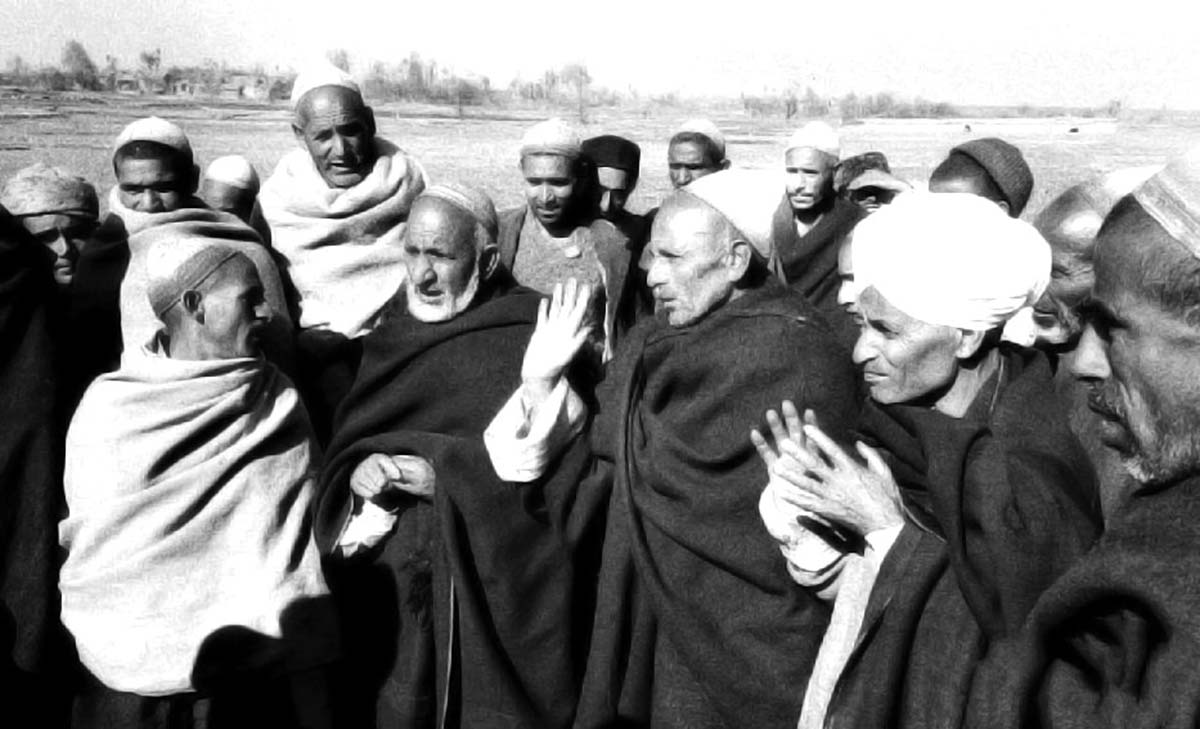
Jammu and Kashmir offers a geographically concentrated version of the national challenge. The share of the population aged 60 and above is already approaching 15 per cent by the mid-2030s, against a national average that will not reach comparable levels until well past 2040. Youth outmigration is structural and accelerating, with over 370,000 unemployed youth registered on J&K’s employment portal as of early 2025, leaving behind ageing households, particularly in rural districts, with depleted family support networks.
The region carries specific assets, though. Its climate, spiritual geography, and scenic terrain position it for silver tourism, an experience economy segment where older travellers seek wellness retreats, pilgrimage circuits, and slow-paced cultural immersion. The apple belt’s elderly farmers hold horticultural knowledge capital that agri-tech platforms could digitise and commercialise. Terrain-constrained healthcare delivery makes J&K a natural proving ground for telehealth and decentralised community care networks, innovations that the rest of India will eventually need to scale. Positioned intentionally, J&K could function as a micro-lab for decentralised silver economy governance, demonstrating what active ageing policy looks like when urban infrastructure and institutional scale cannot be assumed.
Policy Architecture
The decisive reorientation India needs is a shift from elder welfare to a longevity economy framework. These are architecturally different. Welfare is redistributive; a longevity economy is generative, treating older citizens as economic participants rather than transfer recipients.
A Silver Economy Mission, matching Digital India in regulatory coherence and Startup India in investment facilitation, would bring structural clarity to a sector currently fragmented across health, housing, finance, and technology ministries. PPP investment in eldercare infrastructure, fiscal incentives for silver economy enterprises, and re-skilling programmes for the 55–65 age cohort could extend productive labour force participation and reduce the dependency arithmetic that fiscal planners dread.
The most structurally important reform, and the most consistently overlooked, is building a Universal Pension Floor alongside deepened insurance penetration. The current state, where 70 per cent of the elderly rely on family transfers, is a systemic vulnerability that compounds with every passing year of demographic transition.
The bolder institutional innovation worth advocating is the introduction of “Silver GDP” as a measurable sub-component of national income accounting. By disaggregating elder-attributed consumption, care sector employment, and asset-management activity from broader GDP aggregates, policymakers gain the visibility required to allocate capital, design regulation, and benchmark progress with precision. What gets measured gets managed, and India’s longevity economy currently goes largely unmeasured.
The Demographic Pivot Has Begun

Countries that build pension systems before they are overwhelmed, invest in preventive geriatric health before acute care comes to dominate, and create market infrastructure for elder services before informal care networks are stretched beyond capacity will harvest the longevity dividend. Countries that wait will absorb the fiscal stress, the social strain, and the transition costs of a demographic shift that arrives faster than institutions can absorb.
India’s demographic dividend is a finite asset. Its longevity dividend is just beginning, and whether it becomes a source of structural growth or structural fragility is, in the final analysis, a question of how seriously policy takes the economics of ageing before the arithmetic chooses it.
(The author is a pracademic working on government policy and public institutions. Ideas are personal.)