SRINAGAR: The government on Friday revealed that approximately 62 LMT of apples were produced in Jammu and Kashmir over the past three years. A mechanism has been put in place to ensure the availability of quality agricultural inputs to farmers.
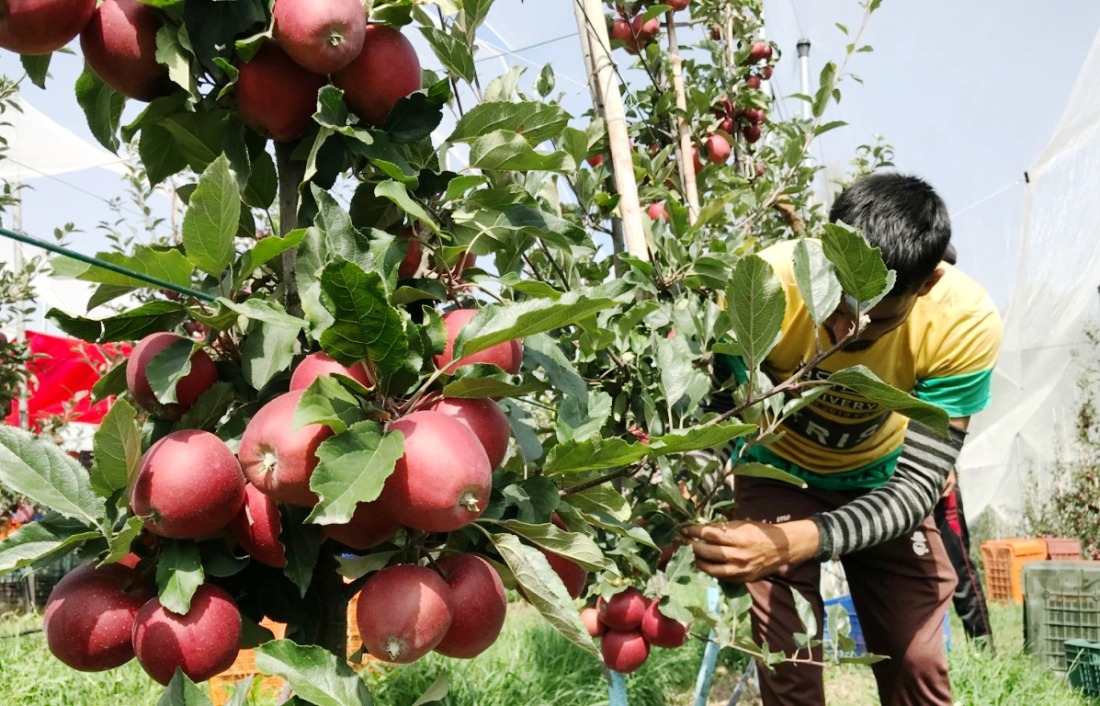
Responding to a query from Dr Bashir Ahmad Veeri, MLA Bijbehara, the Minister for Agriculture Production, said that JK produced 20.40 LMT of apples in 2022-23, 20.64 LMT in 2023-24, and 20.56 LMT in 2024-25, bringing the total production to around 62 LMT over three years.
Addressing concerns over the sale of substandard fertilisers and pesticides, the minister said the Agriculture Department has established a monitoring system to ensure the distribution of quality inputs, including pesticides, fertilisers, and seeds.
“All companies must register their products under relevant regulations, including the Insecticides Act of 1968, the Fertilizer Control Order of 1985, and the Seed Act of 1966. The Directorate of Enforcement within the Agriculture Department actively monitors quality parameters to prevent the sale of substandard products,” he said.
The minister highlighted the significant role of the horticulture sector in J&K’s economy, stating that it provides livelihoods to 35 lakh people, directly or indirectly benefiting around 7 lakh families.
“In 2021-22, horticulture production stood at 23.41 LMT, with 12.07 LMT exported. In 2022-23, production increased to 27.21 LMT, with 17.48 LMT exported. In 2023-24, 26.43 LMT were produced, with exports reaching 18.57 LMT. So far, in 2024-25, 26.46 LMT of horticulture produce has been recorded, with exports amounting to 13.13 LMT,” he said.
Regarding Controlled Atmosphere (CA) storage, the minister stated that the estimated requirement is 6.00 LMT, accounting for 30% of annual fruit production. Currently, J&K has a storage capacity of 2.70 LMT, with an additional 0.37 LMT being added this year, bringing the total capacity to 3.07 LMT. Most CA storage facilities are located at the Industrial Growth Centre in Lassipora, Pulwama, and the Industrial Estate in Aglar, Shopian. Efforts are underway, in collaboration with the Industries and Commerce Department, to establish sector-specific industrial estates for horticulture and post-harvest management in other districts.
To maximise the potential of the horticulture sector, the government has undertaken several initiatives, including the High-Density Plantation Scheme. Since its inception in 2016-17, an area of 663 hectares has been covered, with an additional 173 hectares brought under high-density plantations in 2024-25, raising the total to 836 hectares as of January 2025.
The minister also highlighted efforts in agricultural marketing through the e-NAM (National Agricultural Market) initiative. He said a network of fruit and vegetable markets has been established across J&K to facilitate better marketing for growers and traders, creating employment opportunities. Currently, 24 mandis are operational, with 13 more under development. Seventeen mandis are integrated with the e-NAM portal, allowing electronic transactions, with over 50,000 farmers and traders registered on the platform.
Various government schemes, such as the Holistic Agriculture Development Programme (HADP), Rainfed Area Development (RAD) for irrigation support, Pradhan Mantri Formalization of Micro Food Processing Enterprises (PMFME) for promoting food processing industries, Farm Mechanization, and the Mission for Integrated Development of Horticulture (MIDH), are being implemented to boost the horticulture sector, he said.
The minister reiterated the importance of CA storage in increasing the shelf life of fruit crops and preventing distress sales. Currently, 2.70 LMT of CA storage is available in JK, and with nine new CA storage projects adding 0.37 LMT, the total capacity will rise to 3.07 LMT this year, he said. (KNO)